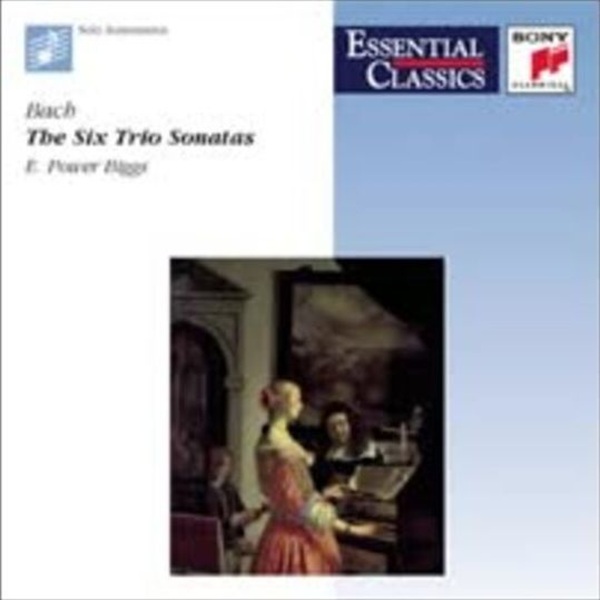
Bach: Six Trio Sonatas / Power Biggs
I’d like to write about Power Biggs, a British-born American organist and harpsichordist who was very active in the 1960s and 70s. With his characteristic dynamic and energetic drive, he performed with a mission and belief to introduce young people to the wonders of organ music (especially Bach). This was around the time when synthesizer versions of Bach, such as Wendy Carlos’s Moog Switched-On Bach, were sweeping the world. Jazz musicians like The Swingle Singers and Jacques Loussier were also actively recording records using Bach’s music as source material. These performances contributed to the popularity of Bach among young people at the time. The key point of his performance of Bach’s Six Trio Sonatas is that he played them not on an organ, but on a pedal harpsichord. This performance is remarkably crisp and lively, and I would even recommend it over the organ version. The instrument Power Biggs used in this recording is a typical example of a “modern harpsichord” made in the mid-20th century by John Challis in America (*Note), but the pedal harpsichord itself was also used in Bach’s time. It was mainly used as a “practice instrument” for organists. Another of his records that I like is Scott Joplin’s “Ragtime”, played on that same pedal harpsichord. It’s such a delightful record that you might mistakenly think the piece was written to be played on the harpsichord.
*Note: This harpsichord has 3 registers: 4-foot, 8-foot, and 16-foot keys for both the manual keyboard and pedals. #bach #triosonata #powerbiggs #swinglesingers #scottjoplin #ragtime #organ #片山俊幸