

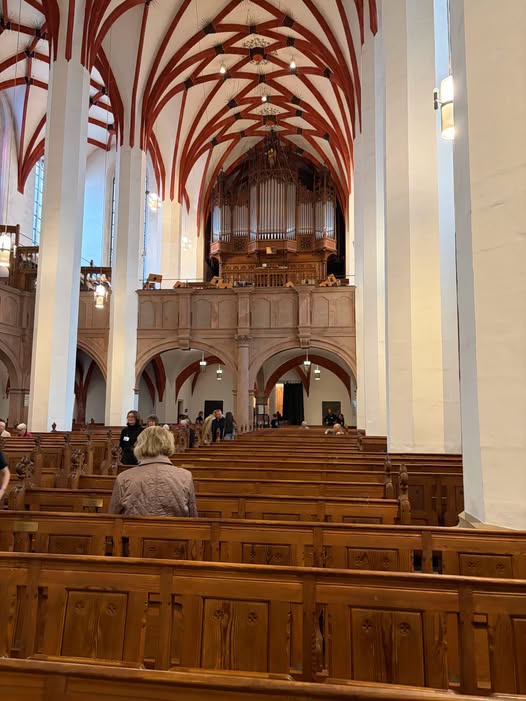
Bachfest 2026
The concept for this event involves several ensembles performing a selection of Bach’s cantatas—ranked in a “Top 50” list based on votes gathered from various quarters. The performing groups are as follows:
・Chor und Orchester der J. S. Bach-Stiftung
・Amsterdam Baroque Orchestra & Choir
・Vox Luminis
・Collegium Vocale Gent
・Gaechinger Cantorey
・The Constellation Choir & Orchestra
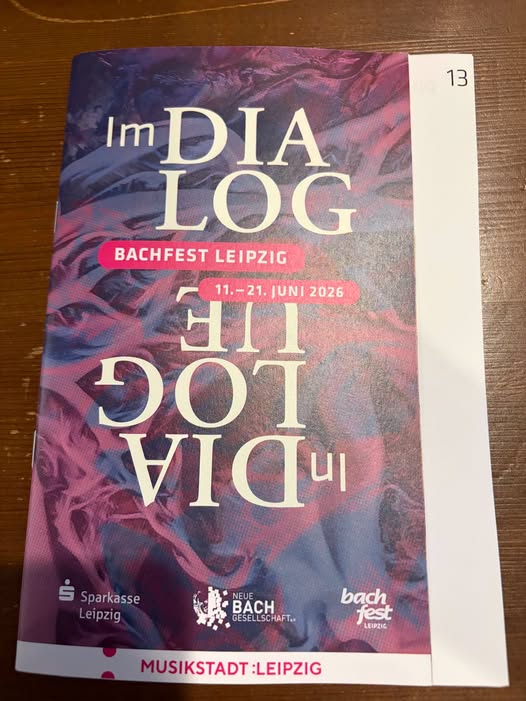
I certainly have my own personal “Top 50” list, and I am eager to see where some of my favorites—such as Cantatas No. 11, 84, and 115—rank. Naturally, works like No. 80 and No. 140 are sure to secure high positions. However, the actual program remains a mystery until I see the printed booklet (which costs 3 euros) at the venue on the day of the performance.

ーーーーーーーーーーーーーーーーー
A city where the past and present coexist
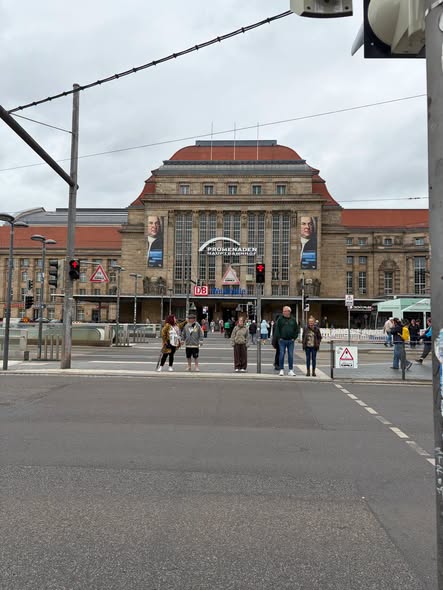
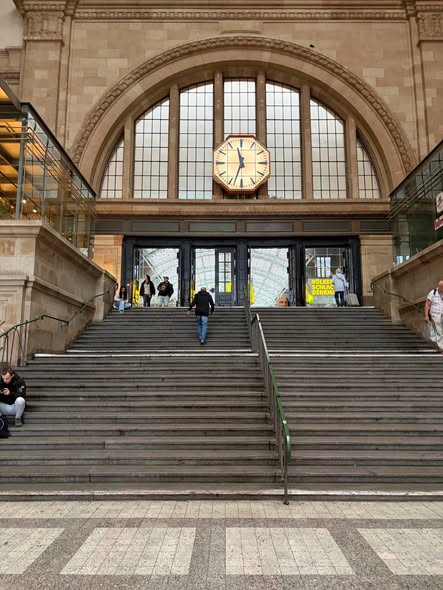
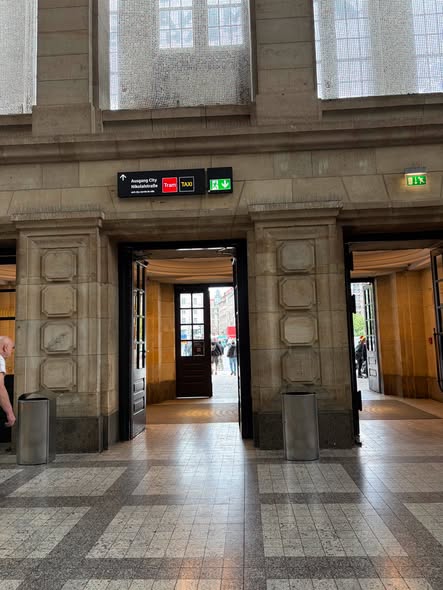
Leipzig is a city where past and present coexist. It’s a city where you can enjoy modern architecture, contemporary art, and cutting-edge technology. It’s also famous for the world’s largest domed zoo and football field. But my only reason for visiting this city is Bach’s music. And if I had to add something, I’d say it’s to experience Leipzig’s everyday life, its old streets, its food, and its beer. I’ll likely never experience the new Leipzig. Bachfest Leipzig 2026 is the ultimate purpose of my trip. The program includes 12 cantata concerts, two per day, an instrumental concert, and the Mass in B minor. I have plenty of time to enjoy exploring the city. My accommodation in which I stay this time is located on the former site of the “Zimmermann Café”, a place Bach frequented.
ーーーーーーーーーーーーーーーーー
Friday, June 12
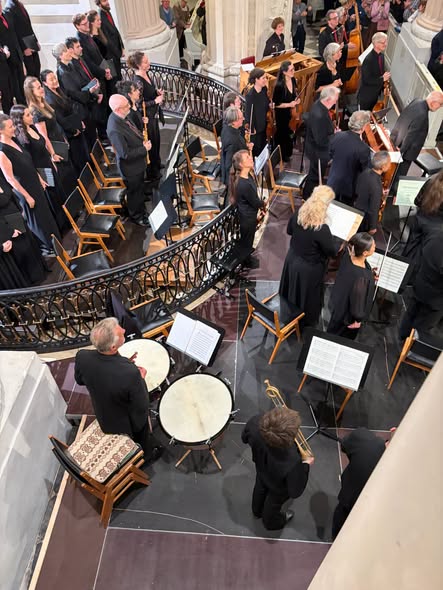
Amidst a light drizzle, the afternoon session featured a performance by the J. S. Bach Foundation (Chor und Orchester der J. S. Bach-Stiftung). The program consisted entirely of works showcasing the trumpet, though unfortunately, the players used trumpets (specifically, the type with extra vent holes). For the final chorale, they employed an inventive touch: during the fermatas, the organ and harpsichord took turns inserting improvised passages.
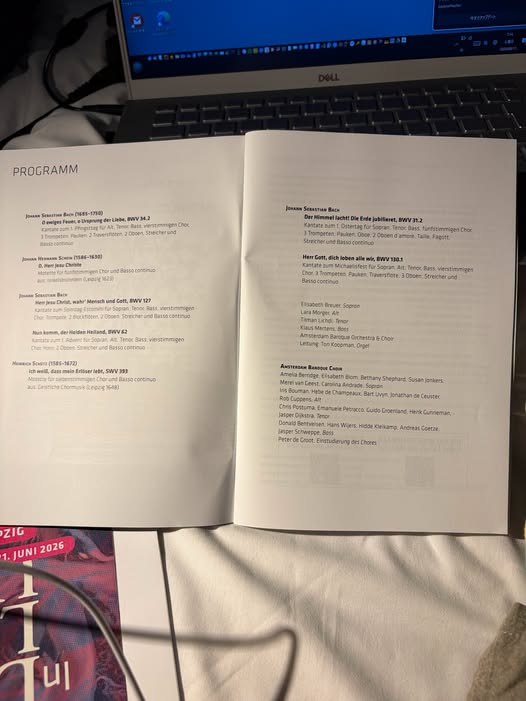
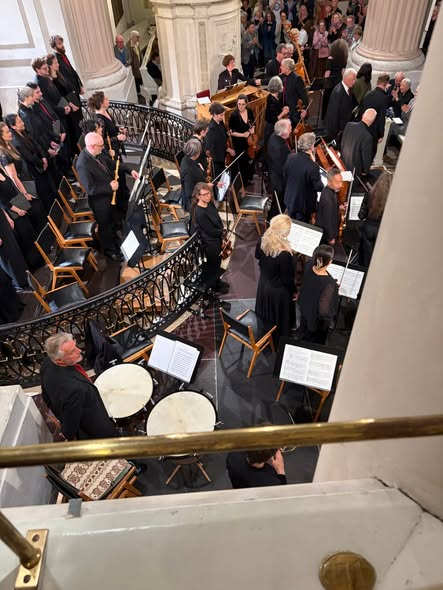
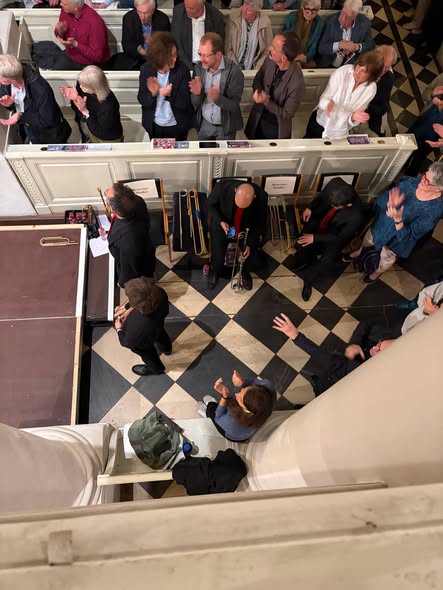
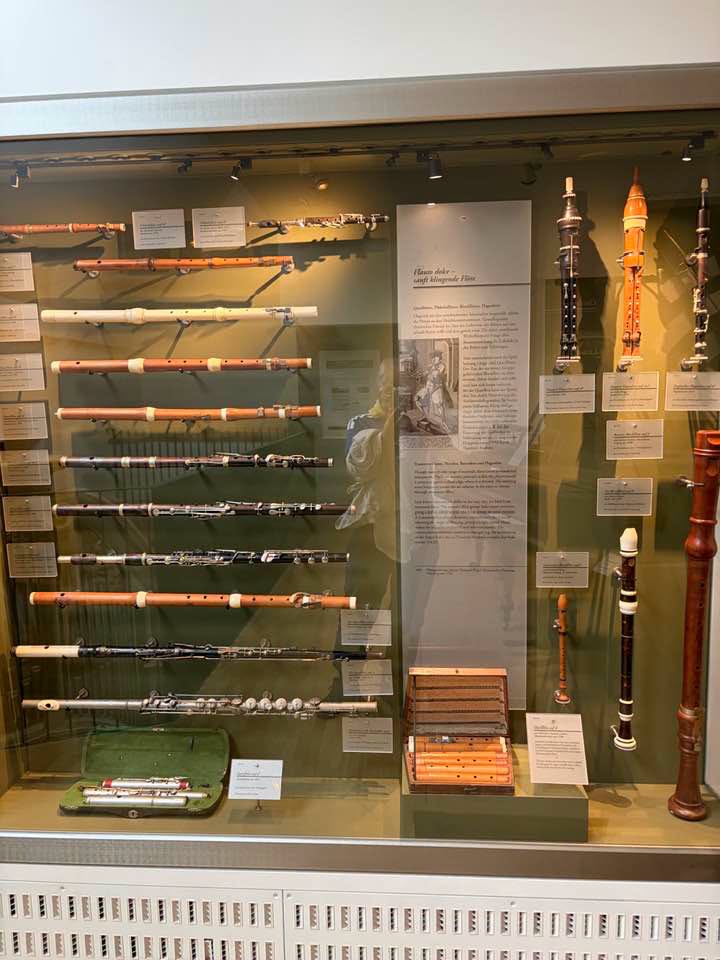
The evening performance by Koopman’s Amsterdam Baroque Orchestra & Choir also featured a collection of works highlighting the trumpet, interspersed with motets by Schein and Schütz. Many of the cantatas showcased anywhere from one to three trumpets. Even among just the eight pieces performed today, there were cantatas—specifically Nos. 31 and 131—that would easily merit a place in the top tier of the repertoire. I am particularly fond of the tenor aria in Cantata No. 131, which features a prominent traverso (baroque flute) part. Bach is truly formidable.
ーーーーーーーーーーーーーーーーー
Saturday, June 13
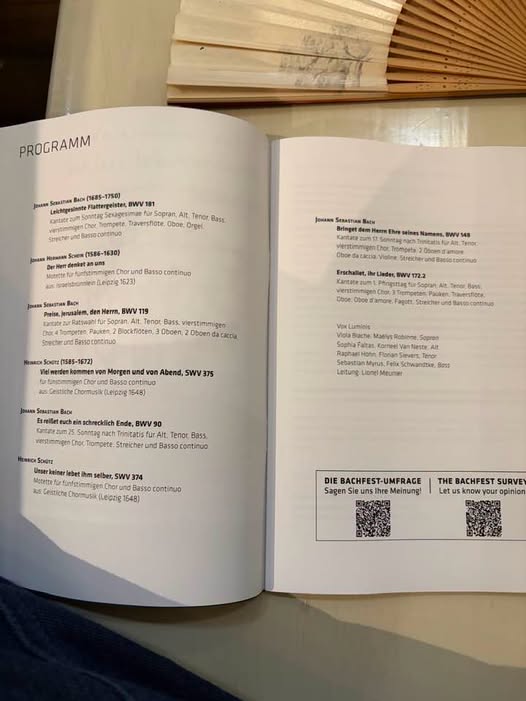
The afternoon performance took place at St. Nicholas Church, featuring the vocal ensemble Vox Luminis. They undertook an innovative approach, using motets by Schein and Schütz as an introduction that led seamlessly into a Bach cantata. It struck me that the group’s true merit shone brightest in the works of these composers—who predated Bach by roughly a century. For these pieces, performed with only basso continuo accompaniment, the choir stood in a circle; this meant that the singers in the front group had their backs to the audience. As expected, many of the Bach cantatas featured the trumpet.
Despite having traveled all the way to Germany, I had been met with a persistent, rainy-season-like drizzle; however, when I stepped outside after the concert, the skies had cleared and the temperature had risen. The church bells were just striking three o’clock.
The evening performance was held at St. Thomas Church, featuring Collegium Vocale Gent.
Tonight’s program included no works featuring trumpets or timpani. Perhaps it was just me, but the performance felt slightly underwhelming compared to the magnificent show Vox Luminis had put on earlier that day. I found myself wondering if the reason lay in the fact that the alto section consisted of countertenors.
ーーーーーーーーーーーーーーーーー
Sunday, June 14 Halle Sightseeing
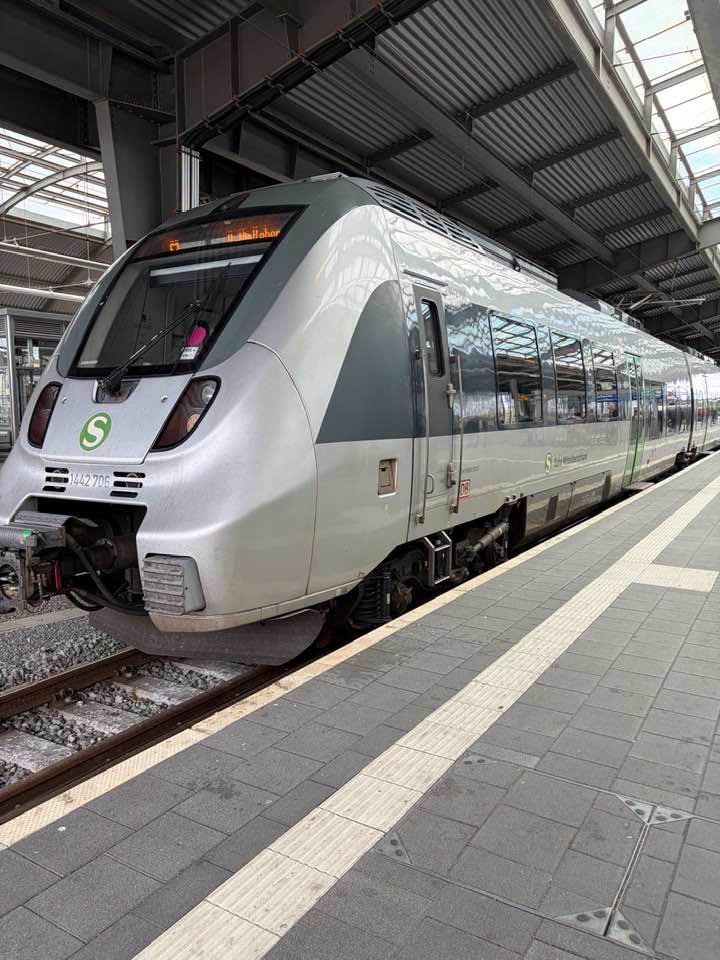
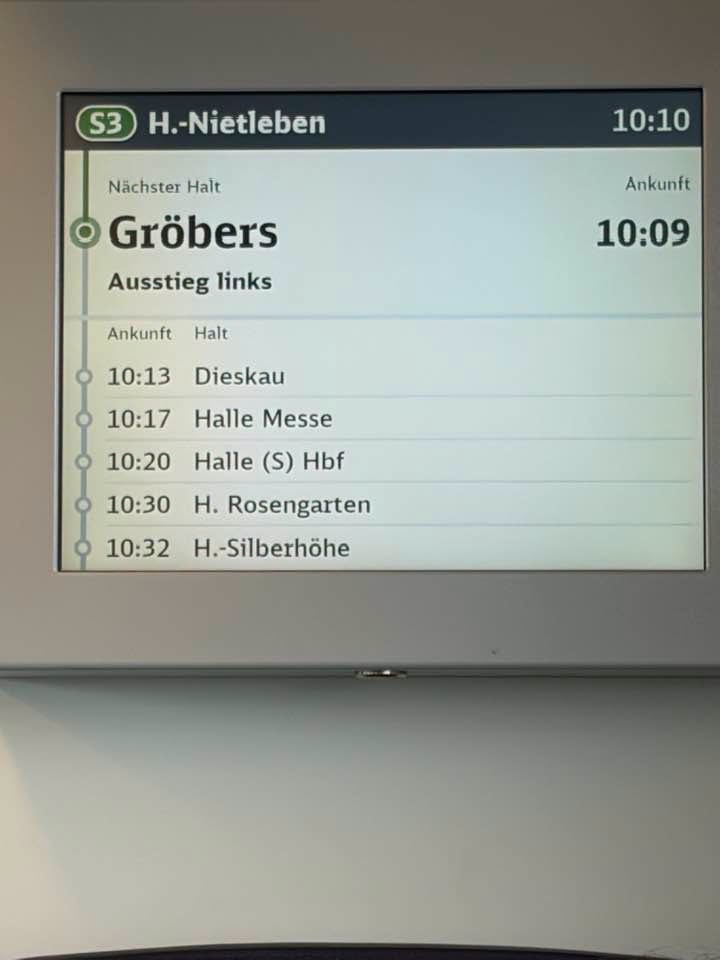
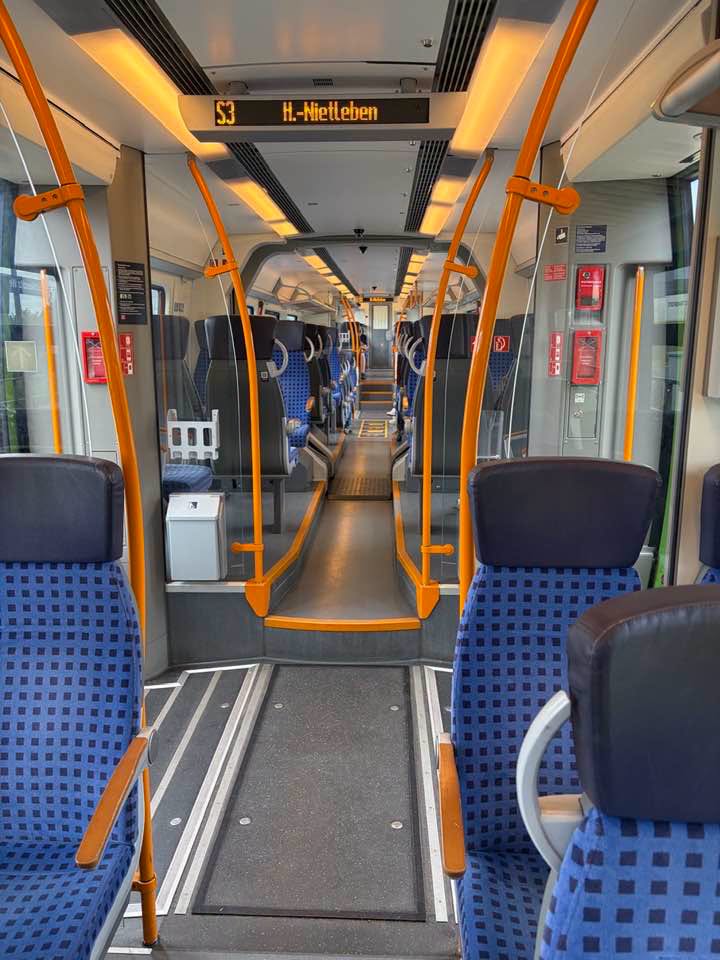
Since the cantata wasn’t until the evening, I took the S-Bahn to Halle today. The ride was comfortable; it seems you can even bring bicycles on board—something unthinkable in Tokyo or Fukuoka. It was cloudy, but the sun peeked through occasionally; the weather was decent enough. Ticket inspections in Germany seem to be random checks. Fare-dodging is technically possible, though I suppose hardly anyone actually does it.
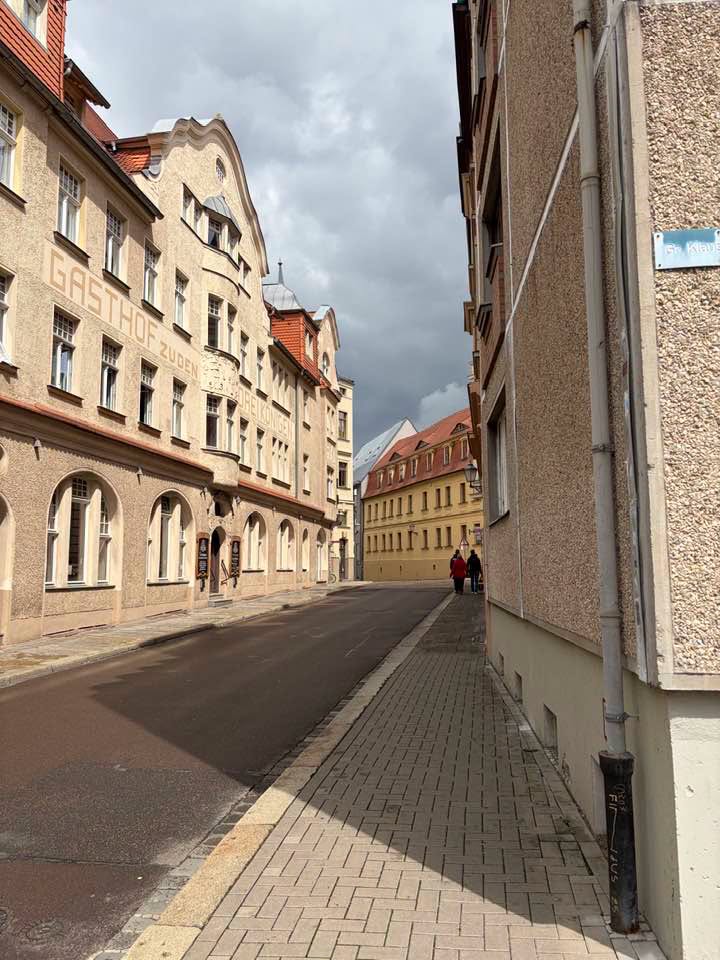
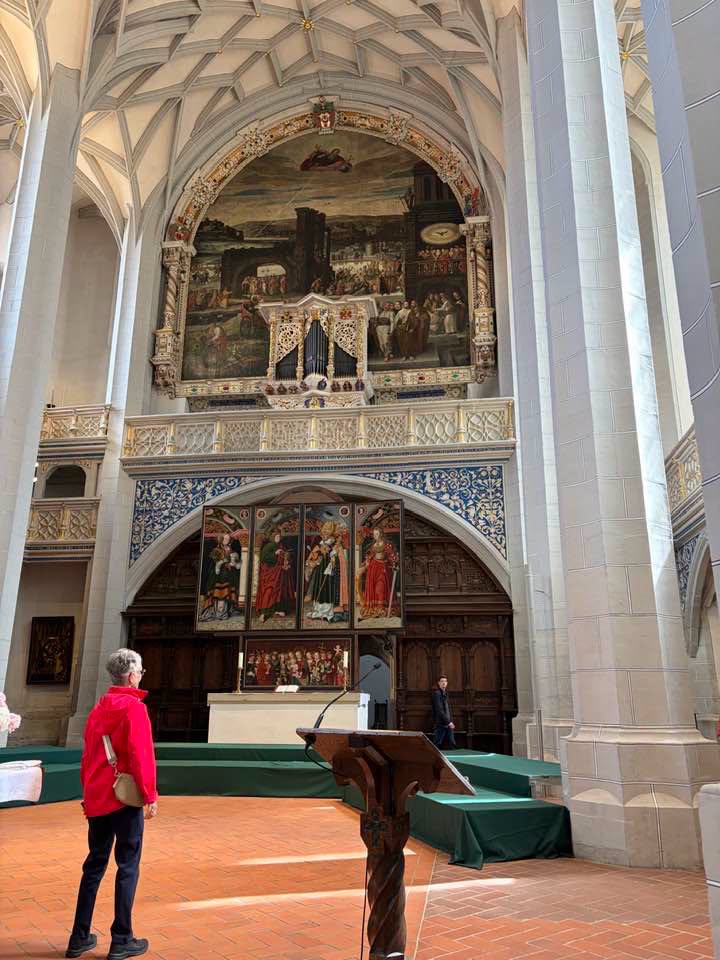
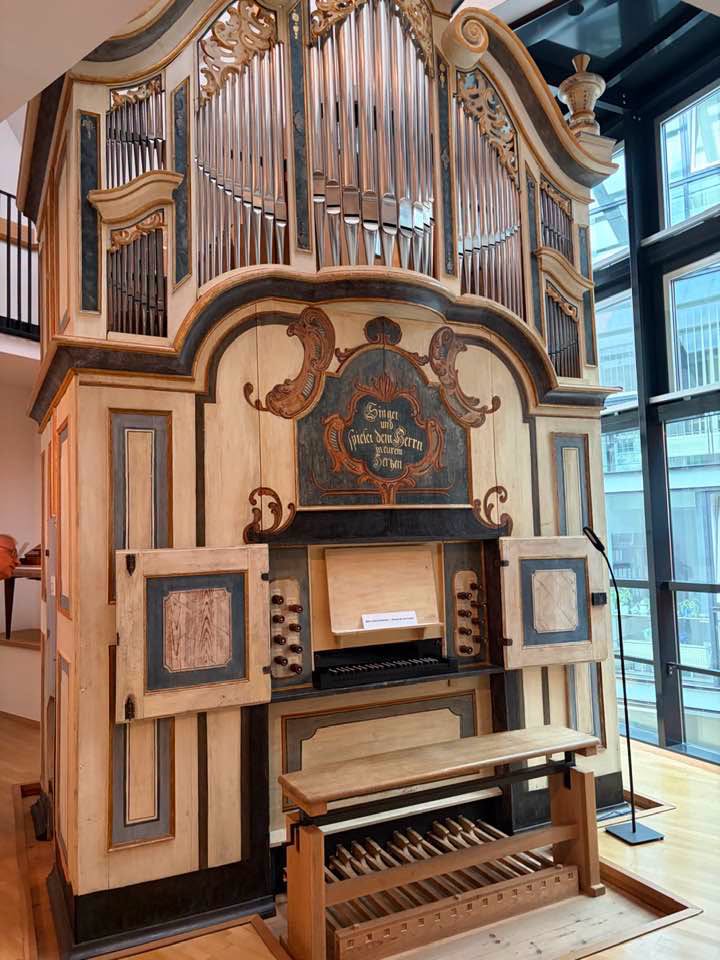
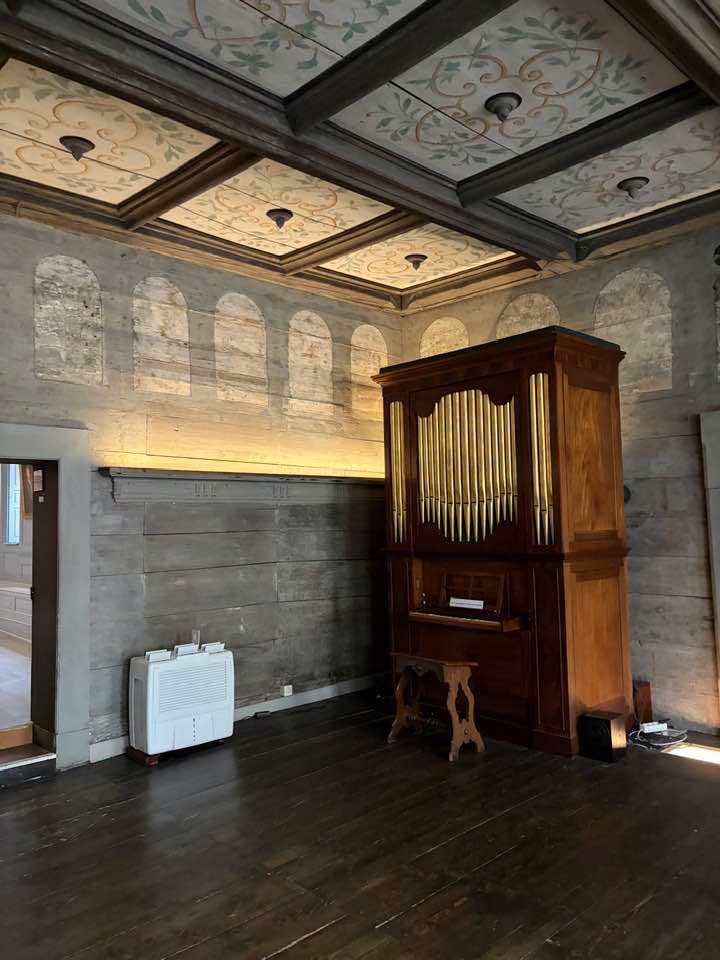
When I asked an elderly person for directions, they replied in German. I had dabbled in German once before but gave up because I found it too difficult. Fortunately, most young people speak English, so communication wasn’t an issue. A kind gentleman guided me (in German) and helped me find my way to the Marktkirche Unser Lieben Frauen. There was a lot of construction work along the way, and I got a little lost, but I managed to arrive—only to find the church had already closed for the day. To make matters worse, a light rain started to fall, so I took shelter at a nearby tram stop for a while. This is the church where Friedemann Bach once served as organist. After a short wait, for some reason the doors opened. It was a magnificent church. The organ Friedemann Bach played is still there, though it seems it can no longer be played; a newer organ stands on the opposite wall.
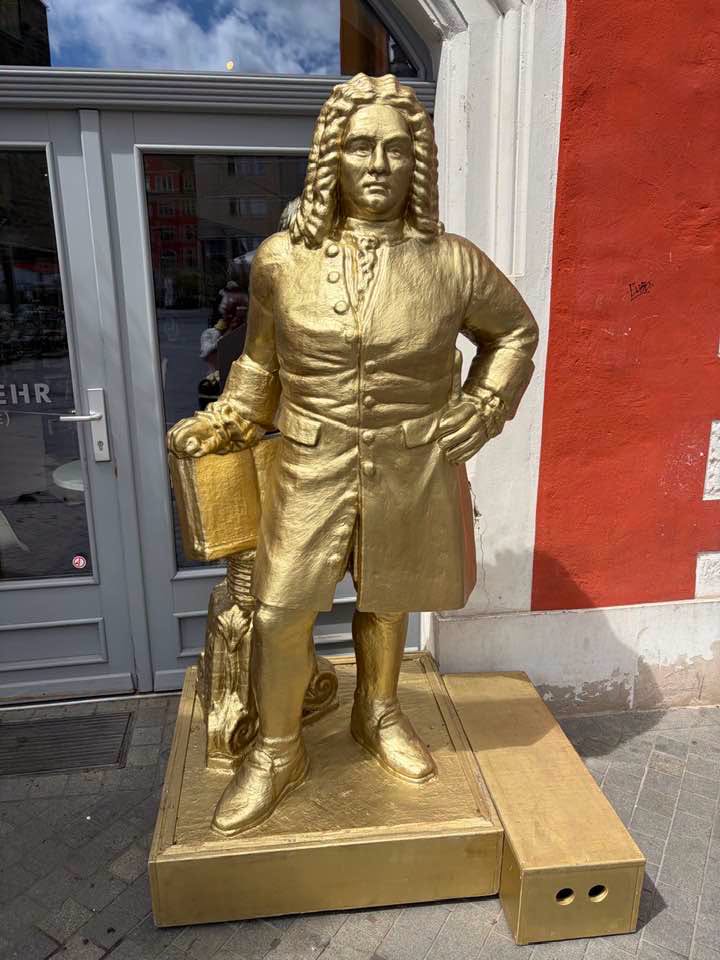
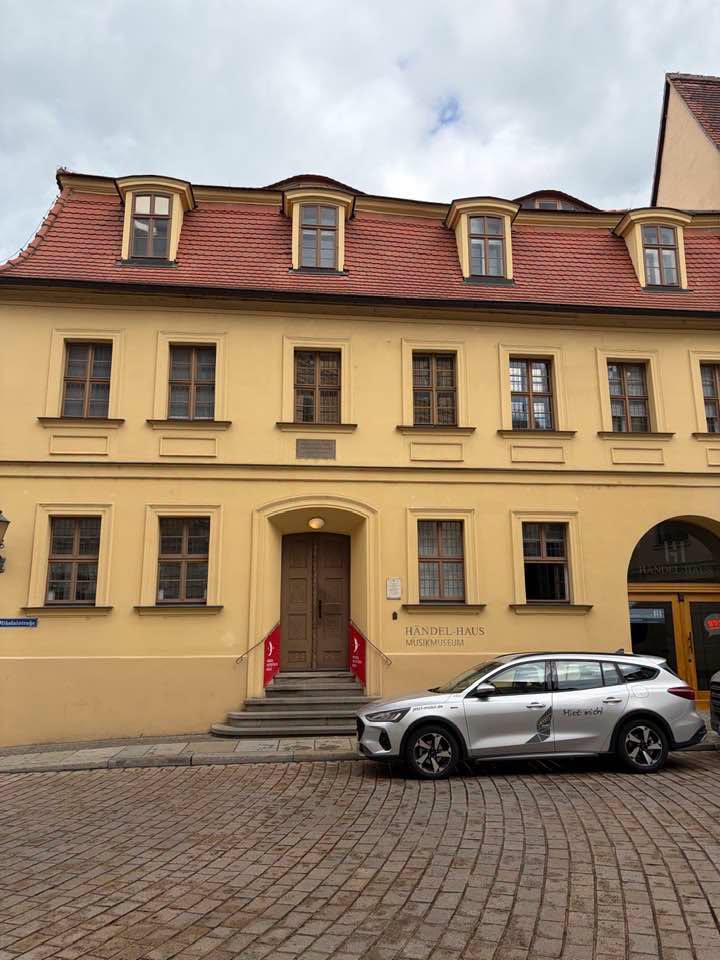
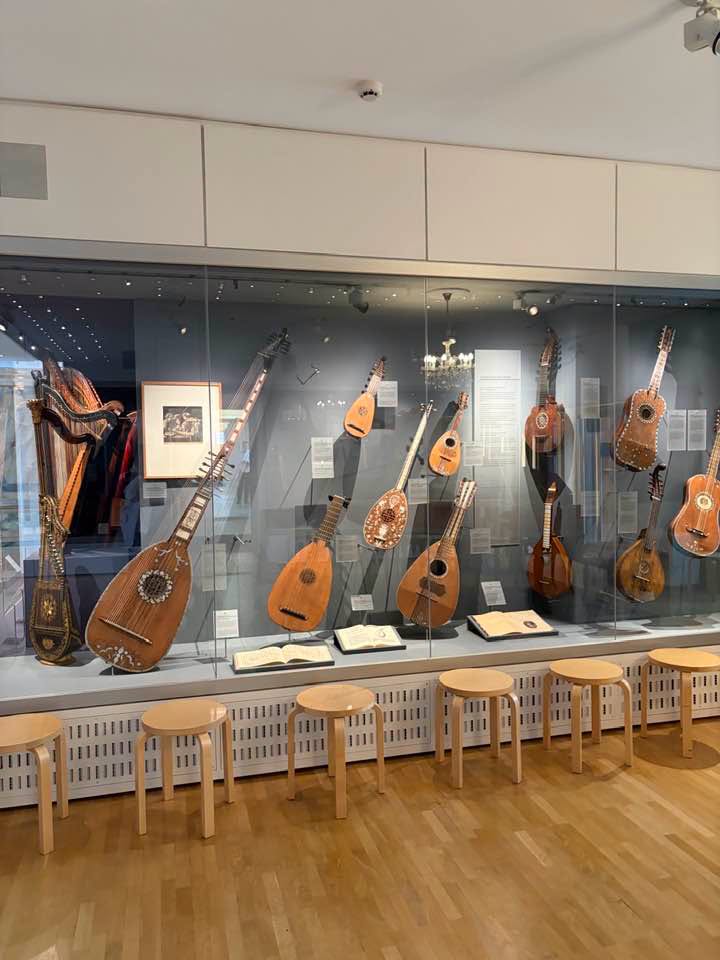
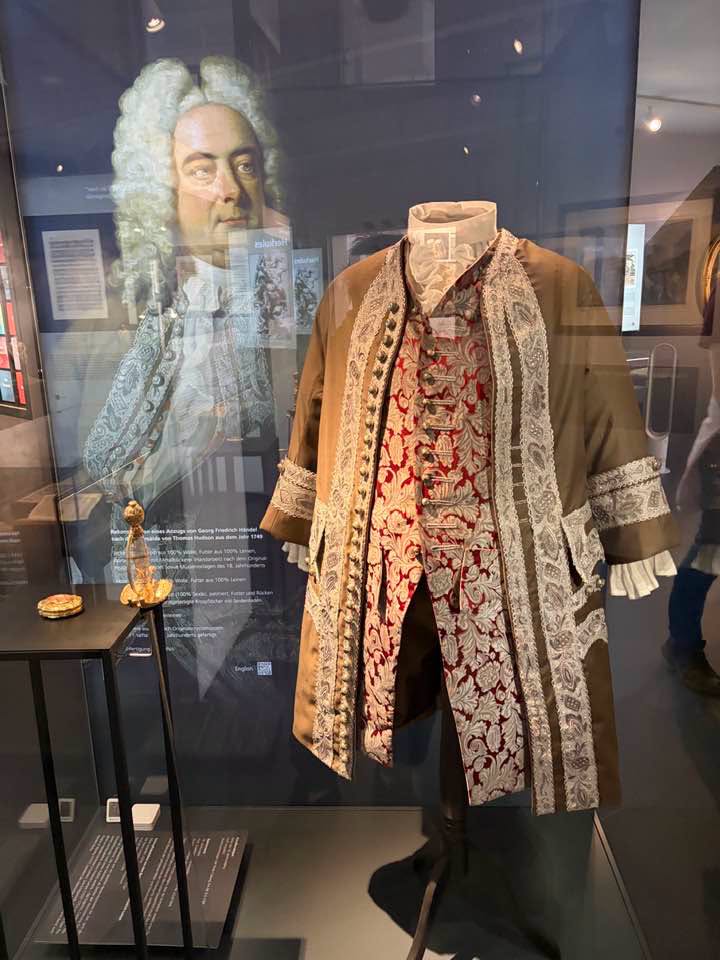
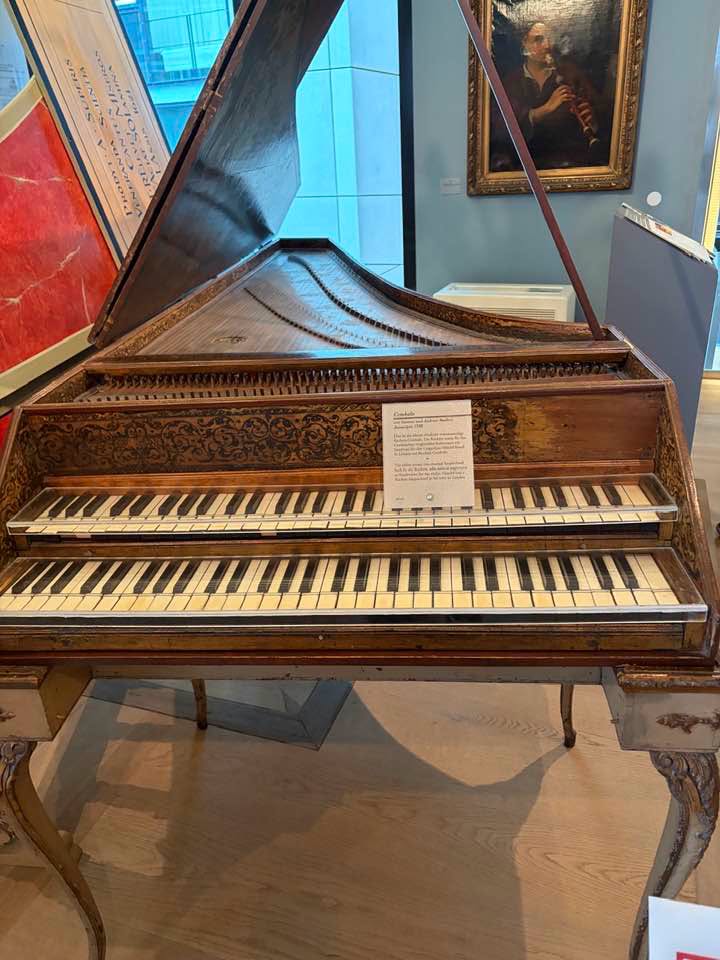
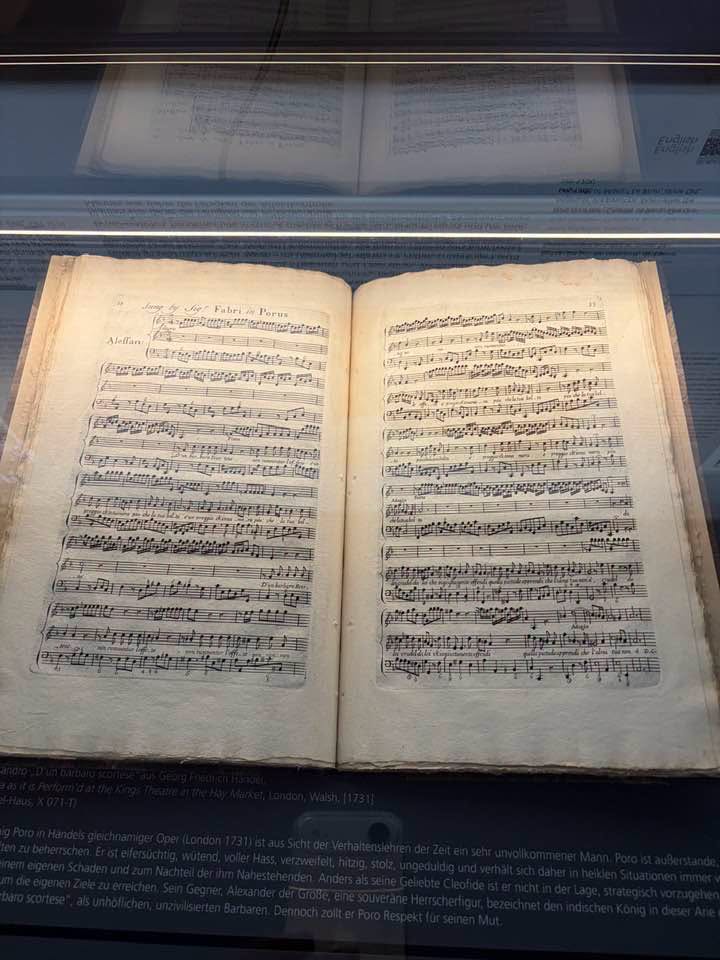
My next destination was the Handel House. I walked through a door with an automatic lock and found myself trapped inside! I had to show Google Translate on my phone through the glass to someone who happened to be there, and they let me out. It was a pretty nerve-wracking moment.
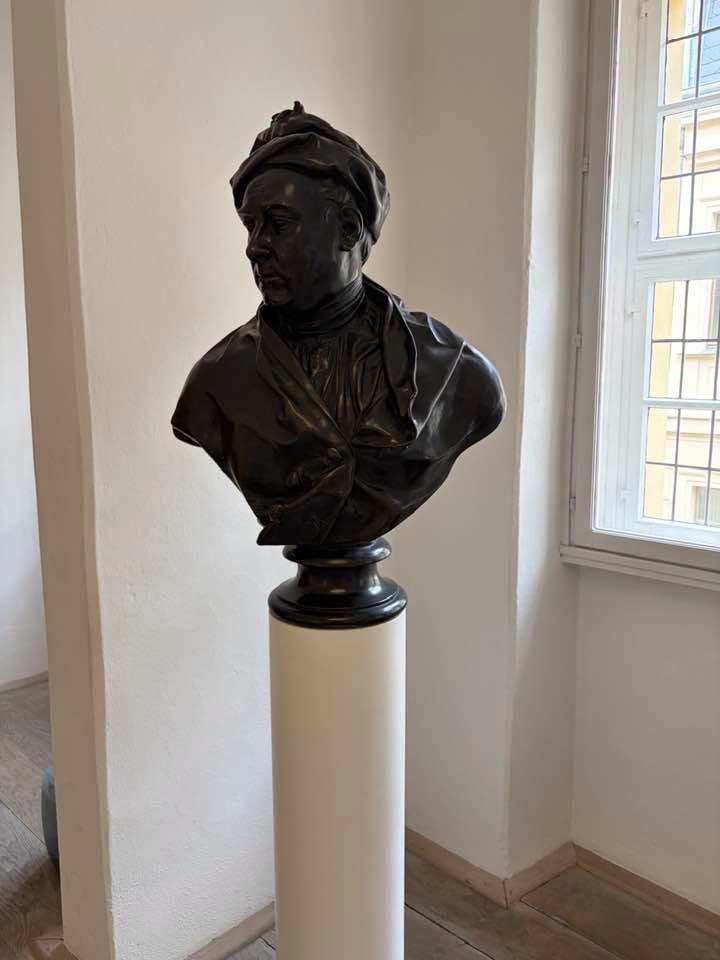
Next up was the Friedemann Bach House.
Unlike the Handel House, there wasn’t really anything to see there. When I stepped outside, I was caught in a sudden, torrential downpour. It was a miserable experience; I’ve never seen weather change so drastically. I took the tram back to Halle Station.
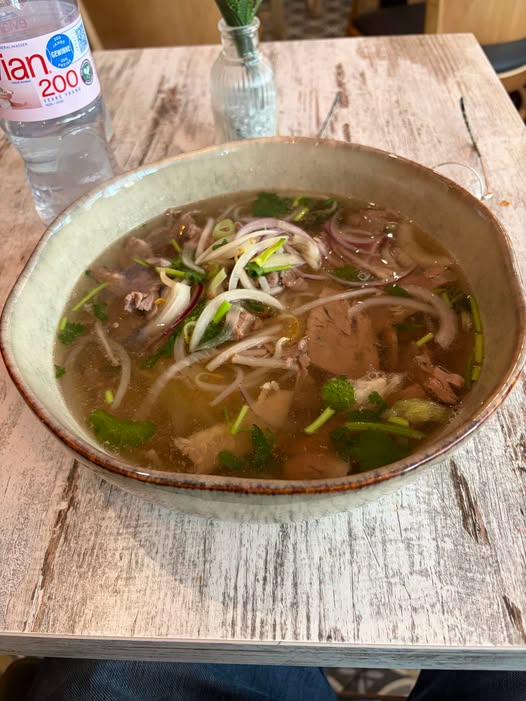
After returning to Leipzig, I had beef pho at a Vietnamese restaurant called “Hanoi(Hà Nội)”—the same kind of dish I often eat at “Saigon” in Tenjin. It was the first proper lunch I’d had since arriving in Germany. The former East German region accepted many immigrants from Vietnam in the 1980s. After German reunification, many of them opened restaurants in the citys of Germany, so there are many Vietnamese restaurants in Leipzig. I then headed back to the hostel to charge my phone and get ready for the cantata at 4:00 PM. All in all, it turned out to be a pretty good little excursion. Tonight, after the concert, I plan to watch the World Cup match against the Netherlands at a sports bar starting at 10:00.
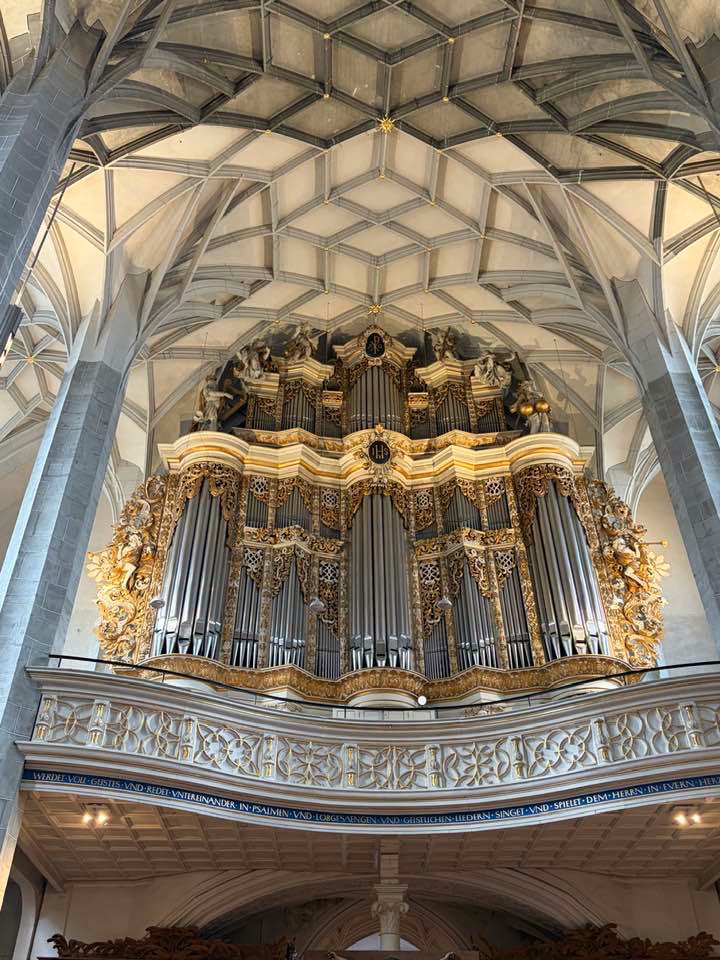
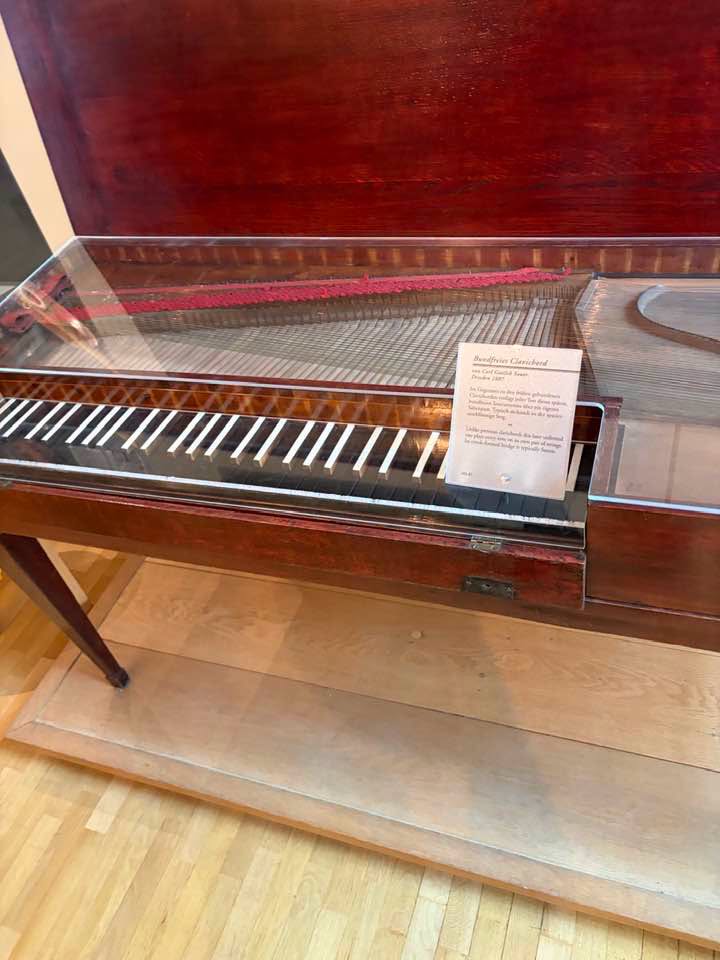
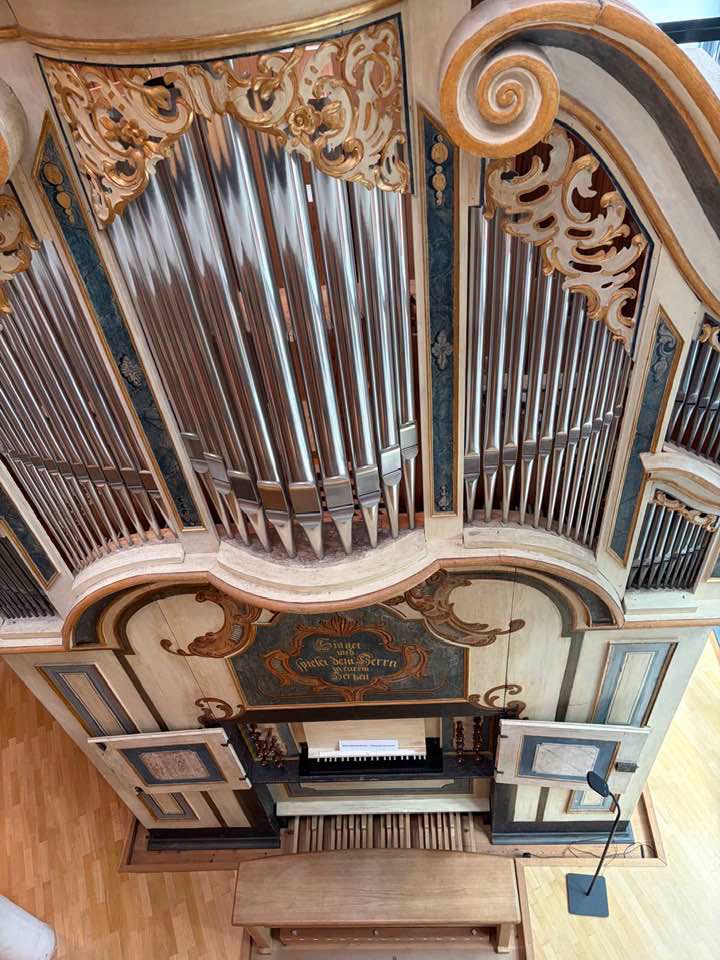
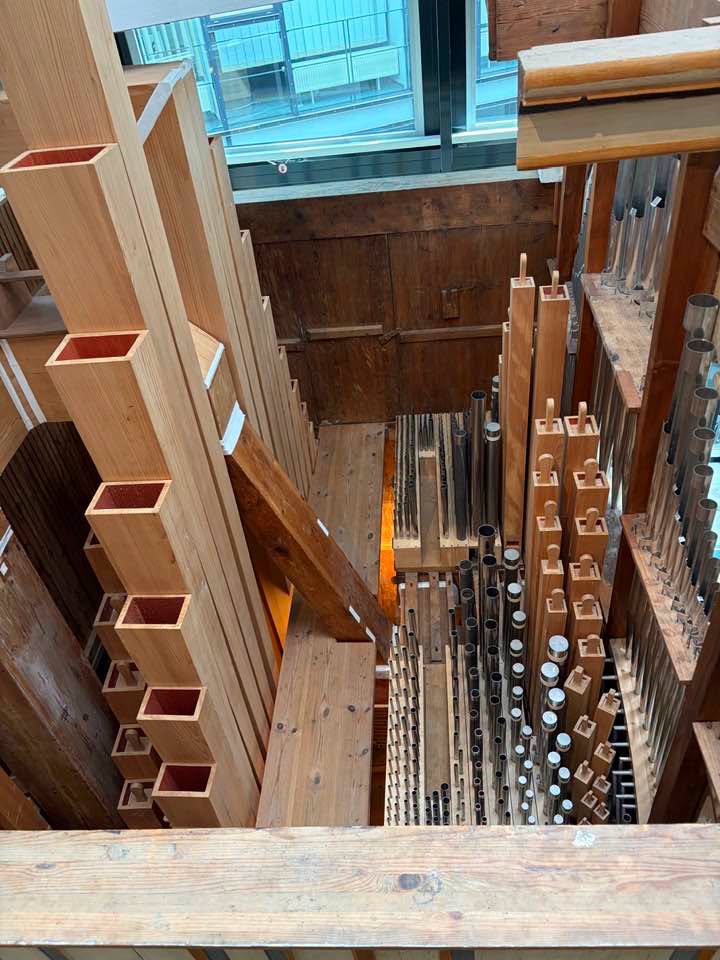
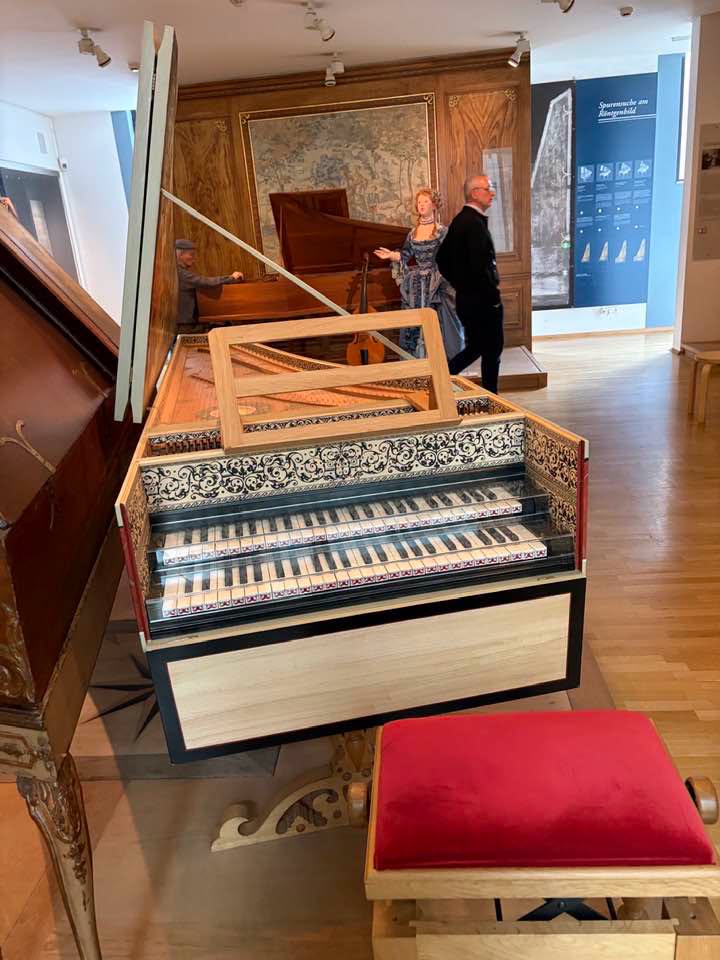
The organ played by Friedemann Bach.
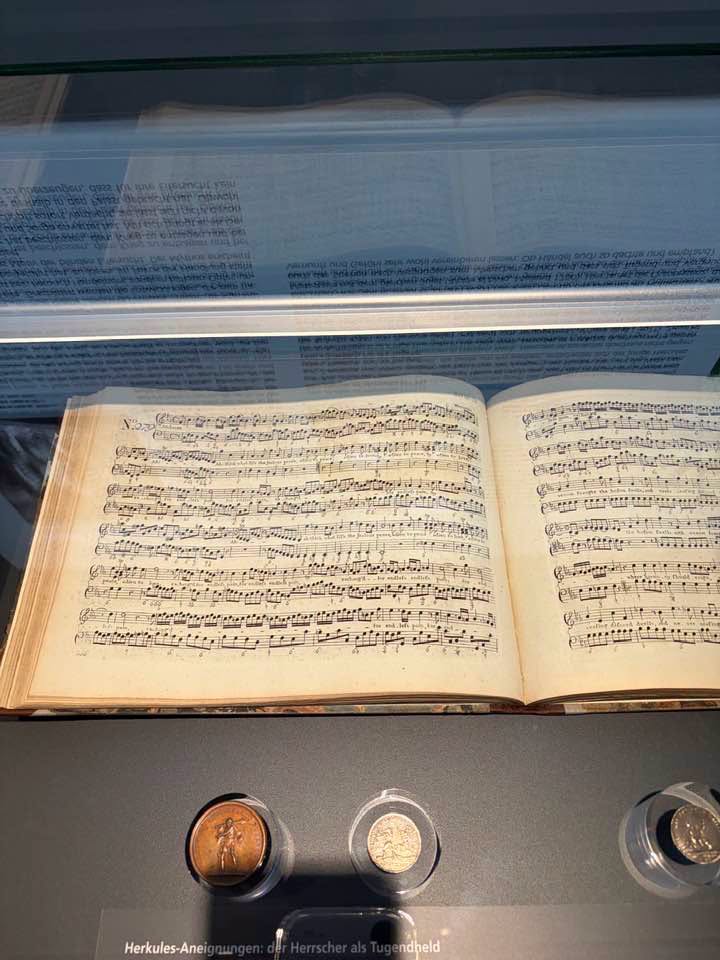
Vietnamese restaurant “Hanoi(Hà Nội)”.
ーーーーーーーーーーーーーーーーー
Sunday, June 14
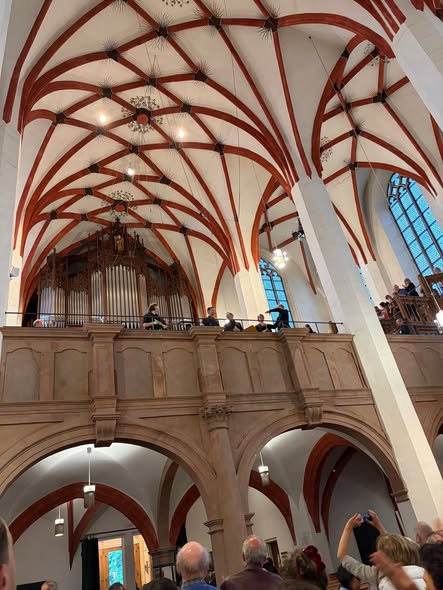
Next came the afternoon session. Performed by the Chor und Orchester der J. S. Bach-Stiftung, the program began with Cantata No. 143. Interspersed with an organ chorale prelude and an unaccompanied soprano *cantus firmus* on a chorale, the concert continued with No. 54 (an alto solo cantata) and No. 71, followed by the familiar No. 182. It concluded with the renowned No. 69. Since the alto part in No. 54 lies in a low register, it seemed quite demanding for the female alto soloist. However, in the aria “Leget euch” from No. 182—also an alto piece—her voice projected beautifully. The obbligato instrument used was a recorder rather than the usual traverso. At the end of the concert, there was a surprise: the entire audience joined in singing the chorale “Was Gott thut, das ist wohlgethan” (the closing chorale of Cantata No. 69). Upon leaving the church, I found it raining again, and the temperature seemed to have dropped significantly.
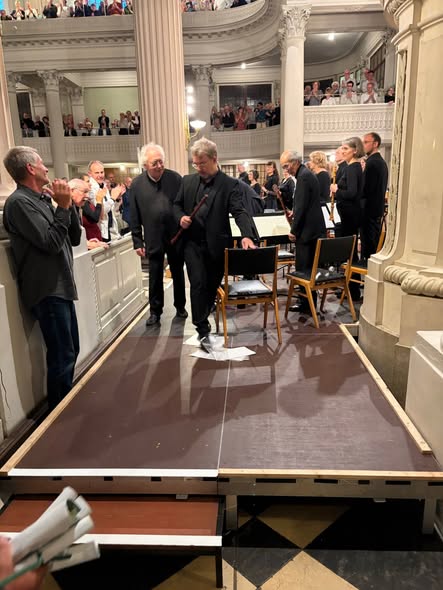
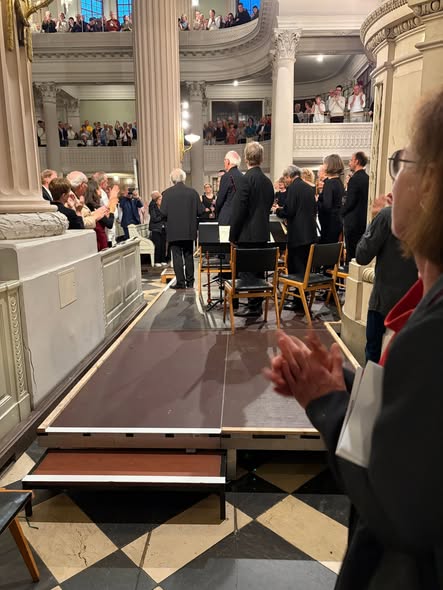
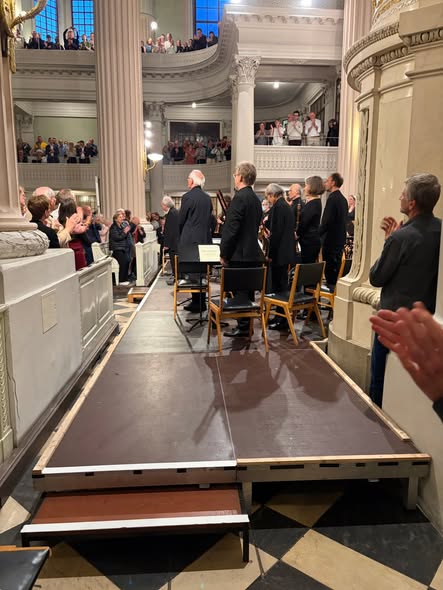
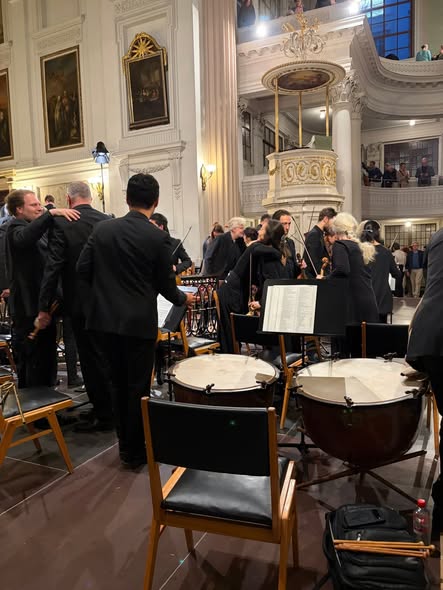
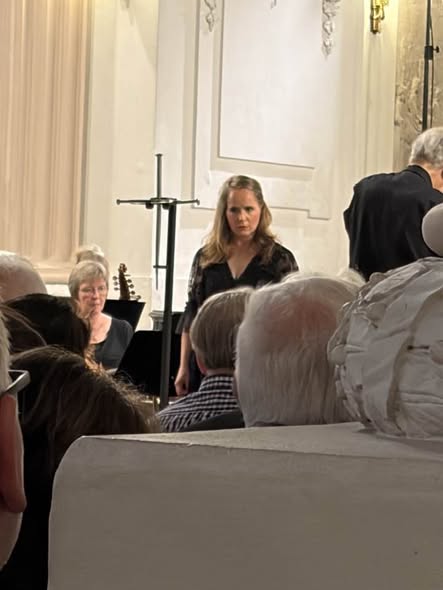
The evening session featured Collegium Vocale Gent. At last, the program began to include some of my favorite cantatas: No. 8 and No. 45—both featuring prominent traverso parts—as well as No. 26. No. 8 was truly the highlight of the day. For the evening concert, I was seated right next to the orchestra on the right, allowing me a close-up view of the performers—though, unfortunately, I could only see the traverso player from behind. For me, this was the best program I had heard so far. I am looking forward to the top-ranked entries coming up. Mr. Herreweghe walked right past me; naturally, I couldn’t take a photo.
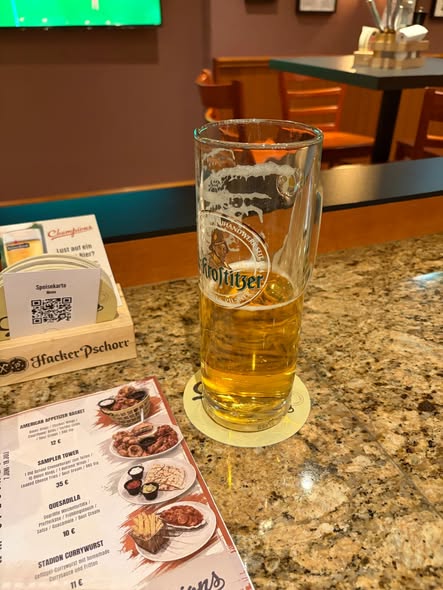
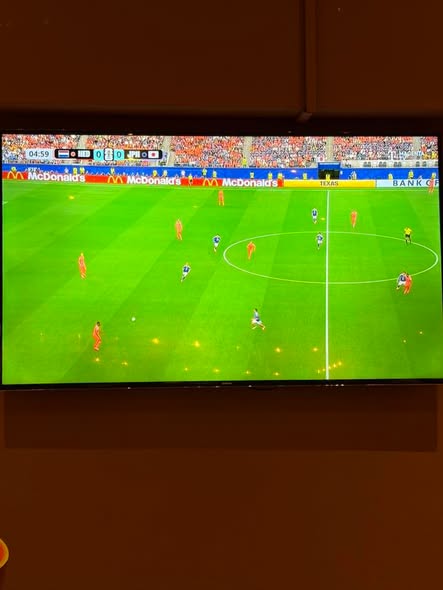
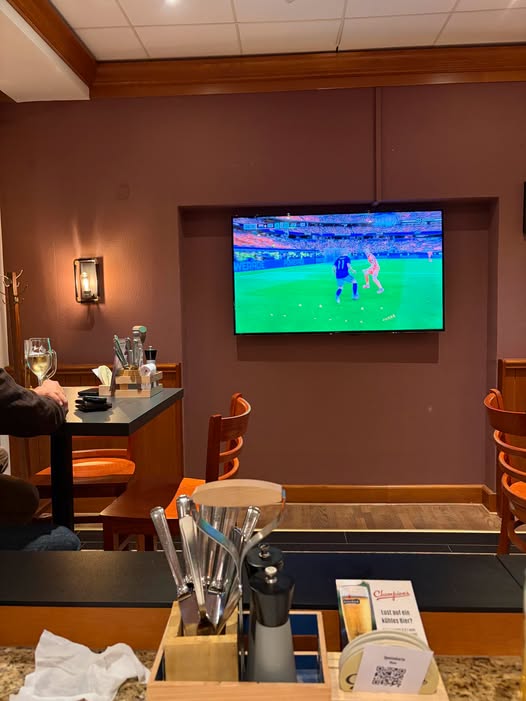
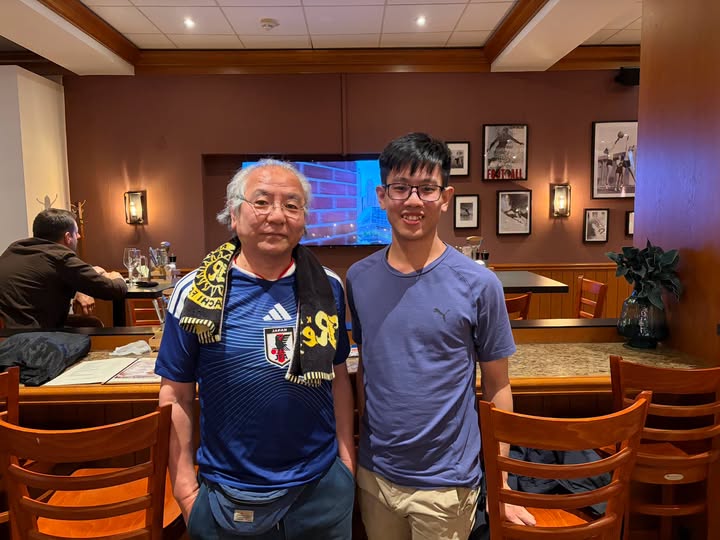
With a Malaysian student from Leipzig whom I met at a sports bar. I also met an Italian supporter who was wearing a Japanese jersey.
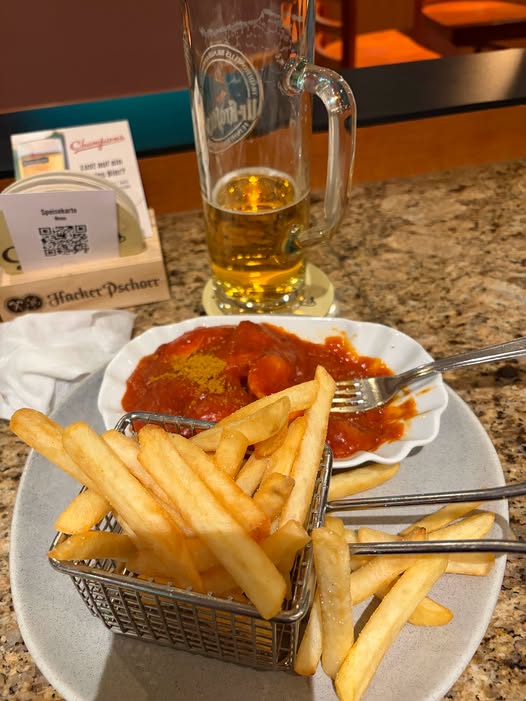
It’s supposed to be a curry-flavored sausage, but it just tastes like ketchup.
ーーーーーーーーーーーーーーーーー
About a shower room
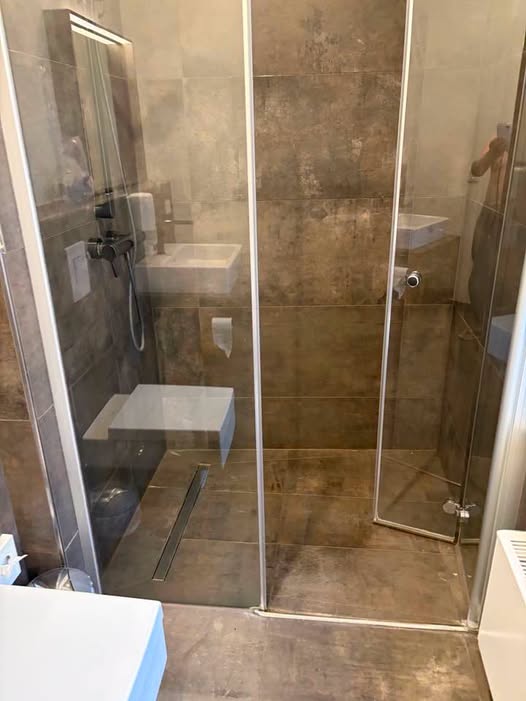
In a sense, one could say that modern Japan developed by taking Germany as its model. Yet, there are things here that I simply cannot fathom. The hostel where I am staying is—well, a “budget” sort of place—but the shower room is incredibly inconvenient to use. For one thing, there is no changing area. It lacks the kind of basket for undressing that you invariably find in Japan. It isn’t just that, though; there is simply nowhere to hang or set down the clothes you’ve taken off or the ones you intend to put on. All there is, is the washbasin area. While the absence of a “Washlet” is something I can perhaps overlook (though it certainly counts as a significant minus), I find it completely incomprehensible that the shower room floor is at the same level as the toilet floor. The toilet floor ends up getting soaked. It is just like in India. It seems best to consider Japan the exception in this regard. Incidentally, the place where I am staying stands on the former site of “Café Zimmermann”—the very establishment that served as the setting for the famous “Coffee Cantata”. It is a fantastic location, situated just a five-minute walk from both St. Thomas Church and St. Nicholas Church.

ーーーーーーーーーーーーーーーーー
Monday, June 15
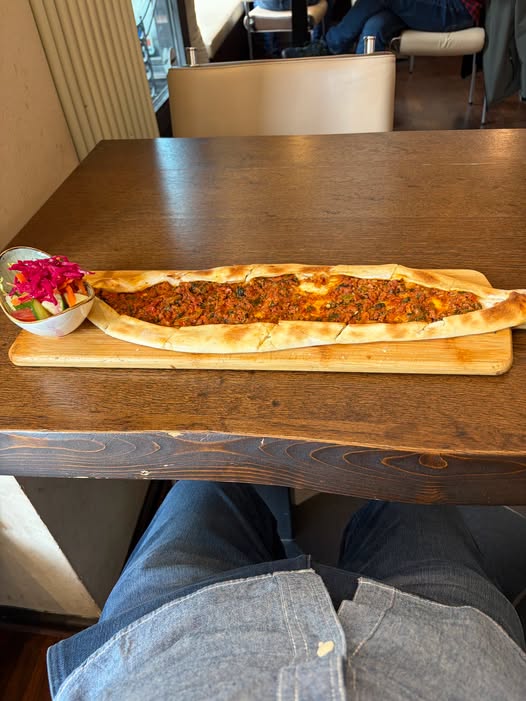
This morning, I took the tram from the Goerdelerring tram stop to visit the village of Adler-Kleinzschocher. This is the town where Bach’s “Peasant Cantata BWV 212”, composed at the request of Picander, a tax collector who was also a friend of Bach and a librettist for his cantatas, was performed. After returning to Leipzig, we had lunch at a Turkish restaurant, “Schiller Restaurant & Cafe GmbH”.
The Turkish restaurant “Schiller”. I don’t know what it was called, but it was delicious. It was like a Turkish pizza without cheese.
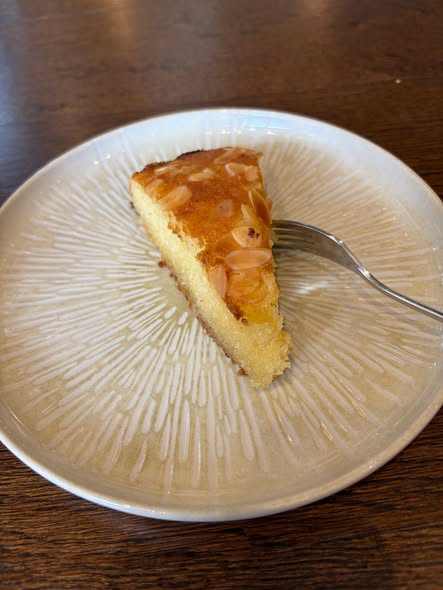
This cake was a winner.
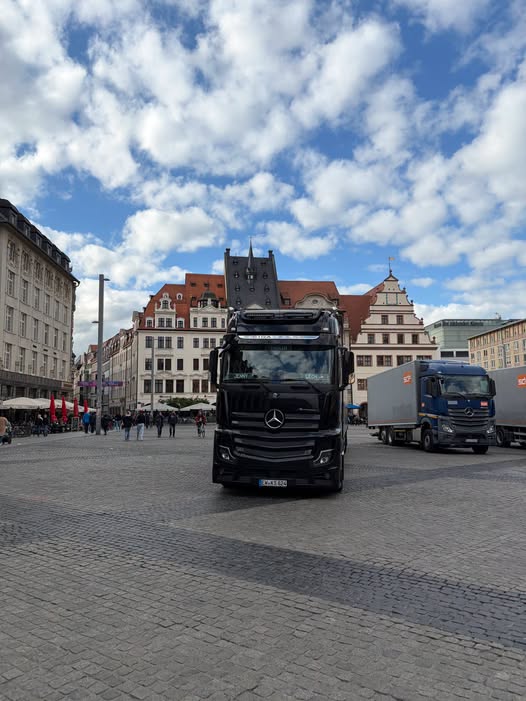
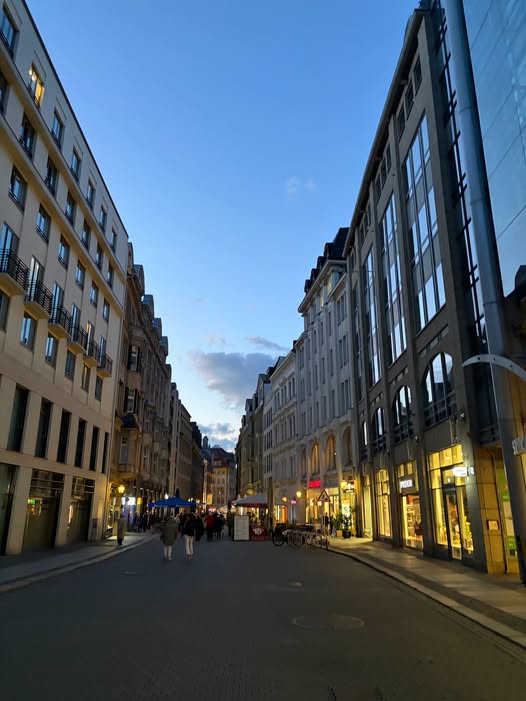
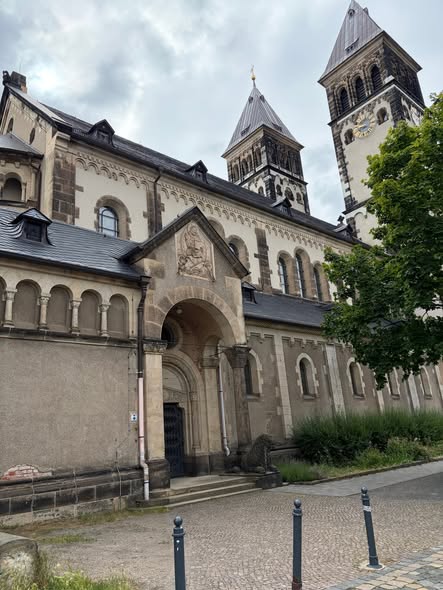
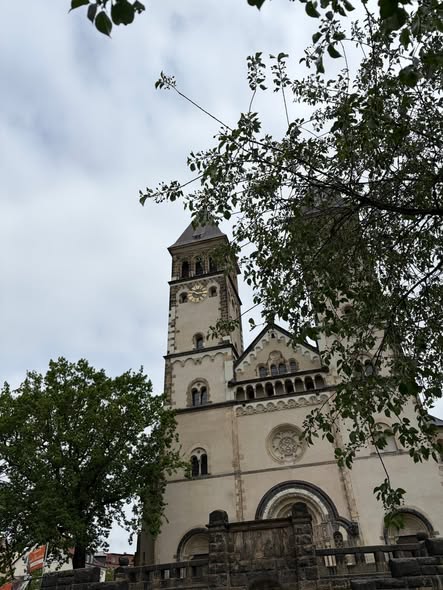
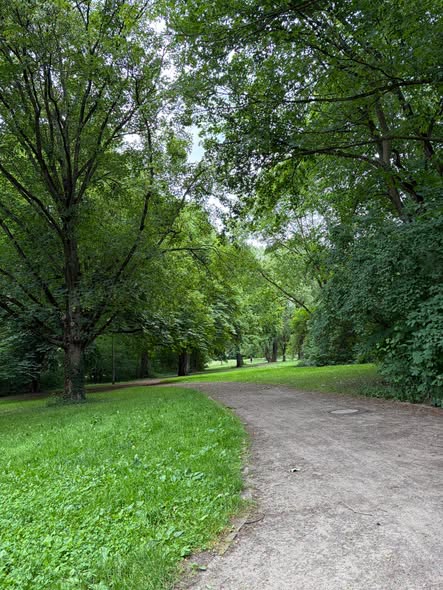
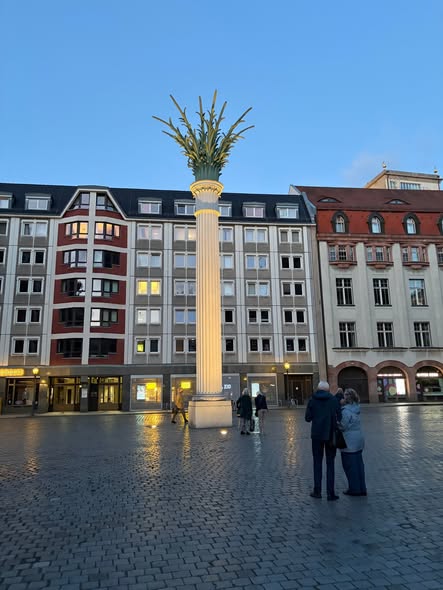
From the Marketplace to St. Nicholas Church.
ーーーーーーーーーーーーーーーーー
Monday, June 15
It was a cold morning, but I did a fair amount of walking in the village of Kleinzschocher. I had hoped it would remedy my lack of exercise, but my shoulders remain stiff and my legs ache just the same.
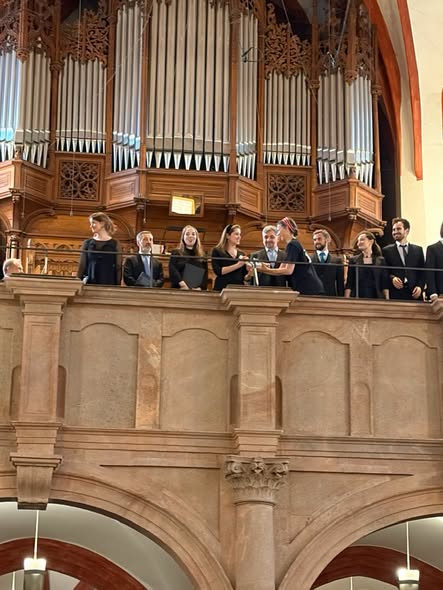
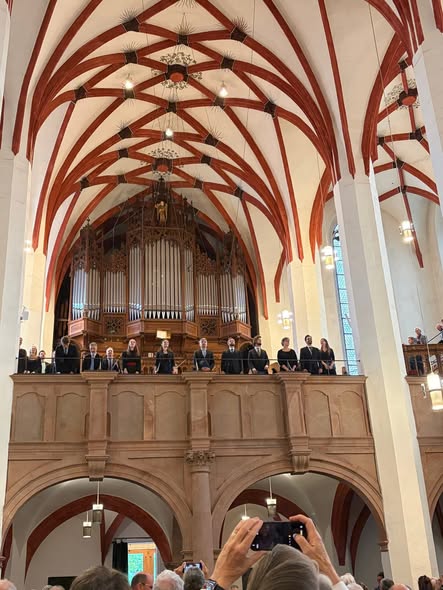
The afternoon concert featured Vox Luminis, who had already given a magnificent performance on the 13th. True to form, the program interspersed motets by Schütz and Schein among the cantatas. Today’s lineup consisted of Cantatas Nos. 150, 110, 170, and 70. The austere, archaic-sounding No. 150 dates from the Arnstadt period; its music seems to pulse with the very blood of Schütz. The second piece offered a striking contrast, being a celebratory cantata. The alto aria, accompanied by an oboe d’amore, was deeply moving—enough to bring tears to one’s eyes. The third piece was performed on the gallery level at the north end of the church, where the Romantic-style organ is situated. It is a solo cantata for alto voice. The aria “Wie jammern mich doch die verkehrten Herzen”—accompanied by organ obbligato, violin, and viola (playing the basset line)—was exquisitely beautiful. The final work was a cantata originally composed during the Weimar period and later revised in Leipzig; it is a grand-scale piece divided into two parts.
The evening concert was performed
by the Gaechinger Cantorey. The program included Cantatas Nos. 63, 137, 190, and 29, again interspersed with works by Schein and Hammerschmidt. As much of the opening chorus of Cantata No. 190 is lost, a reconstructed version was used for tonight’s performance. All the works were large-scale compositions featuring three or four trumpets and timpani. This was my first time seeing the Gaechinger Cantorey perform, and I found them to be a solid, reliable ensemble. The soloists were also impressive.
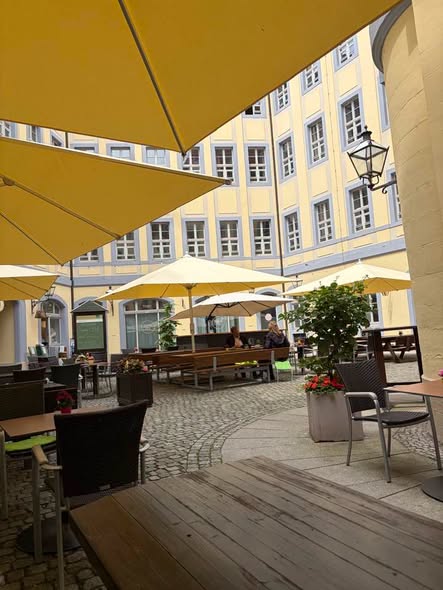
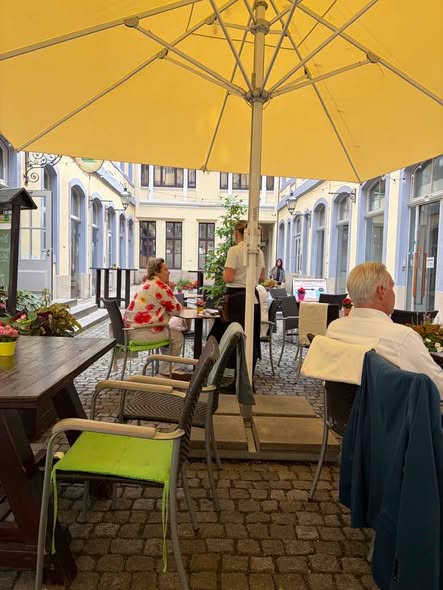
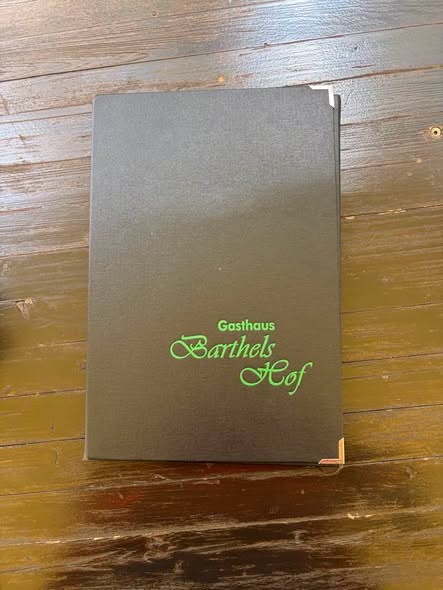
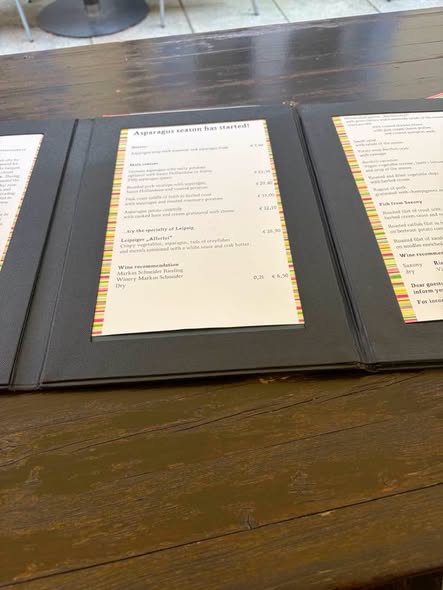
Gasthaus Barthels Hof. A long-established restaurant that Bach himself likely frequented.
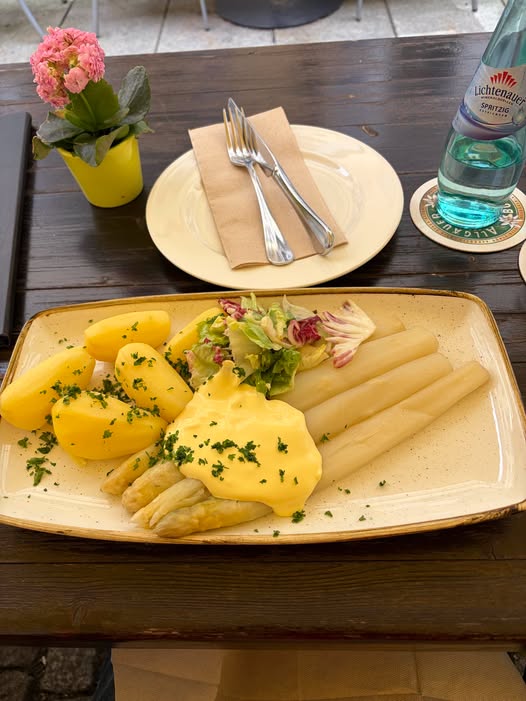
Market.
ーーーーーーーーーーーーーーーーー
Monday, June 16
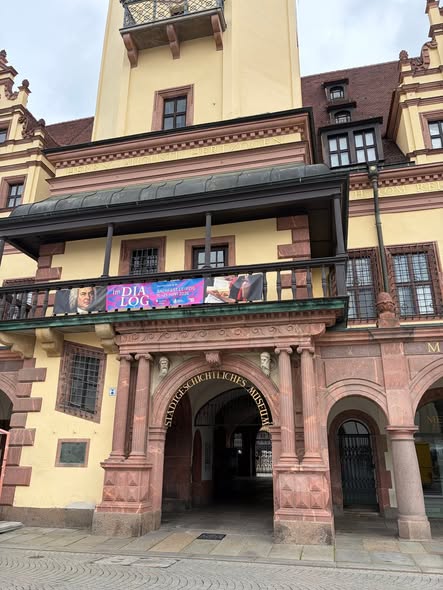
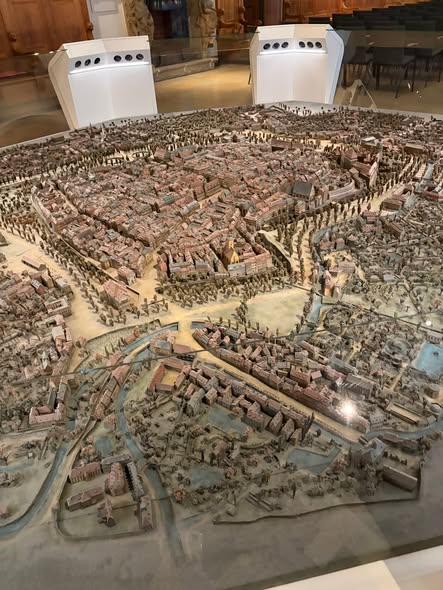
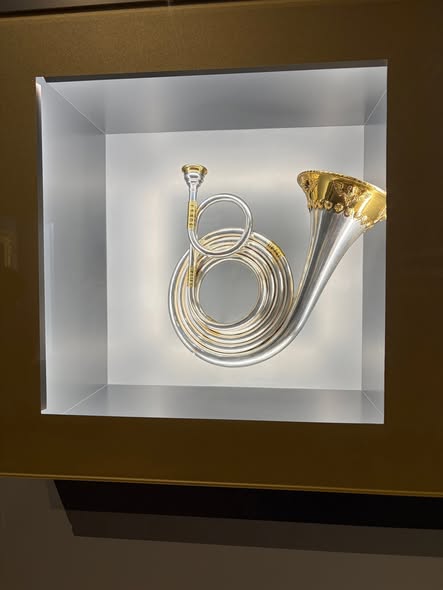
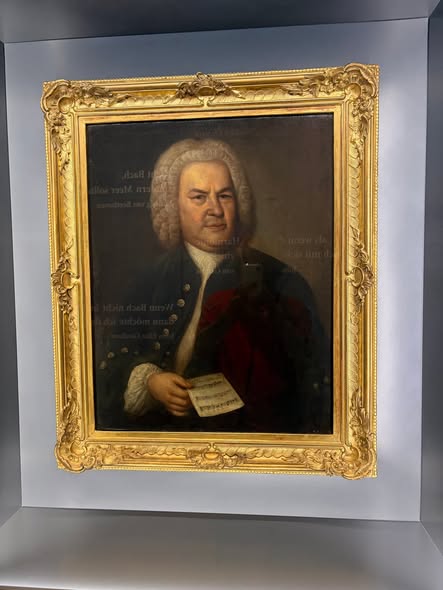
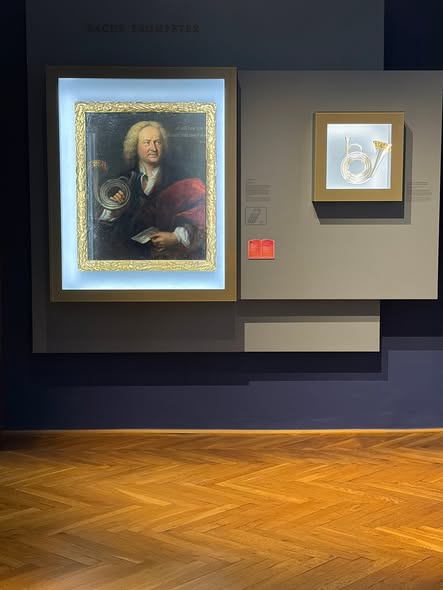
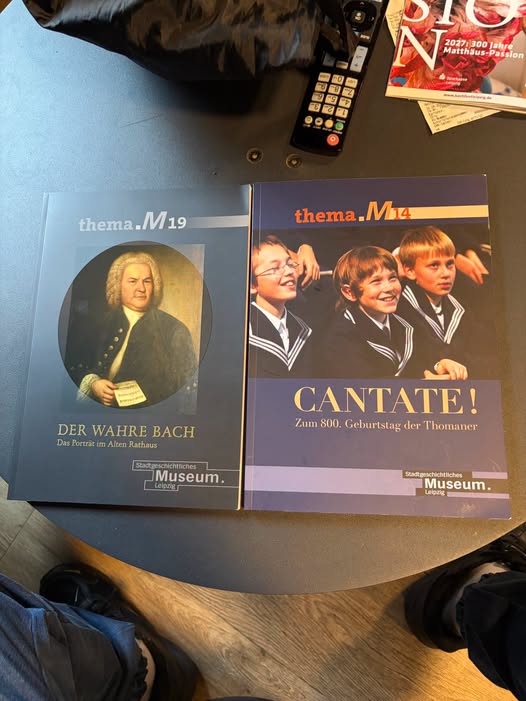
Visiting the Leipzig City History Museum (Old City Hall) to see a model of the city as it was at the time (pre-war).
The afternoon session featured the Gaechinger Cantorey, continuing from the previous evening. But—would you believe it?—I had completely misread the schedule! As a result, I missed the first three pieces: Cantata No. 78, the Schütz work, and Cantata No. 61. These were all favorites of mine, too… However, I did manage to arrive in time for Cantata No. 51. I had simply assumed the start time was 4:00 PM, just like the day before; I only realized my mistake while touring the Old Town Hall. The final piece, Cantata No. 80—Luther’s “A Mighty Fortress Is Our God” (Ein feste Burg ist unser Gott)—was magnificent! The program really felt like it was hitting its stride. As for the soprano aria “Komm in mein Herzenshaus”, I am very familiar with the earnest rendition by Wilhelm Wiedl of the Tölzer Knabenchor. While I fully acknowledge that adult female sopranos are technically superior, I personally prefer the boy soprano for that unique, innocent purity.
The evening session featured The Constellation Choir & Orchestra—and the long-awaited appearance of John Eliot Gardiner. Thirty minutes before the concert began, a sudden, torrential downpour struck. With thunder rumbling, it was quite a commotion. The rain cleared quickly enough for me to reach the church, but a woman standing right in front of my seat made it difficult for me to sit down. When I finally did take my seat, I fanned myself because it was a bit warm—only to have that same woman complain about it. Mind you, the concert hadn’t even started yet. After the opening Praetorius piece, she turned around to complain to two gentlemen behind her about their chatting. It hadn’t bothered me in the slightest… but I realized then, “Ah, so *that* kind of woman is she”.
We have now reached the stage where the cantatas are ranked from 12th to 9th place. Tomorrow, the “Best 8” will finally be announced. Today’s entries are Nos. 1, 56, 6, and 19. The final one is a festive cantata featuring three trumpets and timpani. If I were to hazard a guess, I’d say “Wachet auf, ruft uns die Stimme” is likely the one that will take first place. I wonder where my personal favorite, No. 84, ranks?
One more thing: I thought the inclusion of a theorbo in this group created a really nice atmosphere. Some people argue that instruments from the lute family aren’t necessary, but I don’t share that view.
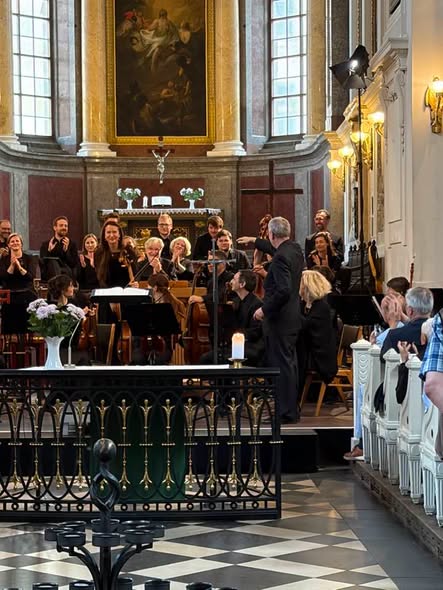
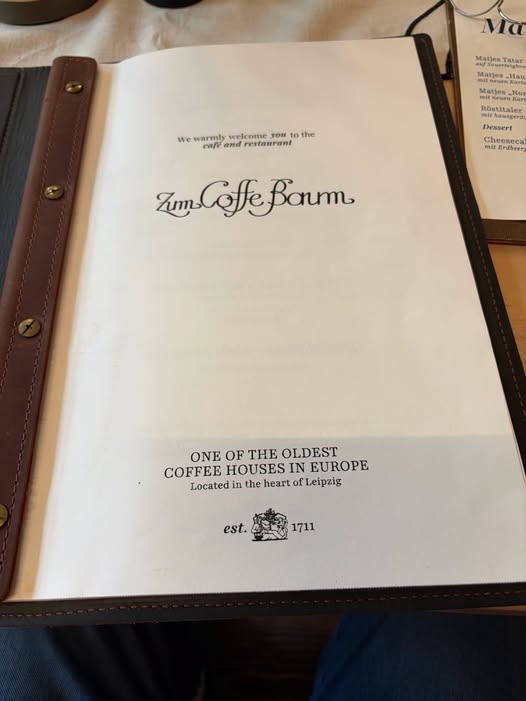
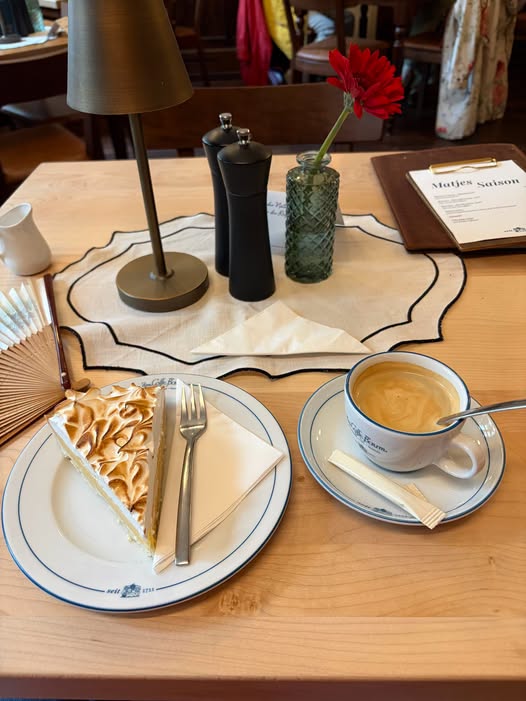
“Zum Arabischen Coffe Baum”—a café that Bach himself used to frequent. It is located right next to St. Thomas Church.
An incredibly sour lemon tart. For one thing, it was huge. Struggling to finish it, I somehow managed to wash it down with bitter coffee.
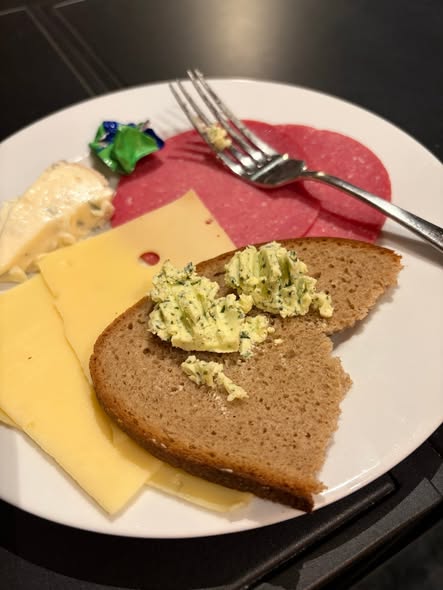
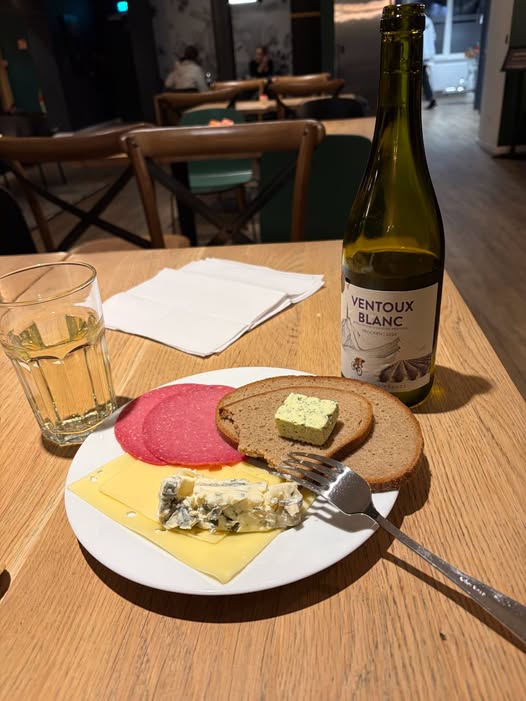
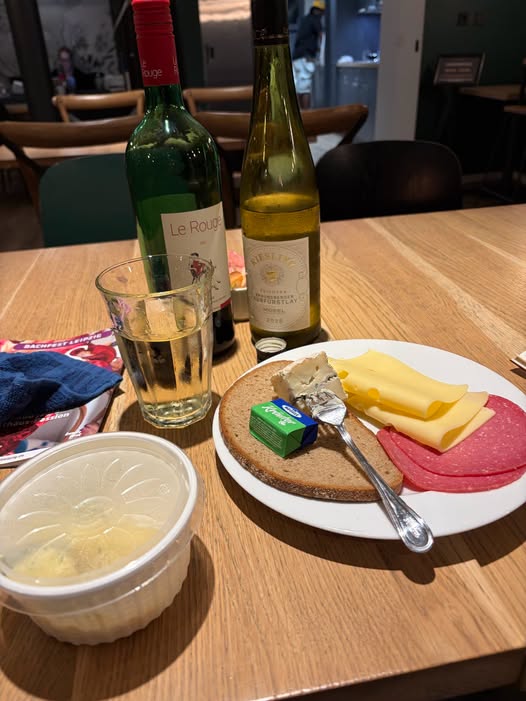
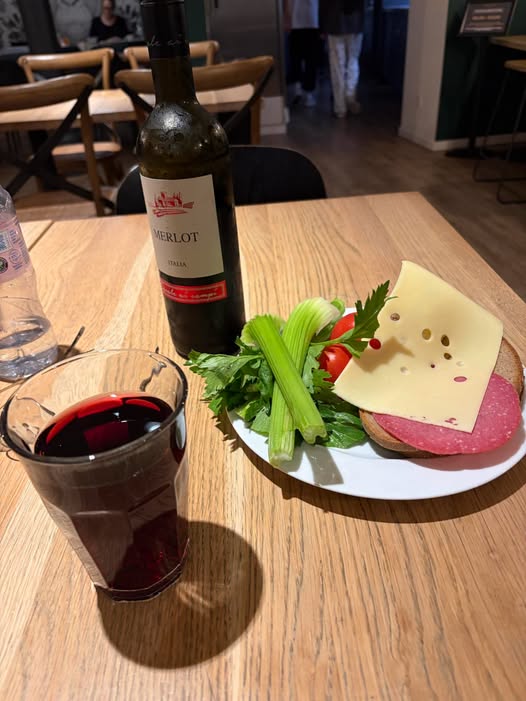
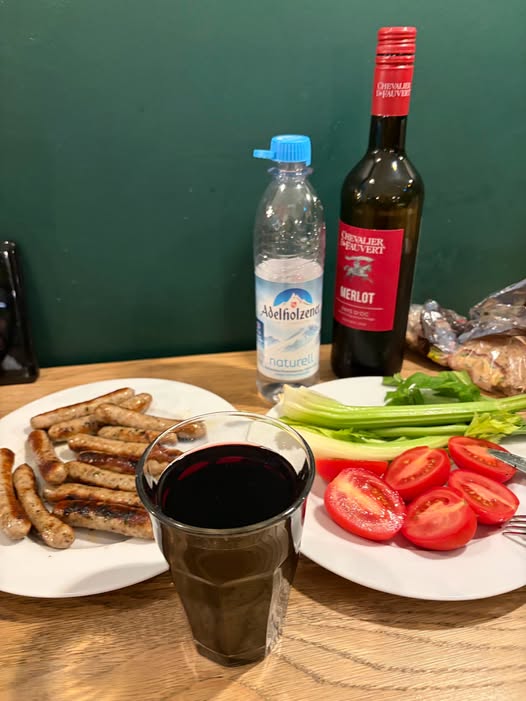
I’m getting pretty tired of this menu, but it just won’t run out. The bread is starting to go stale, too.
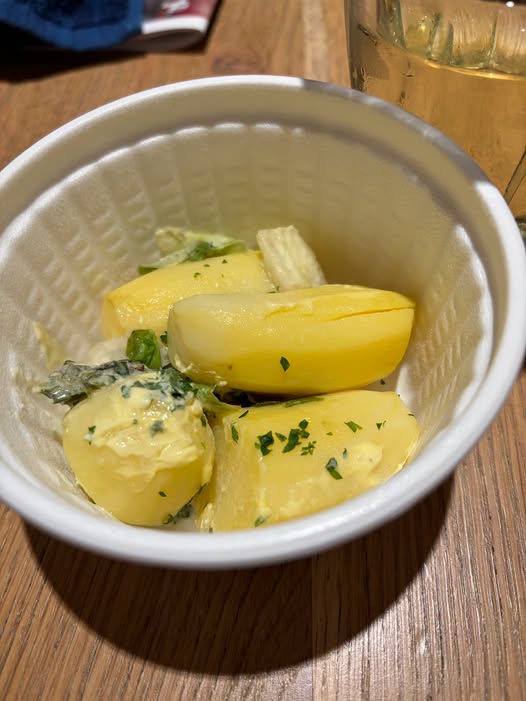
The only difference is the side of potatoes I got for takeout.
ーーーーーーーーーーーーーーーーー
More on Showers
I wrote a complaint about the shower the other day, but there are a few other things that made me think, “Oh, really? Is that how they do it in Germany?”—though, admittedly, this is still about showers. In Japanese hotels, I believe there are usually two mounting points for the showerhead: one overhead and another around waist height, right? In Germany, however, the showerhead is only mounted overhead. What’s more, it’s positioned for the average German, so it’s quite high up. Also, while Japanese showers usually have a switch to toggle between the shower and the faucet, German ones don’t; it’s strictly “shower on” or “stop”. That is quite inconvenient. And there’s more. I mentioned the lack of a basket for clothes before, but the shower stalls also lack shelves. In other words, there’s nowhere to put your shampoo or soap, so you have no choice but to set them on the floor. There isn’t even a hook to hang a washcloth or loofah. Germany is known for a “sturdy and practical” ethos—installing only what is absolutely necessary. You can see this clearly when comparing Japanese and German cars, or in the absence of bidet toilets (“Washlets”). To me, however, it just feels like they’ve left out things that *are* actually necessary. There’s plenty more to say, but I’ve had quite a bit to drink, so I’ll wrap things up here for now.
ーーーーーーーーーーー
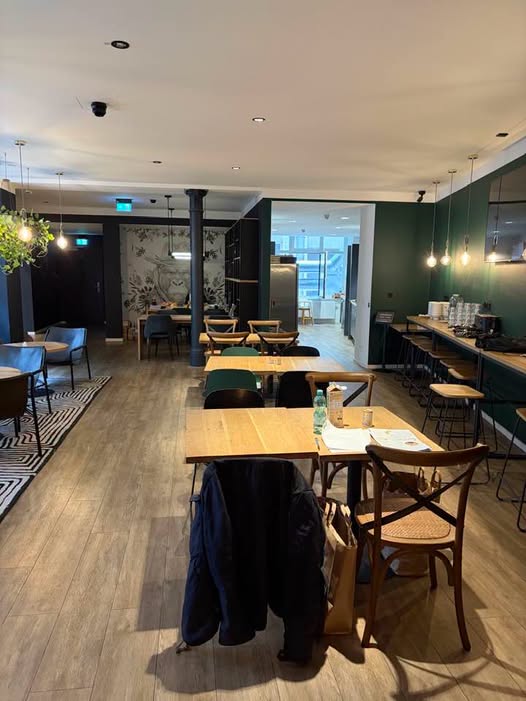
At this hostel, there is a young woman who sits in the corner of the second floor (or the first floor, by German standards)—the same level as the reception and kitchen—every night. She appears to be using a laptop, and I often wonder who she is, though I hesitate to ask. She might well be a “watchperson”. Since the hostel hosts guests of all races and nationalities from around the world, I suspect she keeps an eye on things just in case something happens. The staff here are all friendly; one young man (Whos name is Asger from Denmark), in particular, was so personable that he was delighted when I gave him a bag of Kappa Ebisen (Japanese snacks). We watched Germany’s opening match together in the evening, and the score was tied 1–1 when I stepped out; later, I learned they had gone on to win by a landslide, 7–1. He had predicted Japan would win, too, though unfortunately, their match ended in a draw. He also remarked on how much stronger Japan’s team has become. As I mentioned briefly the other day, everyone below a certain age speaks English, so there is no language barrier. People are incredibly kind; if you ask for directions, they will often walk you right to the location.
It is convenient that the hostel’s second floor (the German first floor) is open 24 hours a day. After a concert ends at 10:00 PM and I’ve had a shower, I can sit and have a drink until around 3:00 AM. I also appreciate that outside food and drink are allowed; I’ve seen other guests cooking quite elaborate meals there.
There are quite a few Vietnamese restaurants in Leipzig; apparently, these are run by people who immigrated under East German policies and chose to stay rather than return home after reunification. There are also many Turkish restaurants, and the food is delicious. I used to have the impression that German cuisine was unappealing, but I found that items like sausages, salami, and cheese were actually tastier than what we have in Japan. Once people realized I was Japanese, quite a few would tell me—perhaps out of politeness—that Japanese food is delicious. There appear to be a few Japanese restaurants, though naturally, I have no desire to step inside. For some reason, there are also many young people interested in Japanese “anime culture”—though I personally hesitate to call it culture. A Malaysian student I met the other day even told me he had learned Japanese through anime. That said, Germans in general didn’t seem to have much interest in Japan itself. Leipzig is home to many people of Arab and African descent. At first, I was a bit intimidated by the groups of young men who looked to be from the Middle East hanging out on the street near my hostel all day; upon closer inspection, however, it turned out they were working for Uber Eats. They had bicycles parked nearby and were constantly communicating via mobile phone. Once I noticed the Uber Eats delivery boxes they were carrying, it became obvious what they were doing. I was also surprised to find beggars here—something I never would have expected in this country. Yet, above all else, this is the land that produced the great Johann Sebastian Bach. That fact alone commands a sense of deep reverence.
ーーーーーーーーーーー
Tuesday, June 17
The afternoon session featured the following lineup performed by Koopman: Cantatas No. 12, No. 131, No. 82, and No. 147, along with motets by Praetorius and Schütz. It felt like the major contenders had mostly been revealed. What would fill the remaining four slots? No. 140 was a certainty, but would No. 84 make the cut? And what about the other two? It was a lineup charged with tension, as if each piece were ascending to new heights. It had been years since I’d spent such a blissful time; it was the ultimate luxury—truly an embodiment of the sentiment “Ich habe genug”.
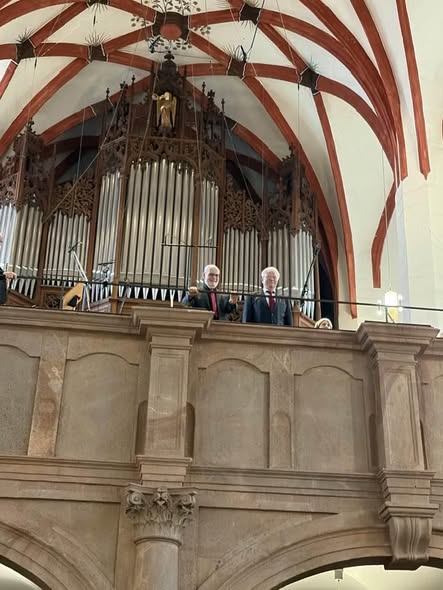
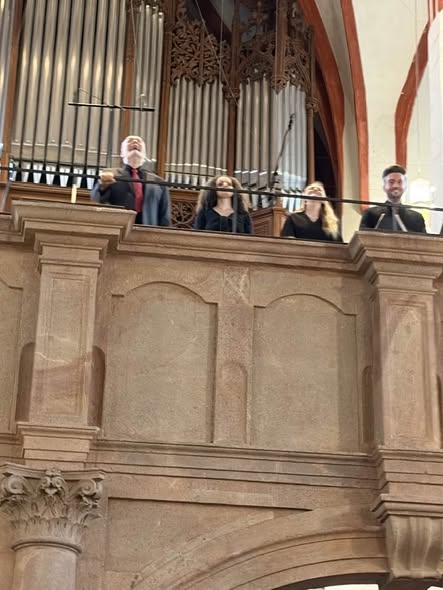
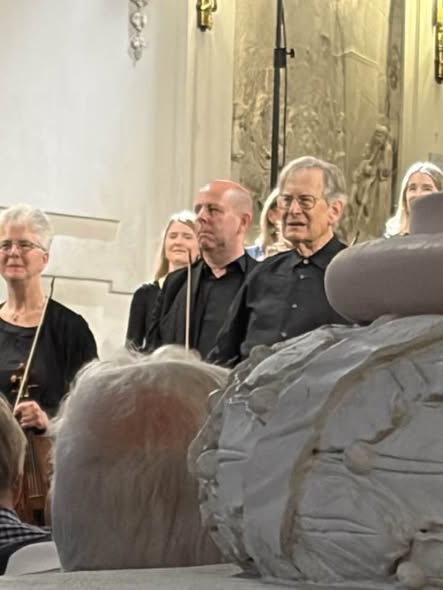
The evening session saw Gardiner return to the podium. This was where the “Top 4” would be decided. The results were unexpected. While I had correctly predicted that No. 140 would take first place, my personal favorite, No. 84, was left out entirely. Fourth place went to No. 4, third to No. 21, and second to No. 106—a choice that made me think, “Ah, of course—that one”.
The performance order was changed on the day of the concert; No. 140 was played first, followed by No. 4. This piece, composed during Bach’s Arnstadt period (when he was 22), consists solely of a sinfonia, choruses, and arias, with no recitatives.
Next came No. 21 from the Weimar period, though for some reason, a 15-minute intermission was inserted after the first half of this cantata. The performance resumed after the break with the remainder of that work, followed by No. 106. My seat that day was terrible—hidden behind a pillar—so I couldn’t take any decent photos. Also, from where I sat, the tenor section resonated strangely; it sounded as if several singers were singing in unison. It was peculiar. In No. 21, trumpets and timpani are used only in the final chorus. The program concluded with the funeral cantata, No. 106. The gentle sounds of the viola da gamba and recorder filled me with a sense of happiness. The organ and theorbo continuo, too, were gentle and warm.
This marked the final day of the “Bach Cantata Best 50” series, which had spanned fourteen events.
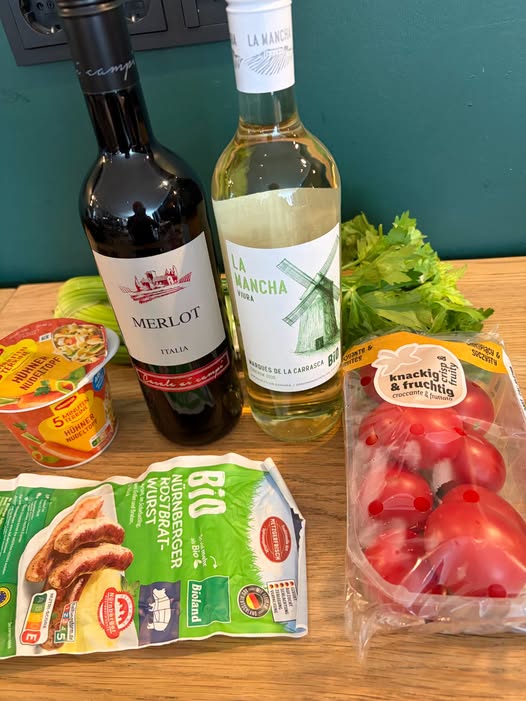
Today’s shopping run.
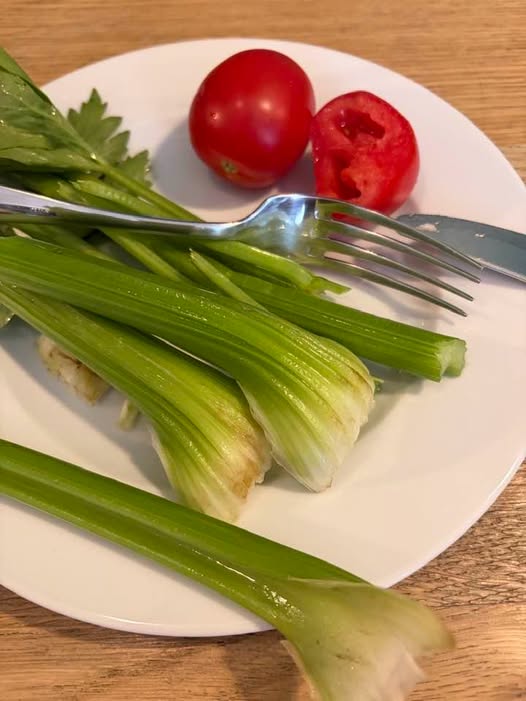
I bought these, thinking I really ought to get some vegetables into my diet.
From the Marketplace to St. Thomas Church.
ーーーーーーーーーーー
Starting today, I plan to make a three-day “Bach pilgrimage”. First, I’ll visit Eisenach, Bach’s birthplace. It’s about three hours and a half by train from Leipzig.
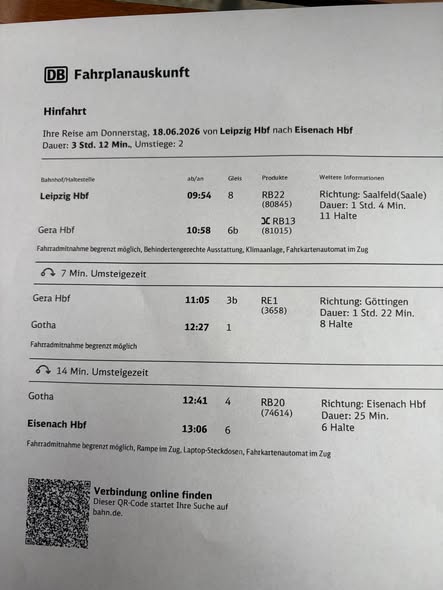
The journey to Eisenach involved two transfers: at Gera and Gotha stations. It was sweltering—no air conditioning, and the windows wouldn’t open. It was like a sauna!
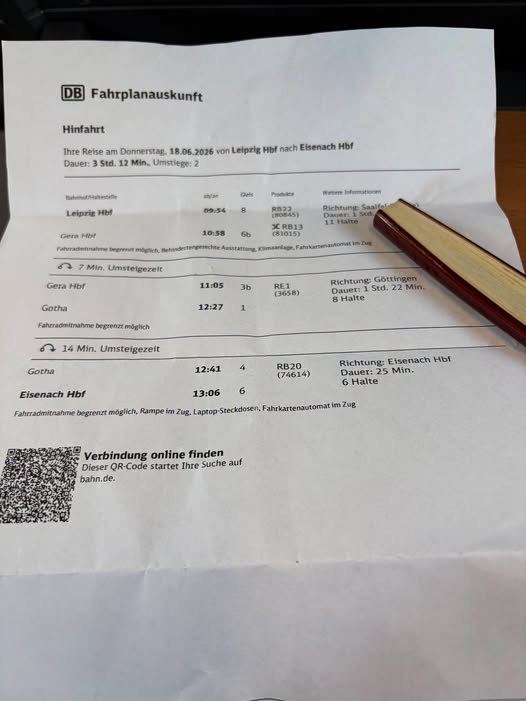
In Germany, if you tell the station information desk your destination, they’ll print out the transfer details for you. I thought this was a great service; If it was, it would likely be well-received in Japan, too—by foreign tourists, for instance. However, since service suspensions and delays are frequent, relying on the printout blindly can lead to trouble. When returning to Leipzig from the suburbs, for instance, trains are sometimes cancelled, forcing you onto a replacement bus instead. The attitude seems to be that as long as they get you to your destination, the method doesn’t really matter—and nobody seems to complain about it.
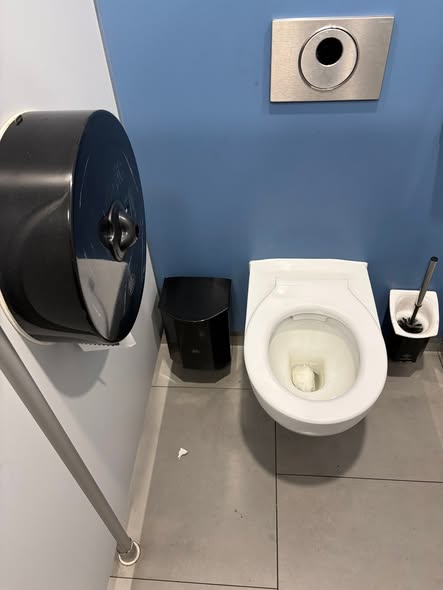
I was sitting in first class without realizing it, and then I got kicked out. Does a first-class cabin where the air conditioning doesn’t even work actually exist?
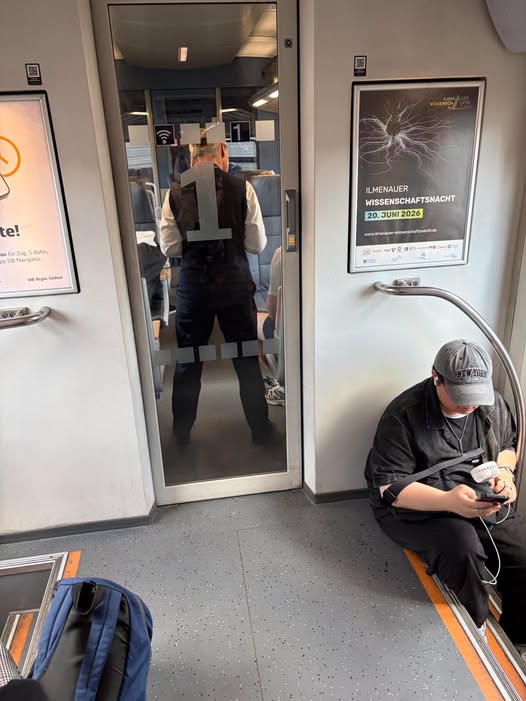
Bicycle cars are a standard feature. Thankfully, the air conditioning is running from Gotha onwards.
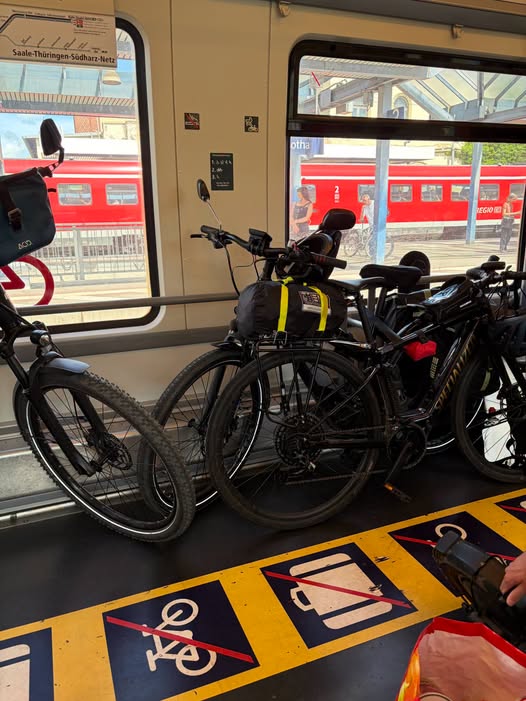
I had no idea it was this hot in Germany! It’s definitely hotter than Fukuoka!
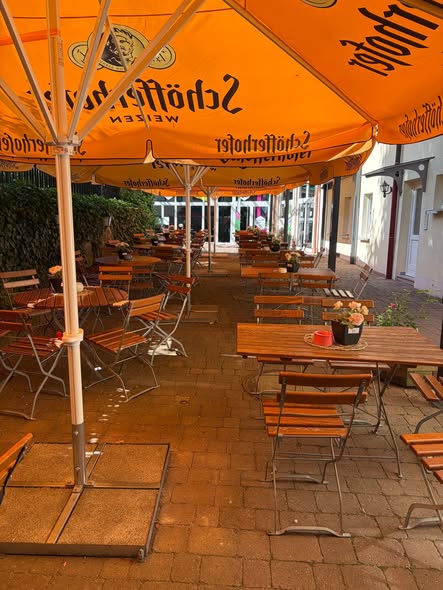
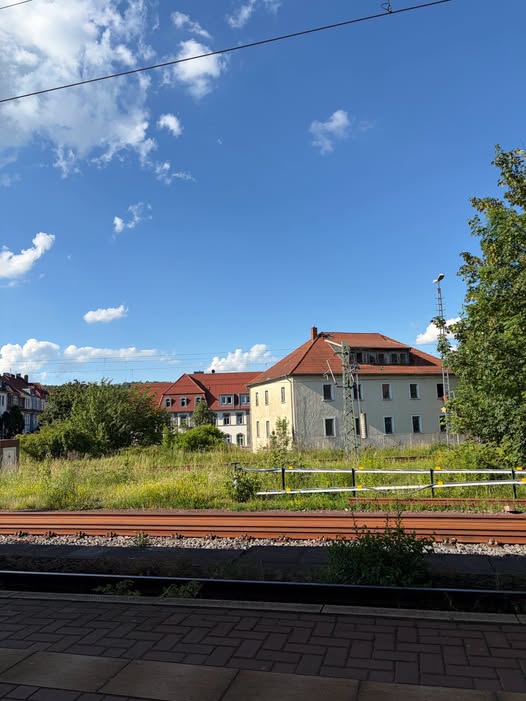
A summer sky in Saxony.
ーーーーーーーーーーー
Wartburg Castle
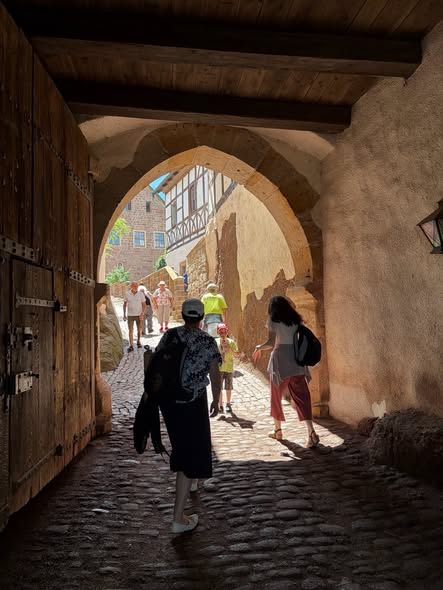
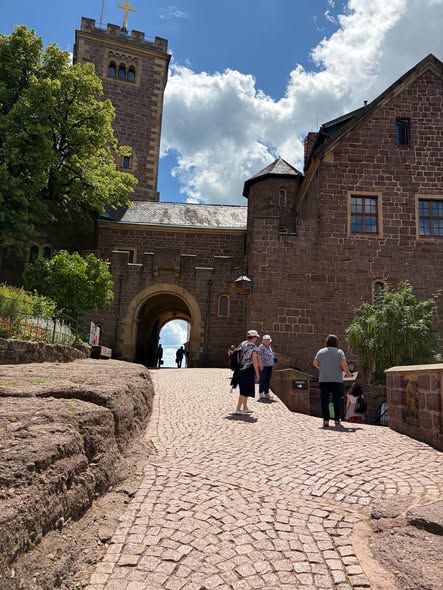
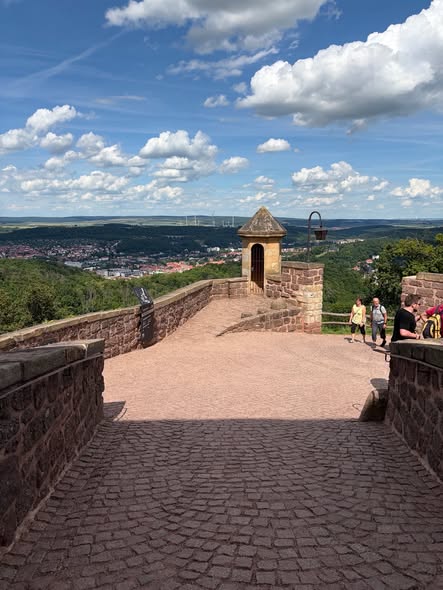
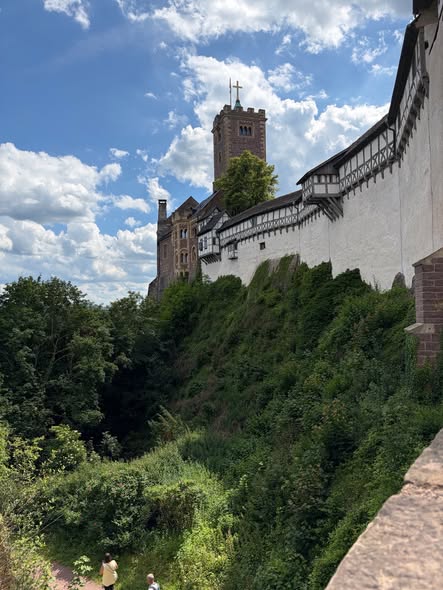
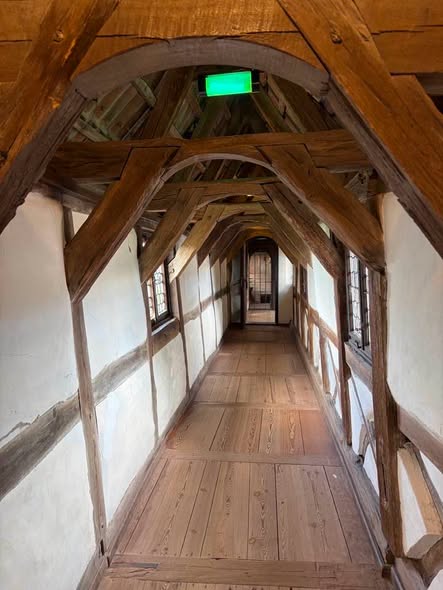
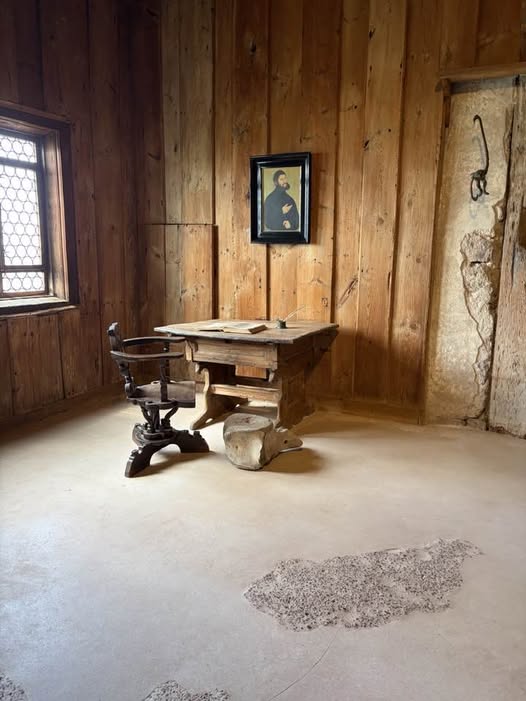
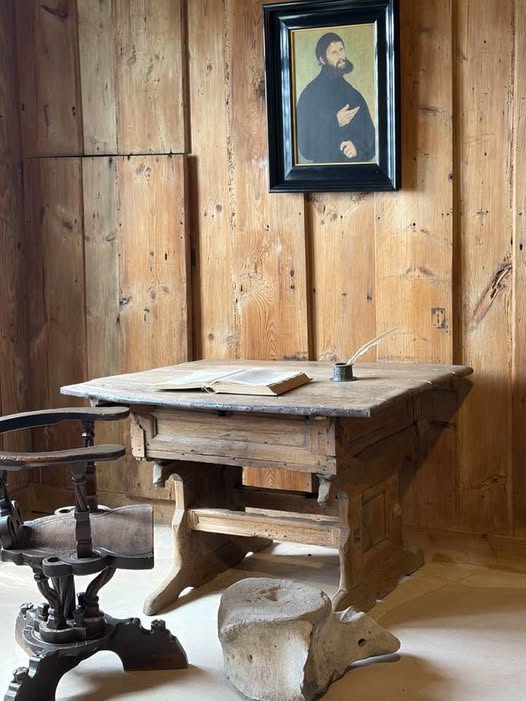
Venturing a bit further afield from Leipzig, I have arrived today at Wartburg Castle in Eisenach, a UNESCO World Heritage site. Perched atop a lush, green mountain, this beautiful ancient castle is renowned as the place where Martin Luther—the religious reformer who profoundly shook the foundations of Christian history—once went into hiding. In 1521, after criticizing the Catholic Church, Luther was excommunicated by the Pope and banished from the Empire, placing his life in grave danger; Frederick III, Elector of Saxony and a local power broker, sheltered him within these castle walls. It is said that Luther spent about ten months in a room here under the alias “Knight George”, growing a beard to conceal his true identity. Yet, he did not merely hide; during this time, he undertook the monumental, life-risking task of translating the New Testament into German. At the time, the Bible was written in Latin and inaccessible to the common people. Luther is said to have completed the translation in just eleven weeks so that anyone could read the Bible for themselves. This translated Bible spread across Germany alongside advancements in printing technology; it not only fueled the Reformation but also laid the foundation for the modern German language. Standing in “Luther’s Room”—where he actually carried out the translation—one can almost sense the tense atmosphere of that era and the sheer intensity of his determination. Standing at this pivotal turning point in history, with the refreshing June breeze against my skin, promises to be a major highlight of this trip. #Eisenach #WartburgCastle #MartinLuther
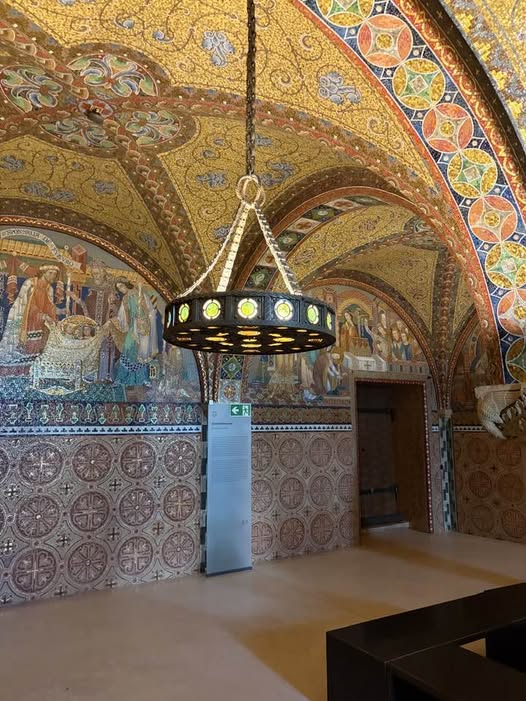
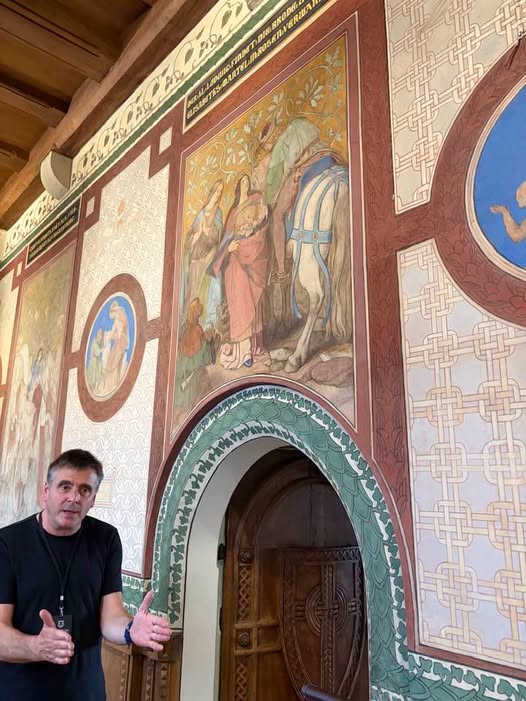
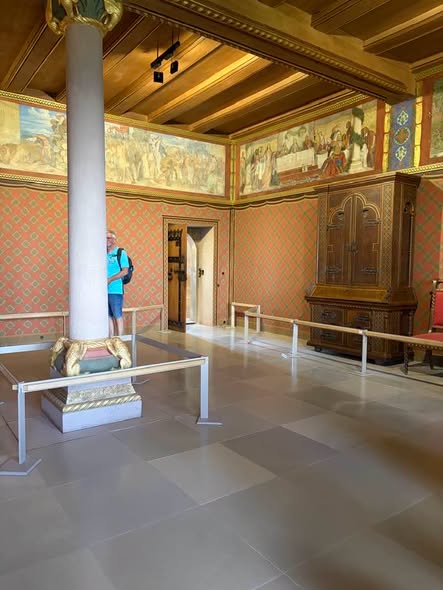
The woman in the center (Saint Elizabeth) was attempting to secretly distribute bread to the poor people of the castle, unbeknownst to her husband. One day, her husband—who was on horseback—spotted her and, growing suspicious, asked, “What do you have in that basket?” When she timidly opened the basket, a divine miracle had transformed all the bread inside into beautiful roses; this is the episode depicted here. Upon closer inspection, one can see her cradling a large number of roses against her chest.
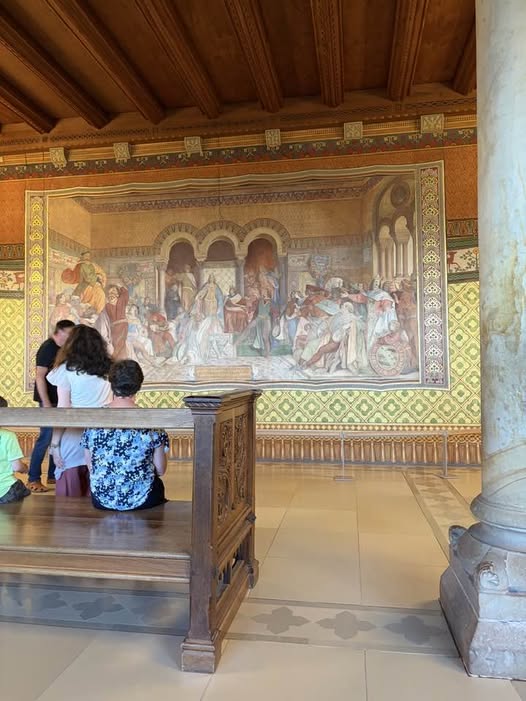
The massive mural visible straight ahead depicts a legendary scene—which also served as the subject of Wagner’s famous opera “Tannhäuser”—where medieval poets known as Minnesingers competed in a singing contest, staking their very lives on their art.
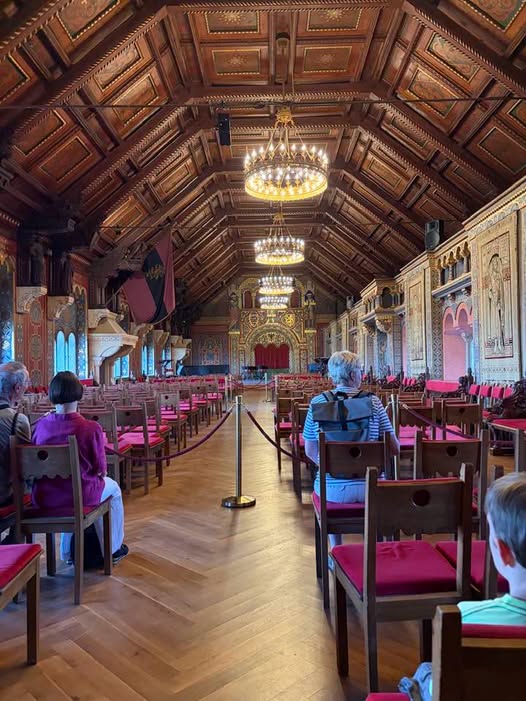
Festive hall (Festsaal ).
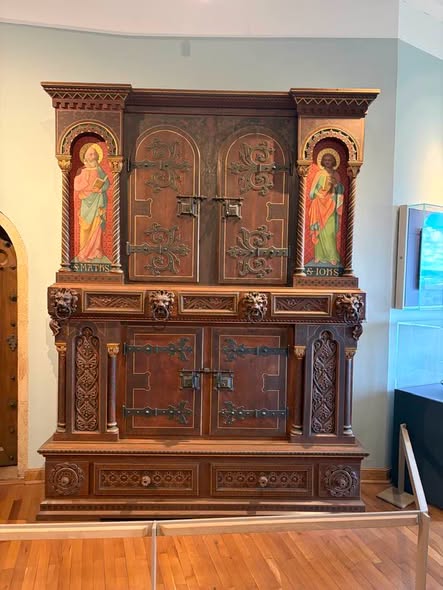
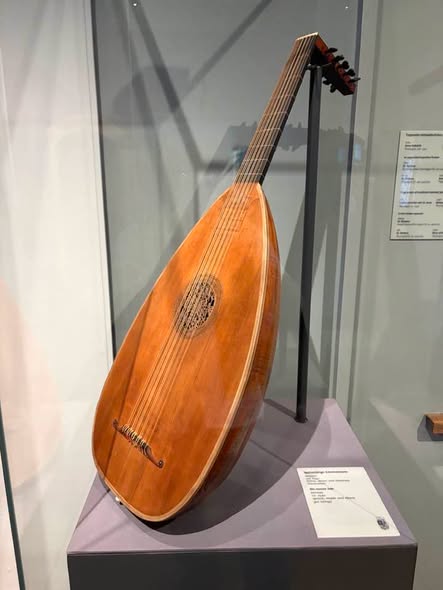
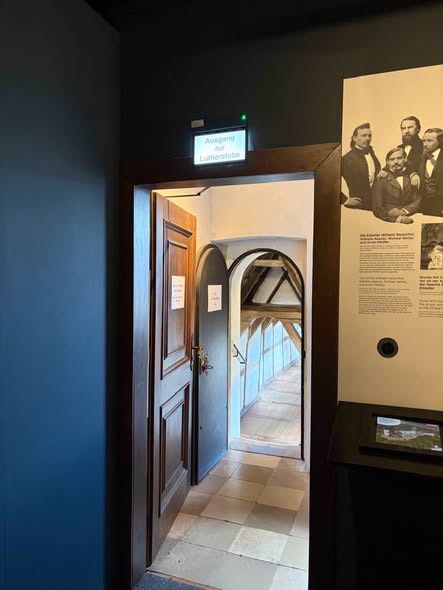
The room where Martin Luther translated the New Testament.
Luther’s desk.
Bach House Museum.
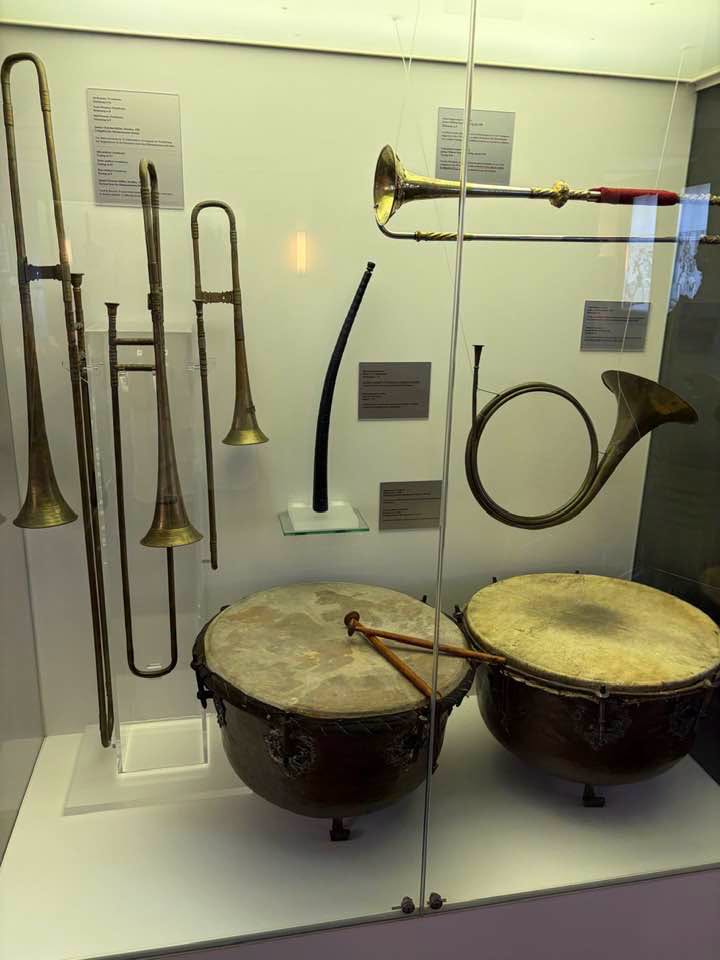
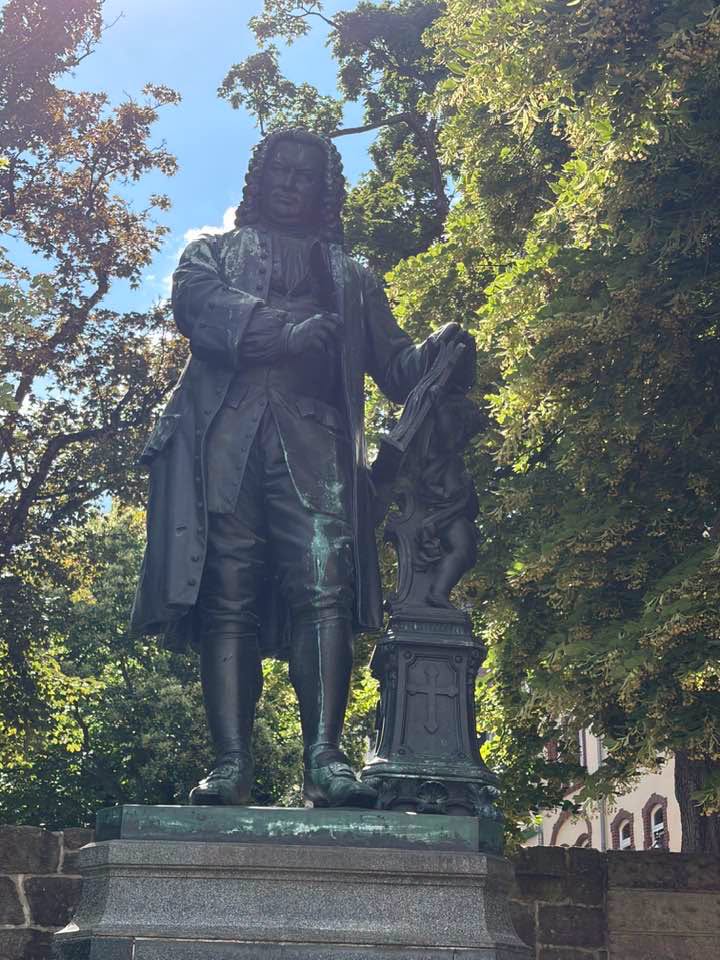
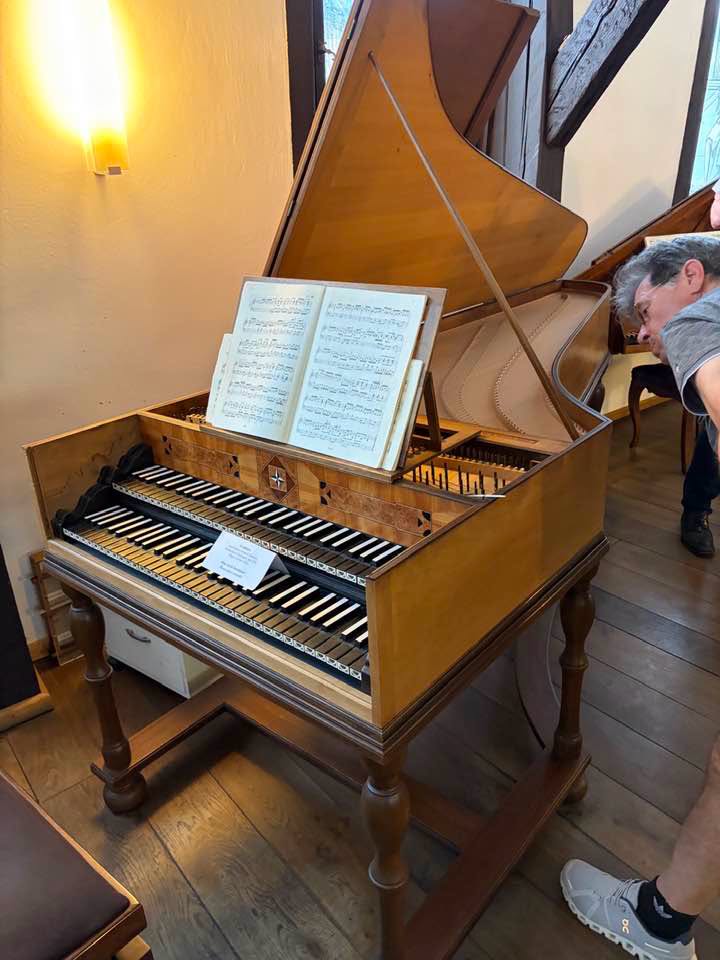
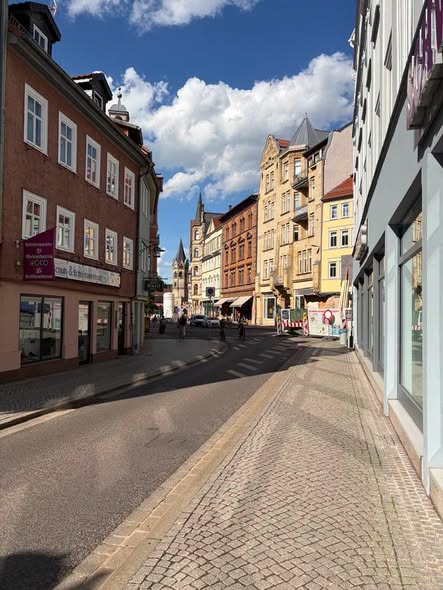
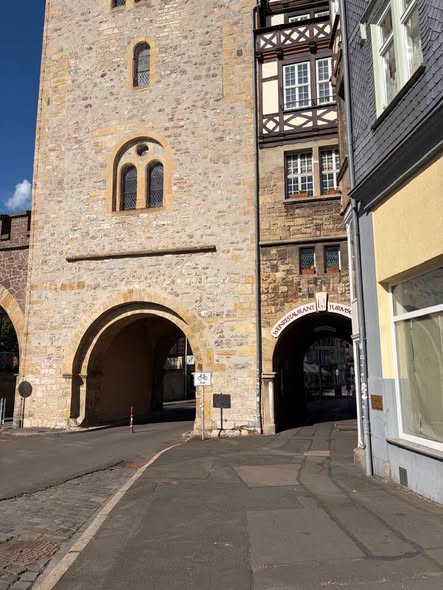
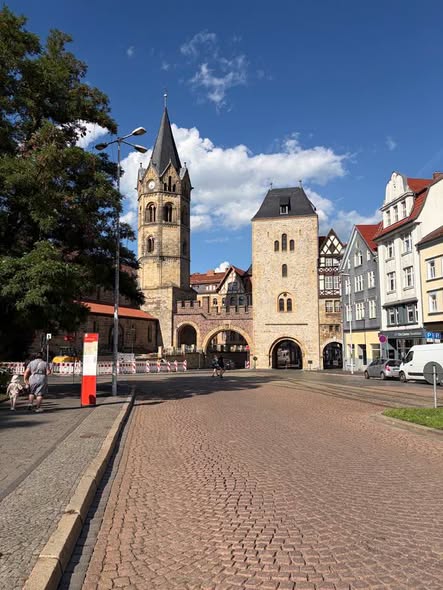
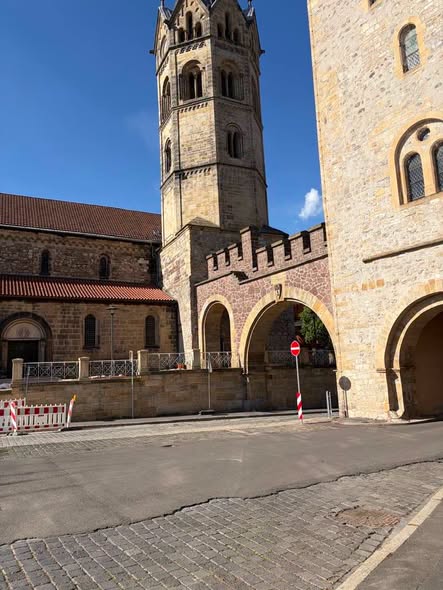
The town of Eisenach.
ーーーーーーーーーー
An Emergency in Eisenach
I had planned to start today’s post by saying that I was embarking on a three-day “Bach pilgrimage”, beginning in Eisenach—Bach’s birthplace—after a roughly hour-and-a-half train ride from Leipzig. But then…
I finally got my “baptism”. Of what kind? I never imagined German public transport could be this terrible. Delays, unreliability, no air conditioning, unexpected stops… and to top it all off, I was forced to transfer to a bus. A bus *without* air conditioning. By the time I reach Leipzig, it will likely already be tomorrow. Today, my idealized image of Germany came crashing down with a loud clatter. If this happened in Japan, it would absolutely be all over the news. I just want to get back to the hotel, take a shower, and have some wine. It would be a total disaster if an accident were to occur on top of this. Memories of that high-speed train crash in Germany decades ago flash through my mind. I have never been more grateful to live in Japan. I never imagined, back home, that I’d end up venting like this. Oh, I just want to bathe, have a drink, and go to sleep!
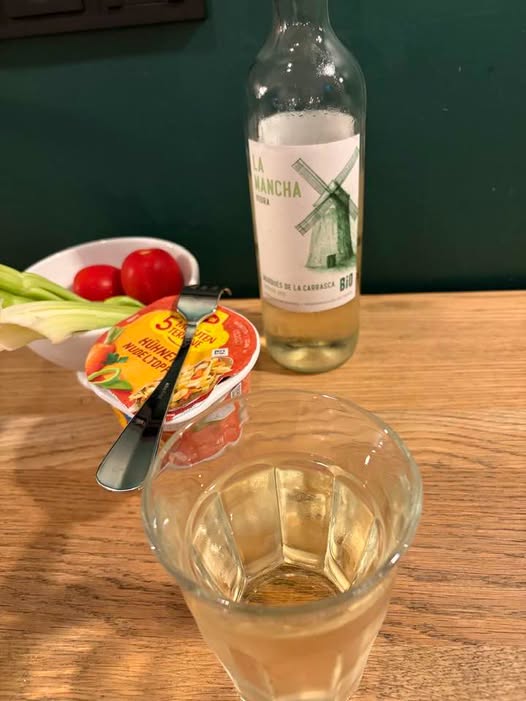
The round trip to Wartburg Castle today
cost me 40 euros in taxi fare.
ーーーーーーーーーー
Monday, June 18
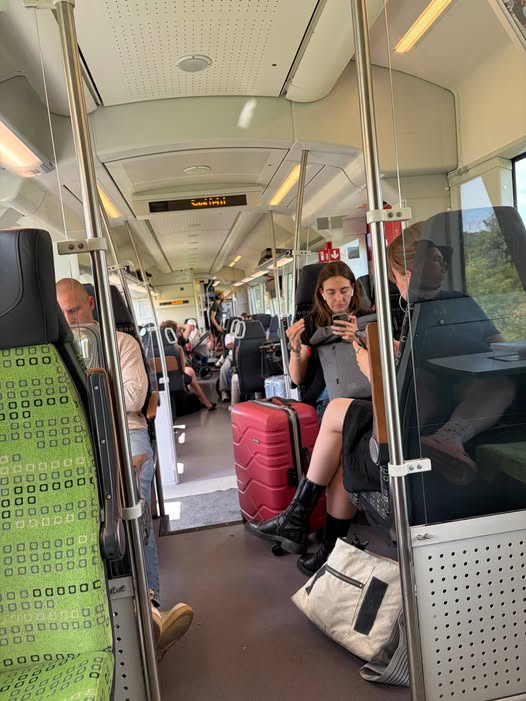
It’s hot. Today is the day I head to Weimar. As usual, the air conditioning isn’t working at all. I brought my laptop but left the power cable behind, so I can’t get any work done on the train. A huge blunder. I have to transfer at Gera today, too; the thought of getting back on that train—which feels like a steam bath—weighs heavily on me.
ーーーーーーーーーー
Young Germans (in their 20s to 40s) seem to be getting tattoos excessively. These aren’t temporary things like henna tattoos, but the real deal—permanent ink that lasts a lifetime. It is hard to fathom why they so casually mark their bodies with tattoos, which in Japan are seen as a badge of organized crime affiliation. One theory is that it serves as a form of self-expression. It is apparently socially acceptable, with even professionals like doctors and lawyers sporting them. On the flip side, however, it makes it very easy for their identities to be revealed if they commit a crime. In that sense, perhaps it actually contributes to society?

ーーーーーーーーー
Weimar Central Station (Weimar Hauptbahnhof).
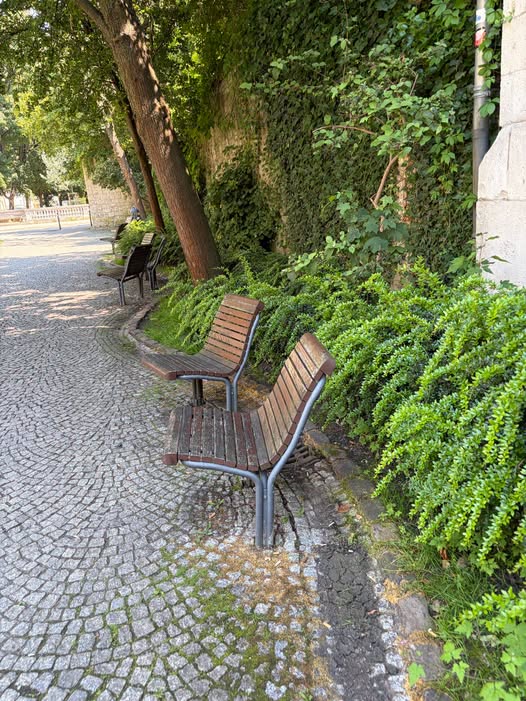
I’m making my way to Marktplatz under the blazing sun—a 30- to 40-minute walk. Even if I wanted a drink of water, there isn’t a single convenience store in sight. It really strikes me as a tough environment for a Japanese person. I’m taking a quick break along the way; the shade of the trees is refreshingly cool, and the breeze feels pleasant.
I was getting thirsty and hungry; this would be my first meal of the day. I asked if there was any chilled water, but apparently, they only had it at room temperature—that’s just how things are done in Germany. Still, Germans really do love the blazing sun; everyone prefers dining on the terrace rather than inside the cool restaurant. Then again, that might simply be because there is no air conditioning indoors.
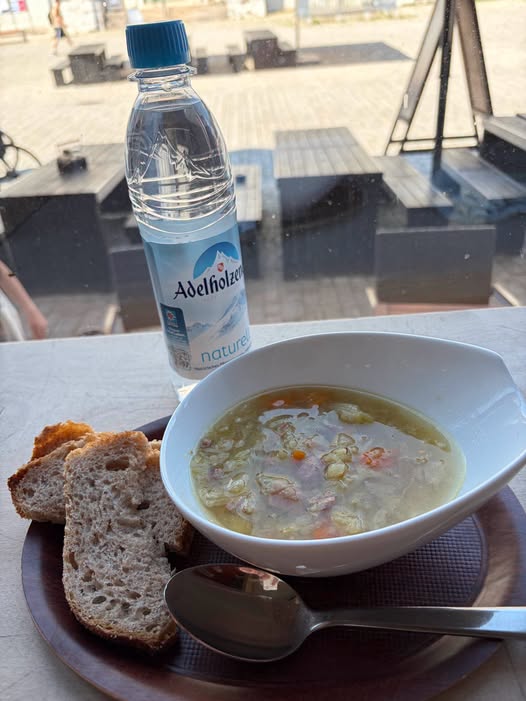
The water in the washroom was colder, so I refilled it.

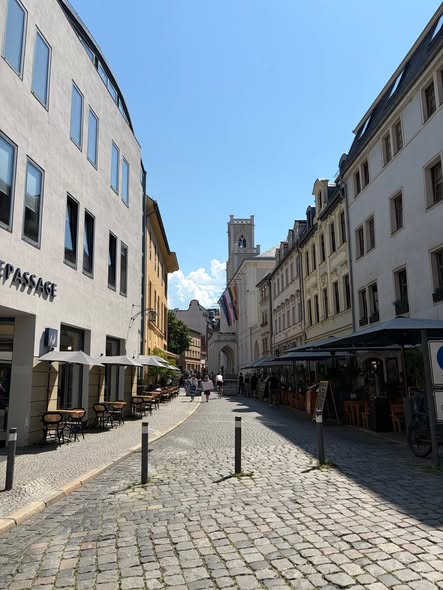
City hall.
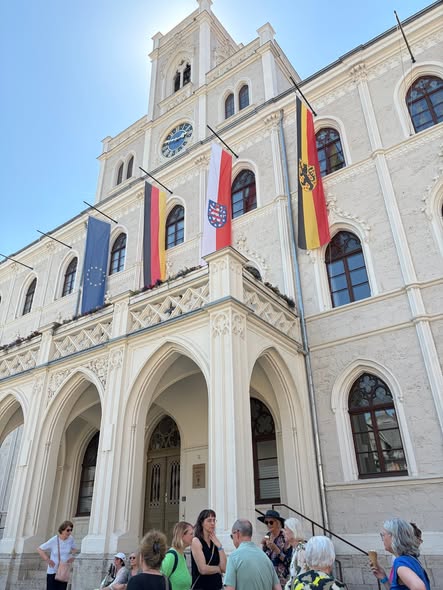
Marketplace.
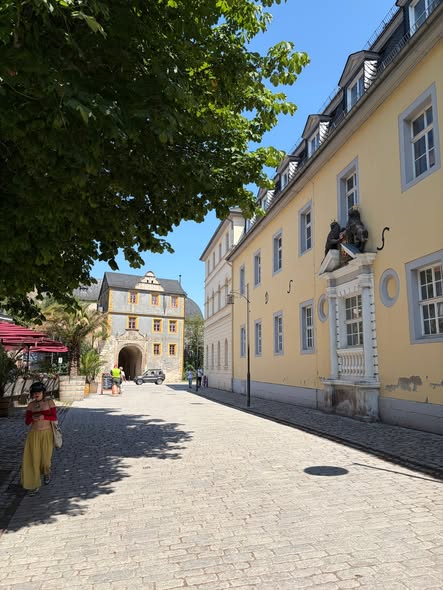
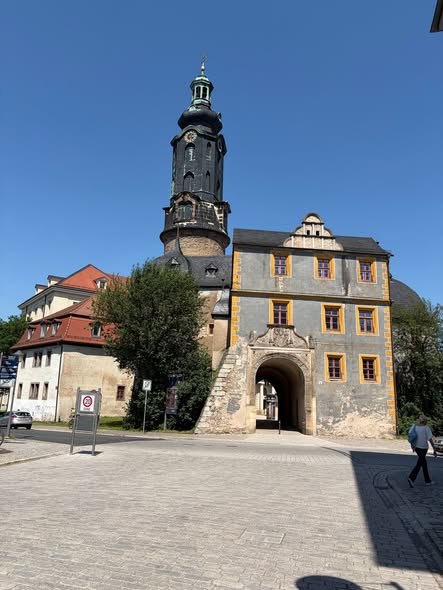
The museum was closed.
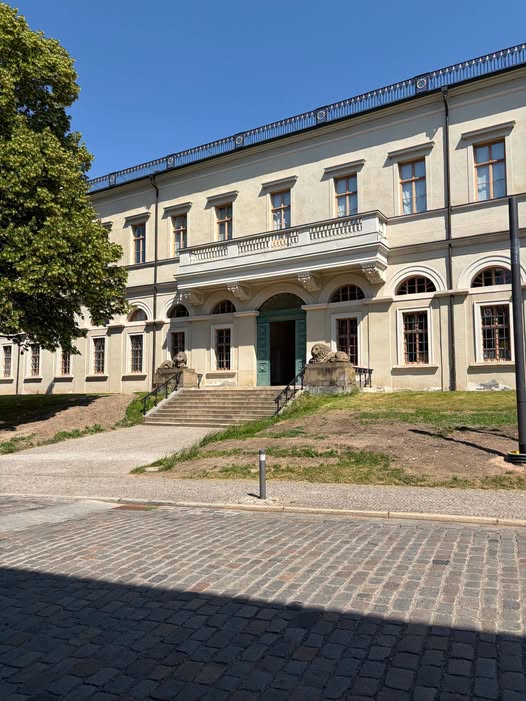
Herder Church. What I liked most was that it was cool inside. It was a space that evoked a sense of reverence.
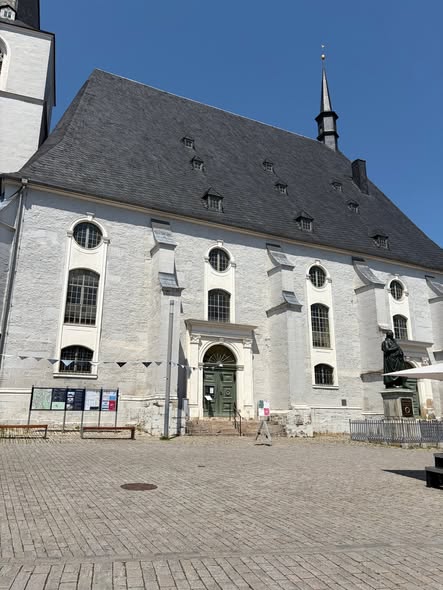
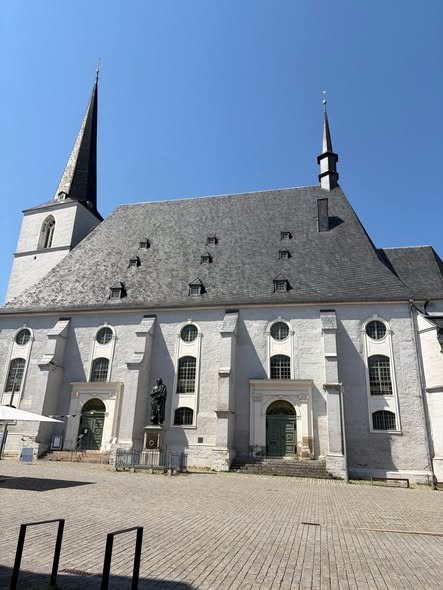
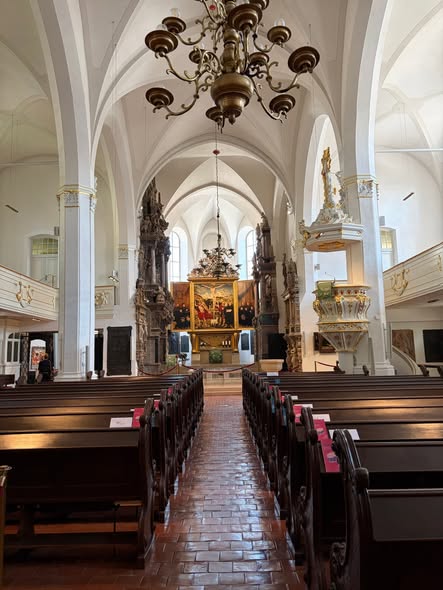
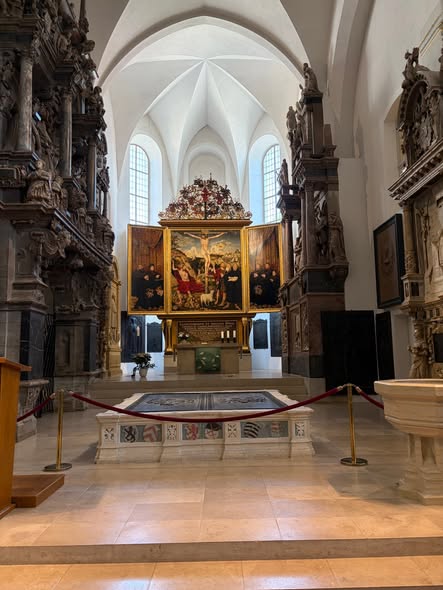
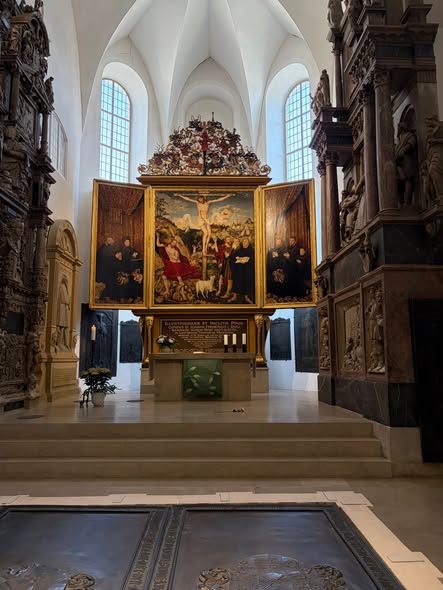
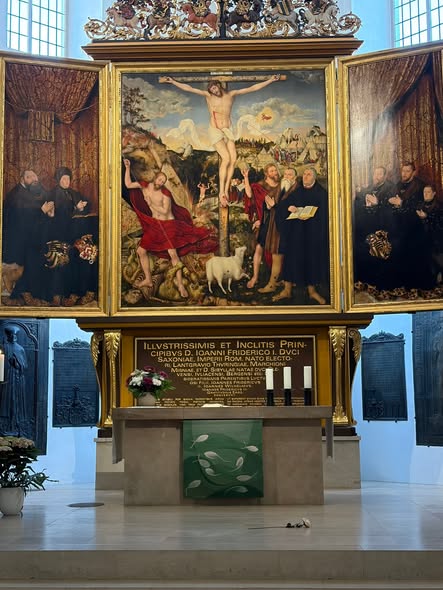
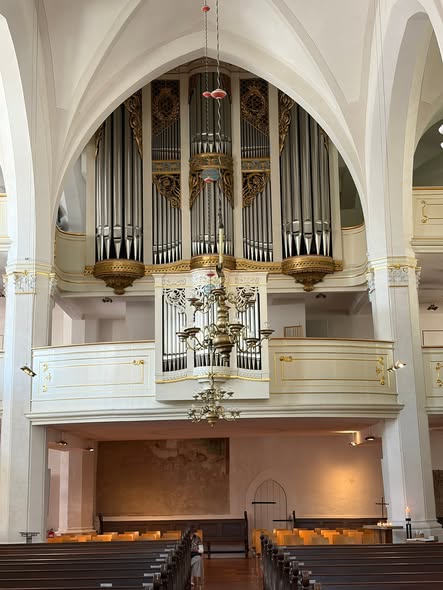
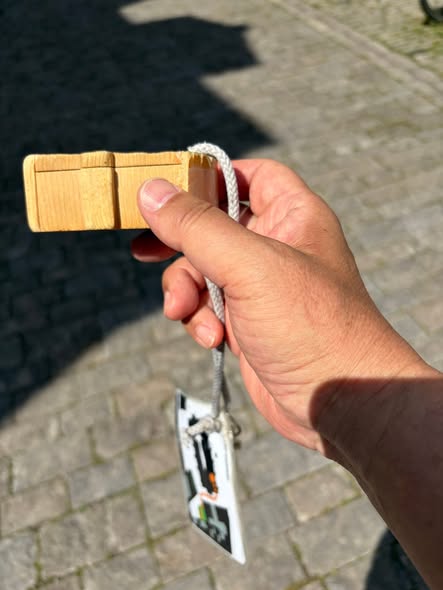
When I asked to use the restroom at Herder Church, I was handed a key.
I boarded a train bound for Naunburg. When a woman got on at one of the stops, I asked her if we were there; she said yes, so I hurriedly got off—only to discover we were still three stations away. It seems she had thought I was asking, “Does this train go to Naunburg?” Once I reach Leipzig, I’ll need to pick up two bottles of wine at Lidl.
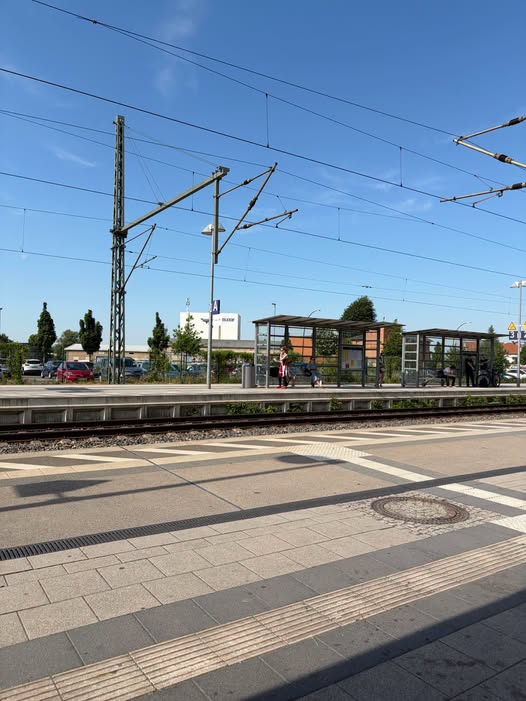
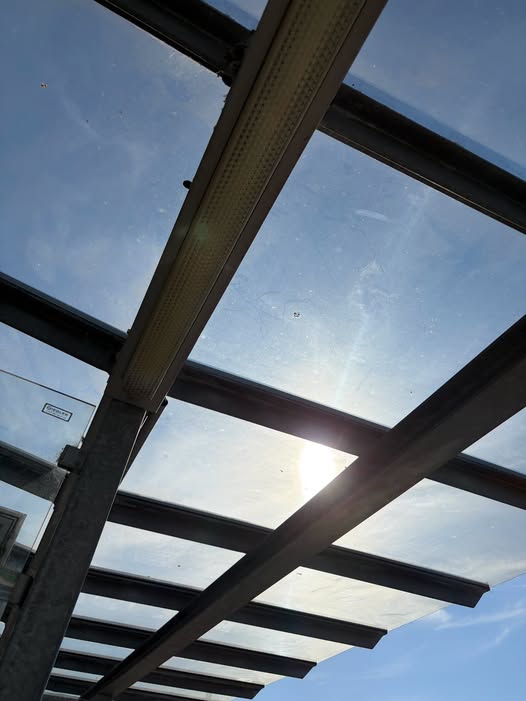
A bus stop with a translucent roof. The afternoon sun is beating down relentlessly, and sweat is pouring off me. As usual, it seems the bus is running late.
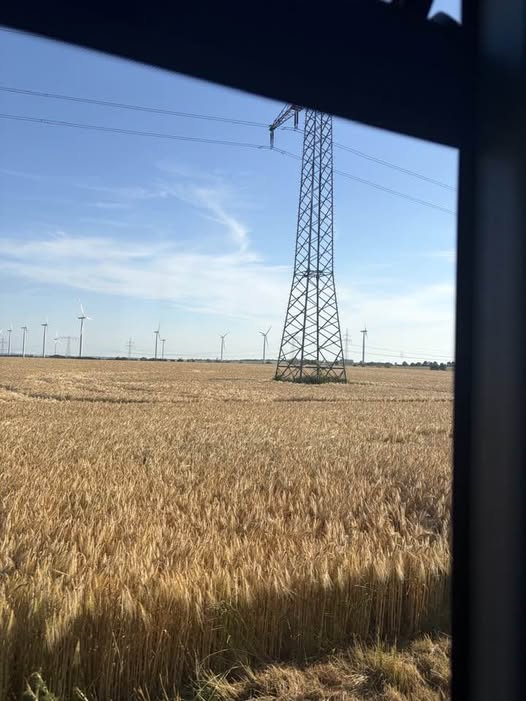
Germany is a country that produces and consumes its own energy locally. I truly envy the fact that they have no nuclear power plants.
Tonight’s snack.
Until yesterday, my routine was to return to the hostel after 10:00 PM, shower, drink until 3:00 AM, take my meds, and go to sleep. Today, I arrived back before 9:00 PM, so I have plenty of time. Still, I’ll probably end up drinking until 3:00 AM anyway.
There is an African guest staying at the hostel (not in my room)—apparently, he’s a long-term resident. He seems like a high-strung person and spends about two hours cooking every day. For some reason, he only ever makes eggplant dishes, but they look absolutely delicious. I tried speaking to him today, asking, “Are you a chef?” but the reply I got was a curt, “Are you sick?” It struck me that he wasn’t just difficult; he seemed to be on the autism spectrum. I asked at the front desk and found out he’s a regular.
Two young Chileans were playing foosball, so I watched them play and chatted with them for a bit.
Tomorrow is the final day of my Bach pilgrimage: Köthen.
ーーーーーーーーー
Saturday, June 20 To Köthen.
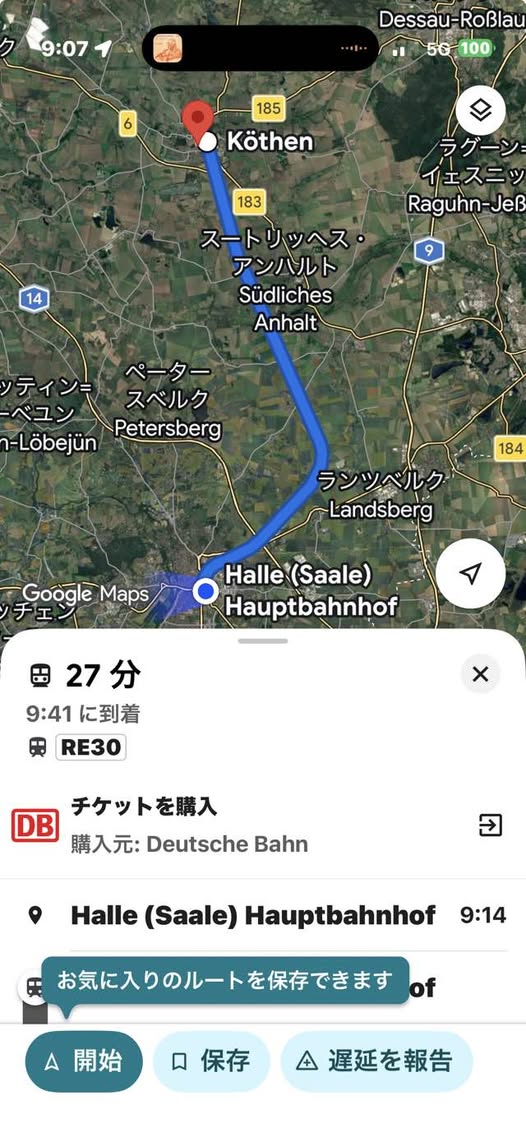

A day trip to Köthen (Reflections by Mr. Bach).
🎵 A day trip transcending time and space—from Leipzig to Köthen.
Leaving Leipzig, where I currently reside, it takes about 45 minutes by train.
My destination was Köthen—the city where the most “secular, yet happiest music” of my musical life was born.
Perhaps the names “Brandenburg Concertos” or “The Well-Tempered Clavier” ring a bell for you today?
Let me share a few reflections on the path I walked today.
🏰 Köthen Castle (Schloss Köthen)
The residence of my dear Prince Leopold, whom I once served as Kapellmeister. It has now become a magnificent museum, carefully preserving the sheet music of that era alongside fragments of my own memories. Standing in the castle’s “Hall of Mirrors” (Spiegelsaal), I can almost feel the heat of those nights spent immersed in music, playing late into the evening with my talented ensemble members.
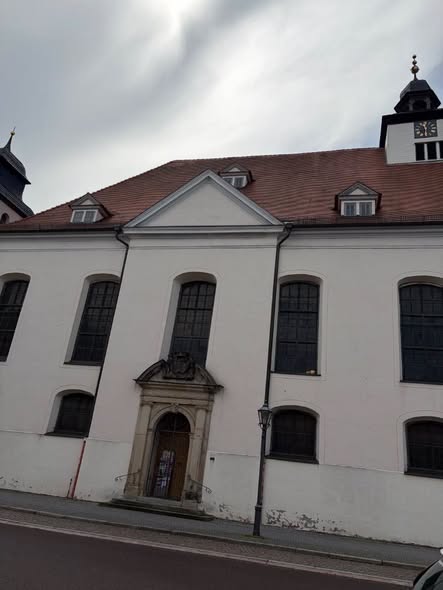
⛪ St. Agnus Church (St. Agnus)
The church I attended during my time in Köthen to offer Lutheran prayers. Amidst the serene atmosphere, my heart was drawn back to those days once more.
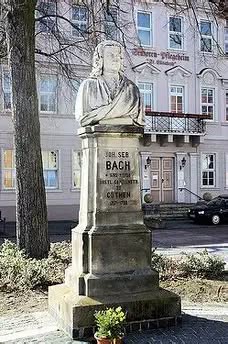
🎼 Bach Monument (Bachdenkmal)
I came face-to-face with a statue of myself standing in the city—looking a bit proud, yet slightly bashful. I offer my heartfelt gratitude to all of you in the modern age who still love my music and visit this city.
This is a city of warm—and slightly bittersweet—memories; a place where I could purely pursue the “beauty of instrumental music” just before the days of my hectic life as a church musician (Thomaskantor) in Leipzig began.
Why not venture a little further from Leipzig Central Station and come listen to the melodies of what was, for me, the “happiest era” of my life? #ドイツ旅行 #バッハ #ケーテン #ライプツィヒからの日帰り旅 #クラシック音楽 #Bachstadt #SchlossKöthen
ーーーーーーーーー
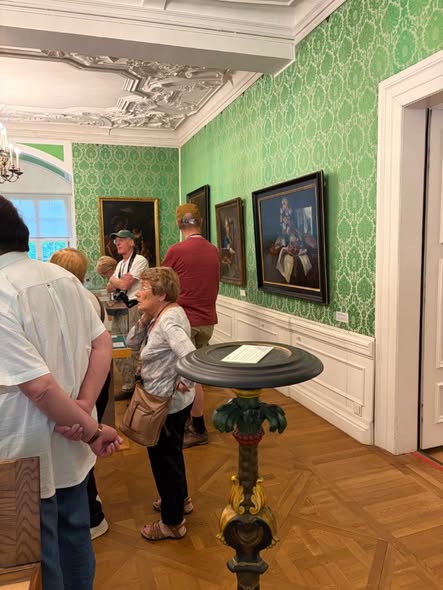
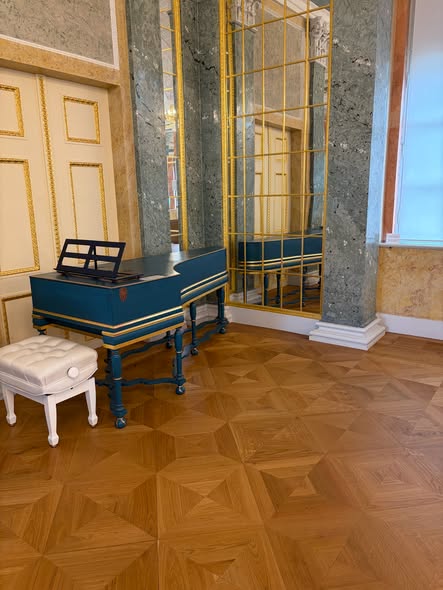
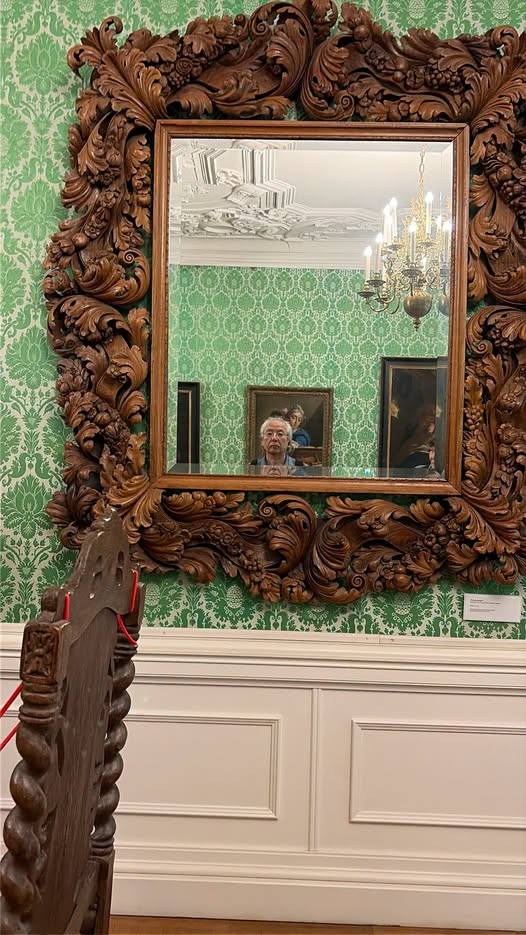
A snapshot taken by a modern-day friend in one of the exquisite rooms at Köthen Castle (Schloss Köthen). Standing in this room—with its vibrant green wallpaper and magnificent stucco ceiling—creates the illusion that time itself has stood still. The many paintings adorning the walls serve as silent witnesses that have watched over the castle’s history and culture since the days I served here as Court Kapellmeister. Seeing modern travelers listen intently to their guides and gaze upon the history of this space with such affection moves me deeply. The very atmosphere of the castle—where I once conversed with Prince Leopold and my fellow musicians, honing ideas for new music—is still cherished and preserved today. From the visual beauty of the décor to the echoing footsteps of history, the lingering spirit of the era I loved permeates every corner of Köthen Castle. #ケーテン城 #バッハの旅 #ドイツの城 #歴史博物館 #SchlossKöthen #宮廷楽長 #クラシック音楽の旅
ーーーーーーーーー
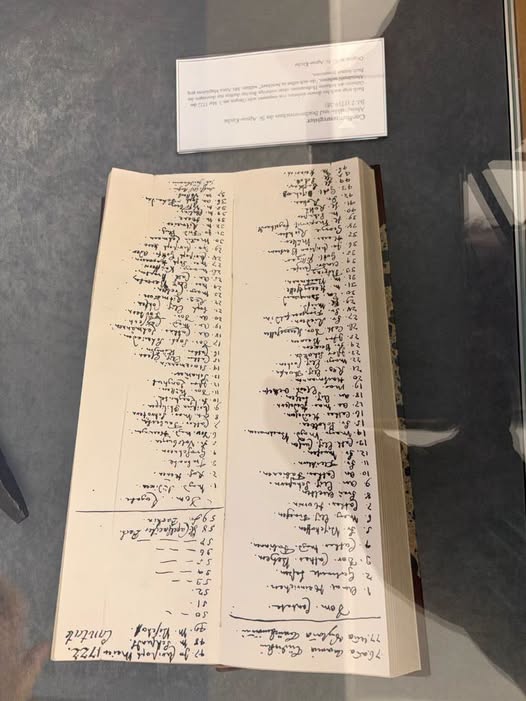
Memories of myself and my loved ones, enduring across time. In the exhibition room at Köthen, I found myself breathless upon reuniting with an old ledger. It is the record book of Holy Communion and confession from St. Agnus Church, which I attended between 1719 and 1728. Please, take a gentle peek at the pages. There, a record remains from May 3, 1722—the Sunday of *Cantate* (“Sing”). Inscribed proudly at the very top is the name of my dear Prince Leopold—a man I served and respected with all my heart. And if you cast your eyes a little lower… at the fifty-eighth entry, you will see the words “Capellmeister Bach”—my title and name from that time—written side by side. The mere sight of these characters vividly brings back the chill in the air of the church, the sound of prayers, and the warmth of my wife, Anna Magdalena, who always stood close by my side. Anna was the one who rescued me from the depths of despair after I lost my first wife, Maria Barbara. We would often walk hand in hand to this very church, St. Agnus, to offer our prayers together. It seems that even modern records note that “Bach always attended services with Anna Magdalena”. To think that a “living testament” of mine—not a musical score, but a simple trace of ink—has survived to the present day for you all to see fills me with a mix of slight embarrassment and immense joy. Köthen was a city that embraced not only my music but also the joys and sorrows of my life. Tomorrow, I return to my daily routine in Leipzig, yet the love-filled days I spent in this city still resonate within my heart. #バッハ #ケーテン #聖アグネス教会 #アンナマグダレーナ #歴史的資料 #音楽の旅 #ドイツ旅行 #Bach #Köthen #StAgnus
ーーーーーーーーー
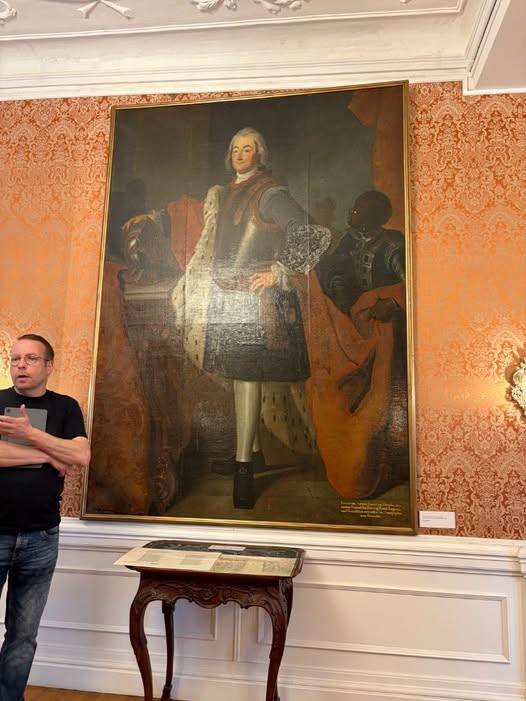
To the dear Duke who supported my “happiest era”: In the beautiful halls of Köthen Castle, I was finally reunited with the most important benefactor of my life. This large portrait, displayed so proudly on the wall—he is Prince Leopold of Köthen, the ruler who welcomed me as his Kapellmeister and loved my music more than anyone else. To all of you in the modern age: he was far more than just an “employer”. He was a magnificent musician in his own right—skillfully playing the cello, viola da gamba, and harpsichord—and an irreplaceable kindred spirit with whom I passionately performed as a fellow member of the ensemble. The *Brandenburg Concertos* and various instrumental works I composed for him came into existence precisely because of his profound musical sophistication. He was a kind and intelligent young ruler who, despite the rigid social hierarchy of the court, treated me as a “friend” and offered comfort during my family’s times of sorrow. In his portrait, he gazed upon the travelers listening to the modern-day guide with that same noble look I remembered—appearing, somehow, to watch over them with quiet delight. “Prince, the music you loved still resonates across the world, even three hundred years later”. Amidst the sound of footsteps echoing against the castle walls, I fancied I could hear the deep, resonant tones of the cello we once played together. #レオポルト公 #バッハ #宮廷楽長 #パトロン #ケーテン城 #音楽の絆 #ドイツ歴史旅 #Bach #FürstLeopold #SchlossKöthen
ーーーーーーーーー
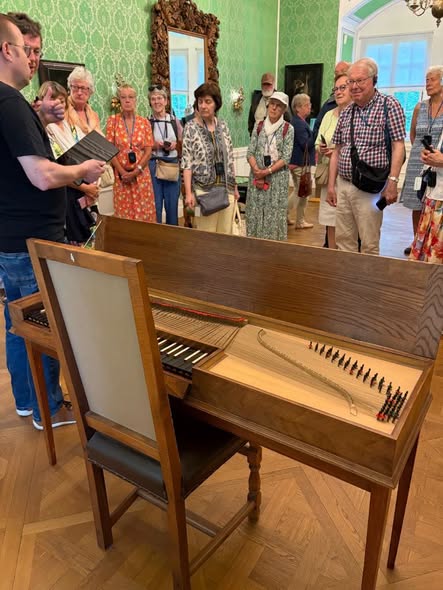
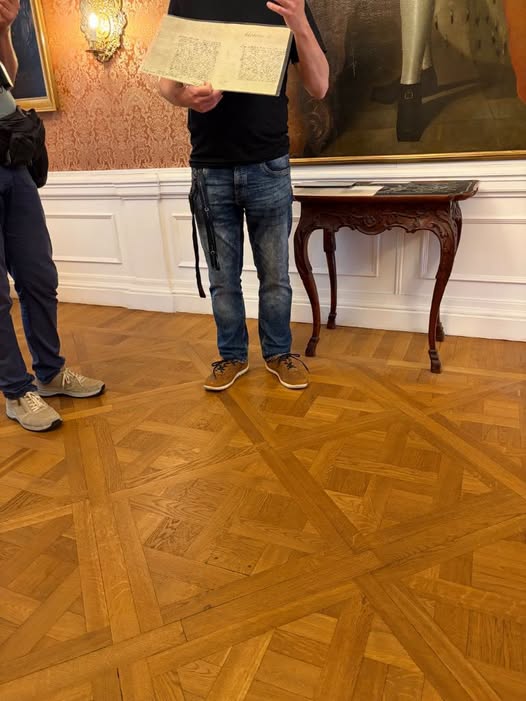
The joy of knowing the words I once penned still reach people’s hearts today: standing before Prince Leopold’s portrait, a modern-day guide held up—with evident affection—an old letter (or perhaps a court record) that I had left behind. On that aged paper, where the ink had long since faded, were inscribed the “living words” I had shared with Prince Leopold and my colleagues—words born of the joys and struggles I experienced within these castle walls. When I was moving my pen across the page back then, character by character, I never imagined that three centuries later, travelers from distant lands would be listening so intently to every single line. As they walk across the beautifully polished parquet floors of this castle, these people of the modern age are eagerly learning the story of the life I once lived. I am deeply moved by the modern-day guides who cherish and share not only my music but also my very words and the legacy of my life, as well as by the gazes of the travelers who look on. Just as musical notes spill forth from a score, may the history embedded in these ancient documents resonate vividly within the memories of your journey. #バッハの足跡 #ケーテン城 #歴史探訪 #ガイドツアー #音楽の歴史 #ドイツ小旅行 #Bach #SchlossKöthen #HistorischeDokumente
ーーーーーーーーー
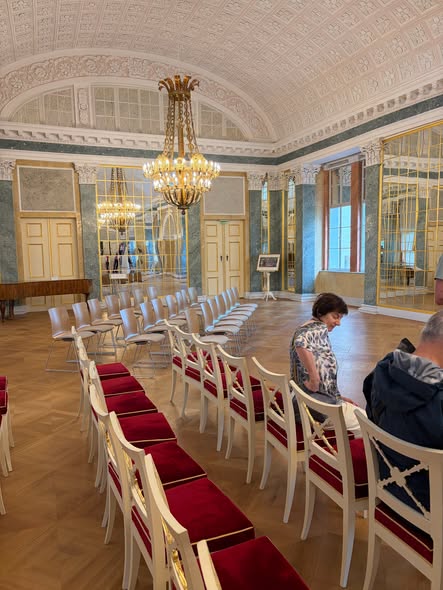
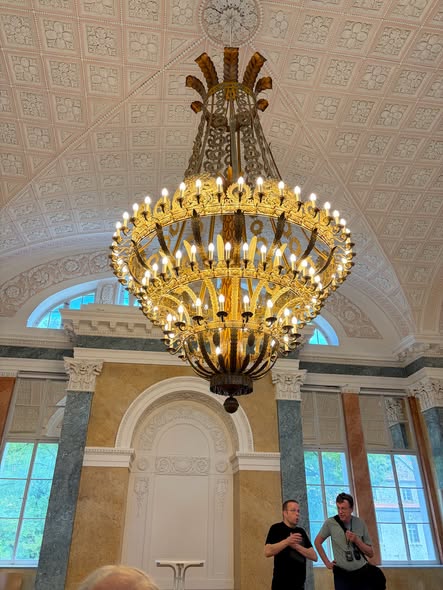
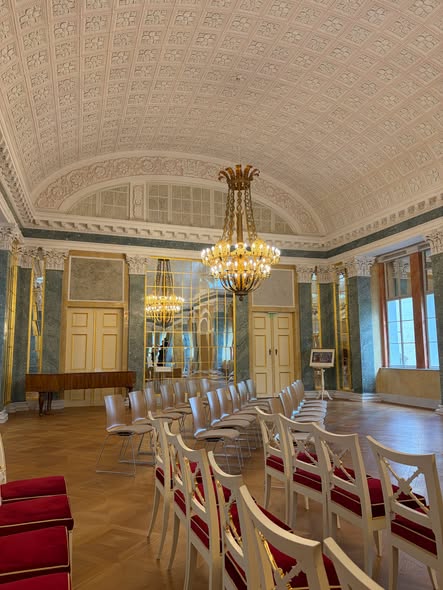
A premonition of joy echoes once more in the soaring “Hall of Mirrors”. At last, I have returned to the “Hall of Mirrors” (Spiegelsaal) at Köthen Castle—the hallowed ground where the most beautiful and blissful sounds of my musical life once rang out. Look up and behold: marble columns, a beautifully carved coffered ceiling, and graceful chandeliers. This dazzling hall, where light dances off great mirrors, is the very place where we gathered day after day to rehearse new concerti grossi and lose ourselves in the music. “Come now—let the cello’s bass resound, and let the violins begin their interplay!”. I cannot help but feel that the echoes of those cues I once gave still linger in the very air of this room. Today, modern travelers sit upon elegant chairs, listening intently to the history and acoustics of this hall. To see music lovers gathered here—much like the courtiers of Prince Leopold’s time—is truly a beautiful sight. May the melodies of the *Brandenburg Concertos* and the *Concerto for Two Violins*—works born in this very place—resonate gently in your ears. The memories of my most radiant youth still quietly breathe within this beautiful Hall of Mirrors. #鏡の間 #ケーテン城 #ブランデンブルク協奏曲 #宮廷音楽 #ドイツの宮殿 #バッハの聖地 #クラシック音楽 #Spiegelsaal #SchlossKöthen #Bachstadt
ーーーーーーーーー
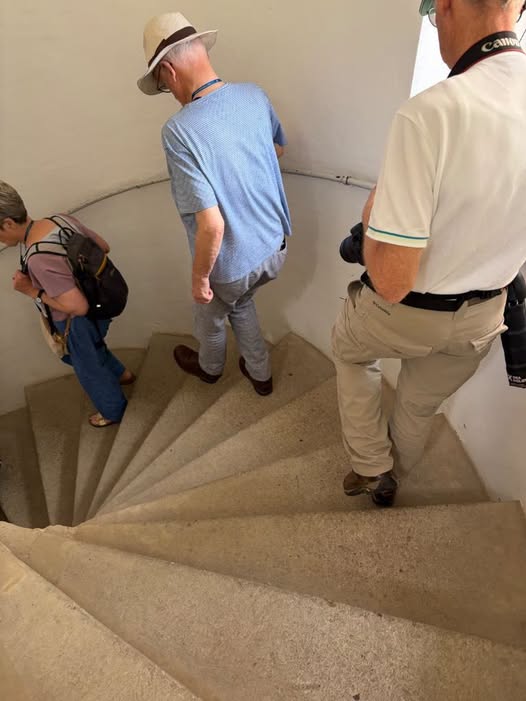
Step by step, moving at the pace of my everyday life, I leave the glittering hall behind and descend the castle’s narrow spiral staircase with my friends from the modern age. I can feel the worn stone beneath my feet with every single step. The rhythm—the tempo—of this walk is exactly the same as it was back when I used to hurry toward the room where the court orchestra awaited, a musical score tucked under my arm. My modern-day companions move slowly, cameras in hand, carefully watching their footing. “Mind your step, traveler; it’s dark down there”. Memories of calling out just like that to my fellow musicians as we went up and down these stairs come flooding back, carried by the unique resonance against the white walls. It is not only in the grandeur of the main stage but also in these casual “spaces of transit” that the true, living breath of our daily lives back then is hidden. Now, what wonderful sights await beyond this staircase? My day trip to Köthen continues. #螺旋階段 #ケーテン城 #城巡り #バッハの日常 #ドイツの歴史 #一歩ずつ #SchlossKöthen #Wendeltreppe #Bachstadt
ーーーーーーーーー
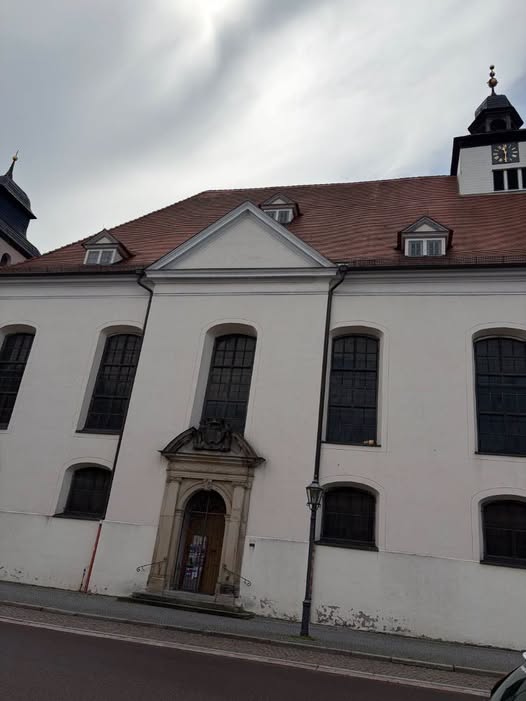
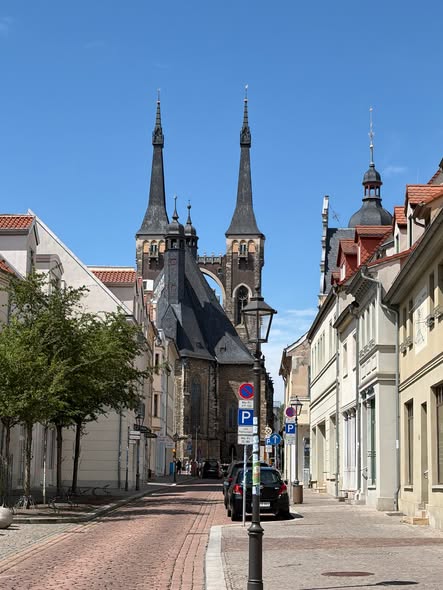
A white church that cradled my prayers and quiet melodies. After the lively musical hours at the castle, I have arrived before St. Agnus Church—the place in Köthen where I found the greatest peace of mind. I look up at its white-walled presence and the clock tower peeking out from the roof. It remains exactly as it was 300 years ago, when I would walk hand-in-hand with my wife, Anna Magdalena, and pass through these doors week after week. Bathed in the gentle light streaming through this large window, I offered prayers to God and felt my heart swell with ideas for a new cantata. Seeing my name inscribed in the “1722 Register”—which I had viewed earlier in the exhibition room—served as a tangible testament to my life here in this very church. It may lack the overwhelming grandeur of St. Thomas Church in Leipzig, yet it was the simple, warm tranquility of St. Agnes Church that breathed a calm, profound spirit into the music I composed during my time in Köthen. Even now, the sound of the bells marking the hour echoes softly—so very softly—deep within my ears. #聖アグネス教会 #バッハの足跡 #ケーテン #祈りの場所 #ルター派教会 #ドイツ歴史旅 #StAgnus #Köthen #Bachstadt
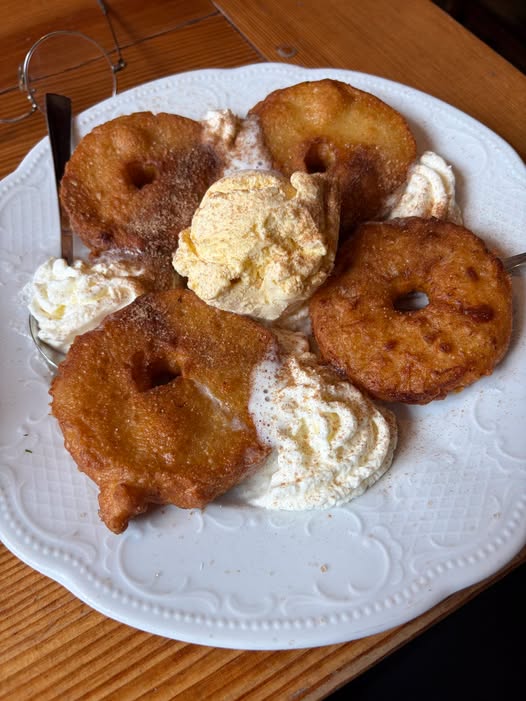
ーーーーーーーーー
Sunday, June 21
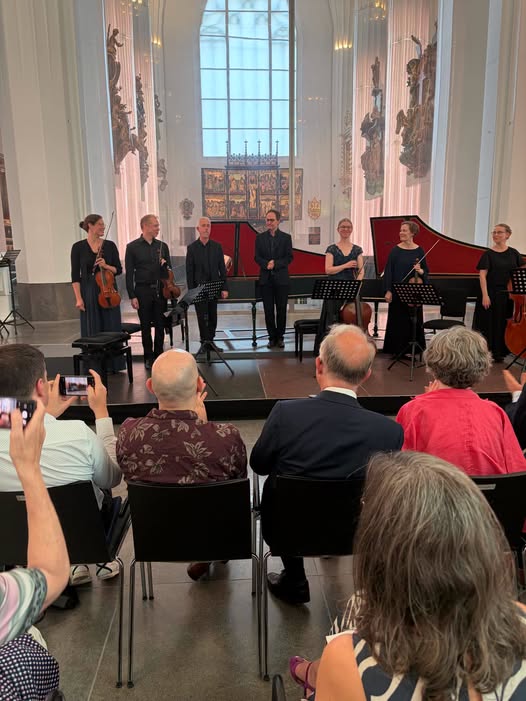
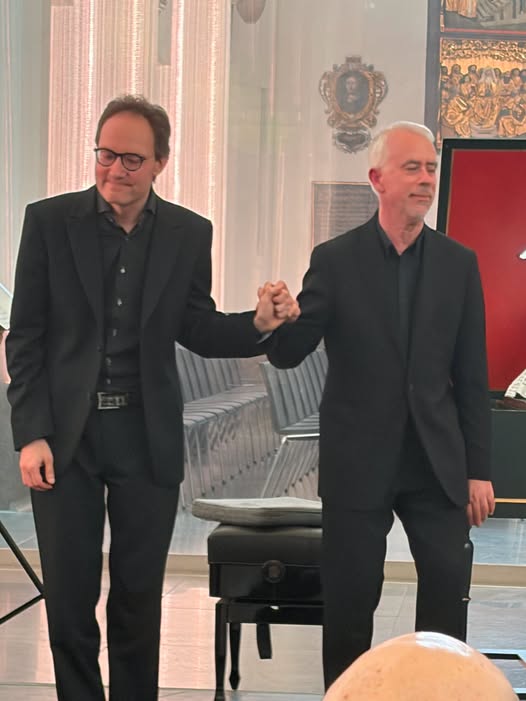
The afternoon program featured the only purely instrumental concert of the series. It included the Brandenburg Concerto No. 5 and two concertos for two harpsichords (in C minor and C major). A sonata for two harpsichords by Friedemann Bach was performed in between, and the concert concluded with the Concerto for Two Violins in D minor. The harpsichord soloists were Pierre Hantaï and Aapo Häkkinen. It was a delightful, relaxed performance.
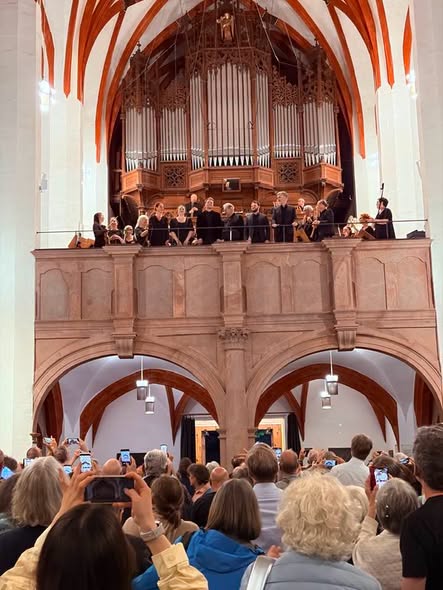
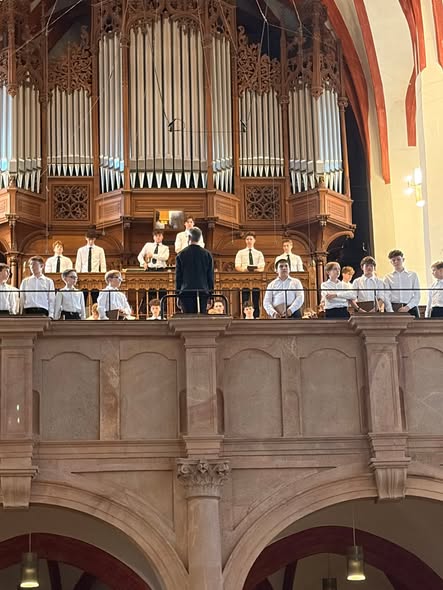
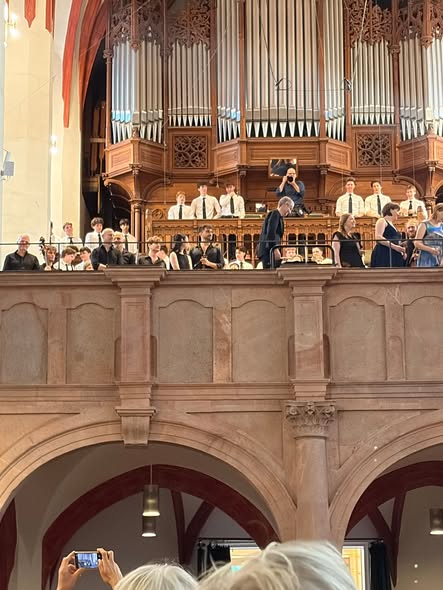
The evening program was the Mass in B Minor—a work truly befitting a grand climax.
The performance was given by:
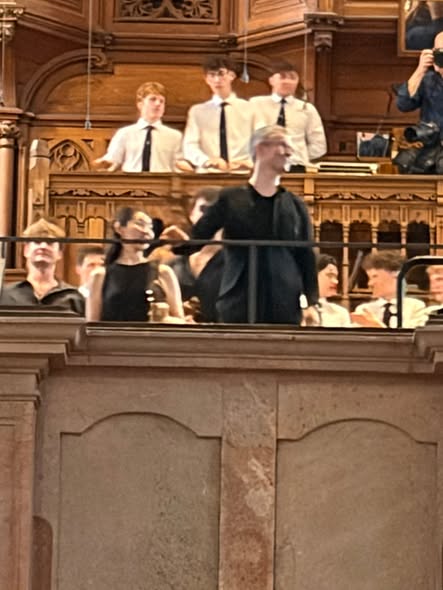
Thomanerchor Leipzig and Akademie für Alte Musik Berlin,
Conducted by Thomaskantor Andreas Reize.
The soloists were as follows:
Dorothee Mields (Soprano),
Miriam Feuersinger (Soprano),
l Malotta (Alto),
Manuel Walser (Bass).
To hear that Mass in B Minor performed at St. Thomas Church in Leipzig—sung by the legendary St. Thomas Boys Choir under the direction of the Thomaskantor—was deeply moving. It felt like a dream. I have no regrets left; I could be called to heaven at any moment now. Ah, the strains of “Dona Nobis Pacem” are still echoing in my mind.
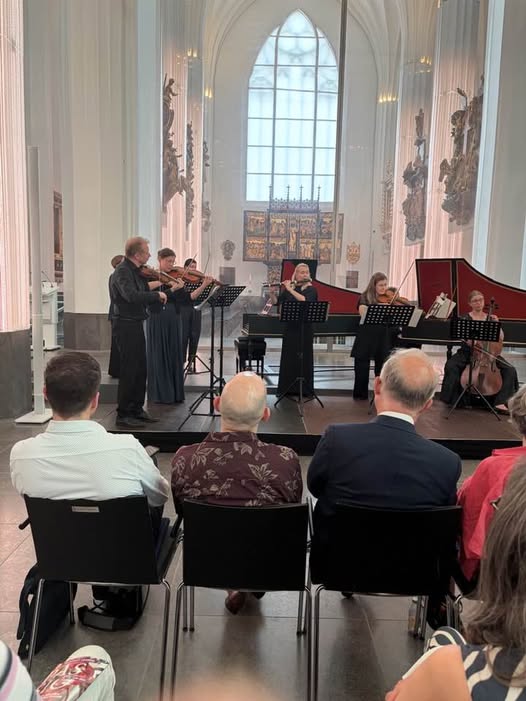
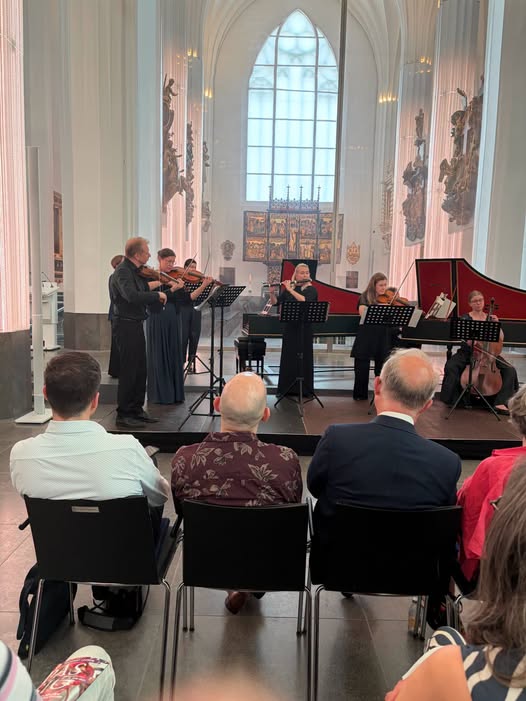
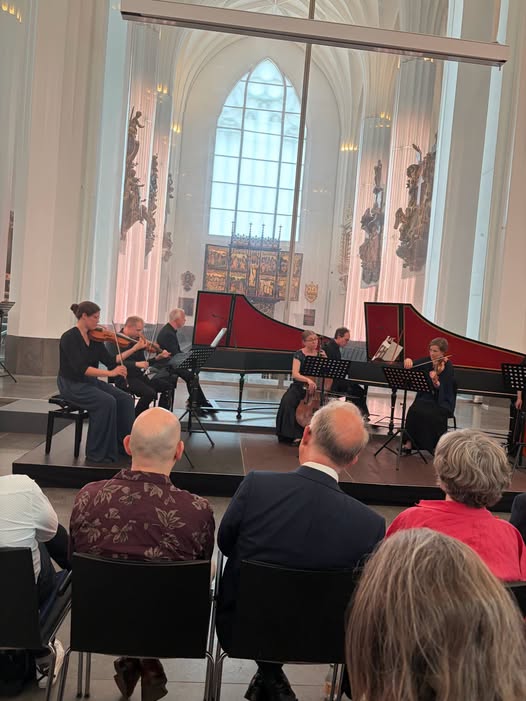

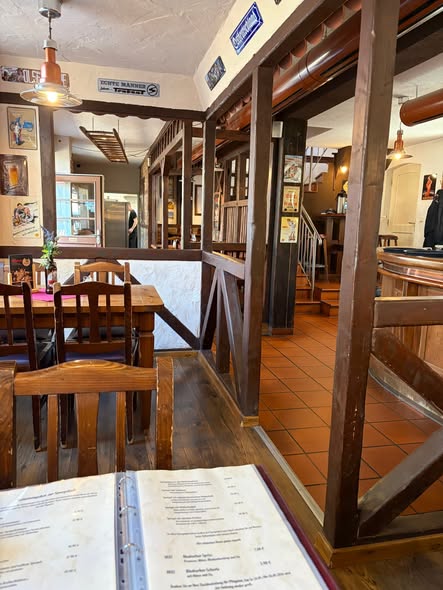
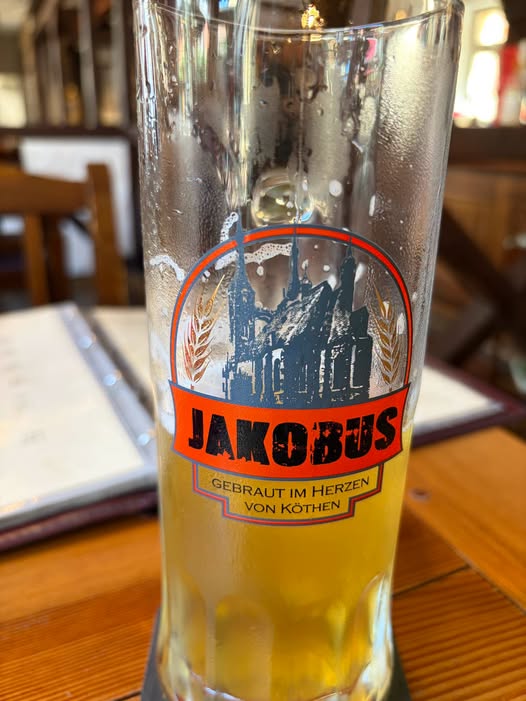
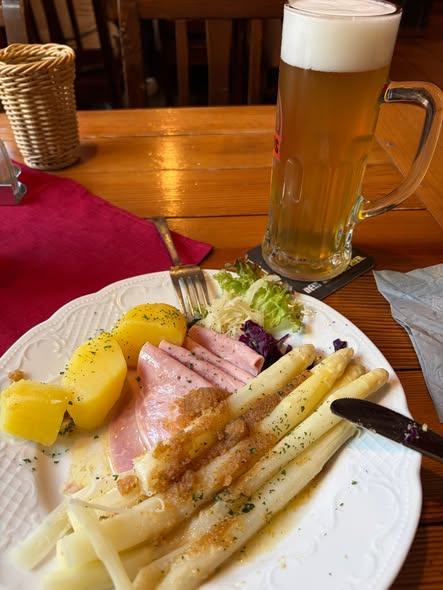
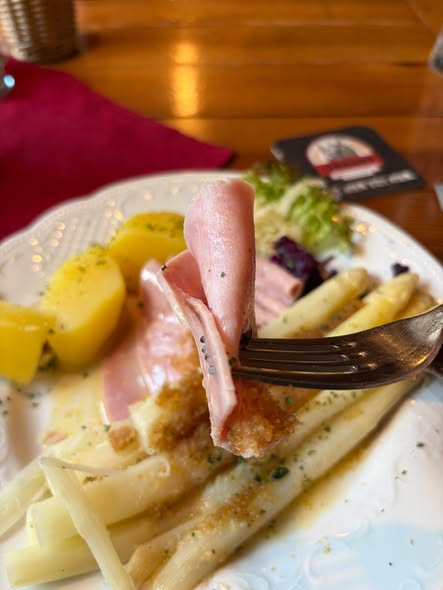
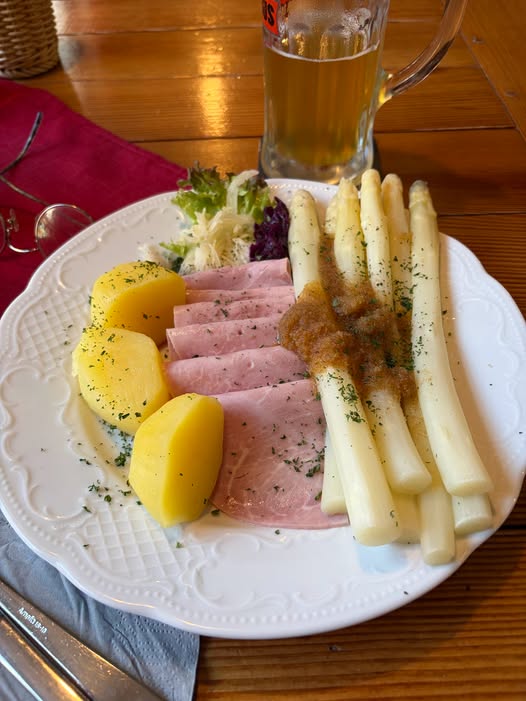
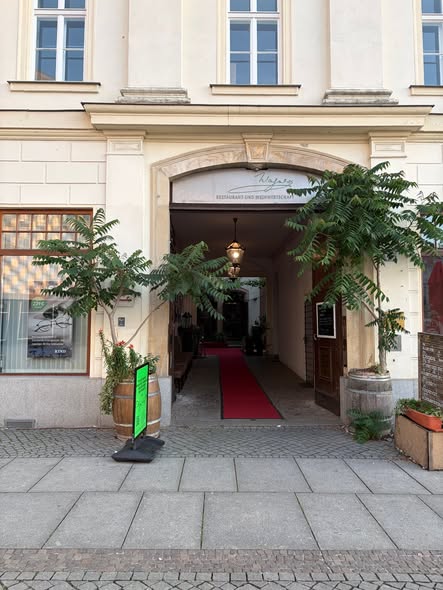
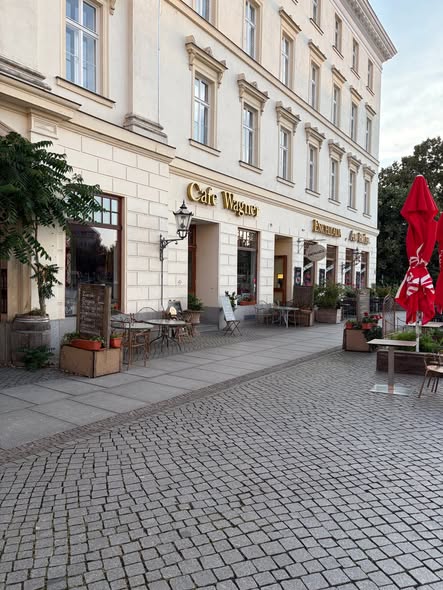
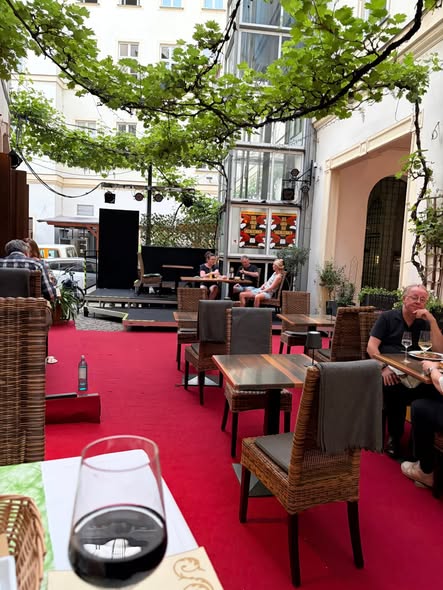
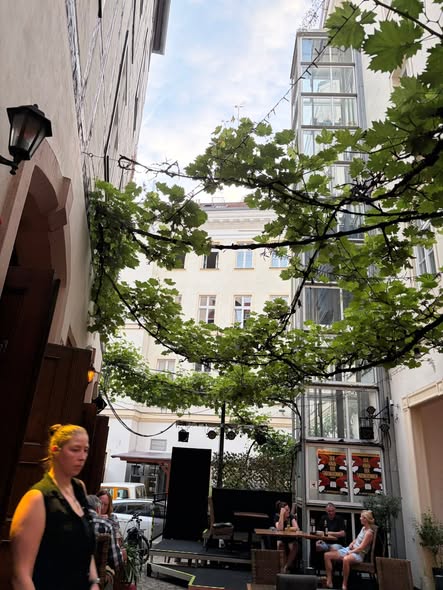
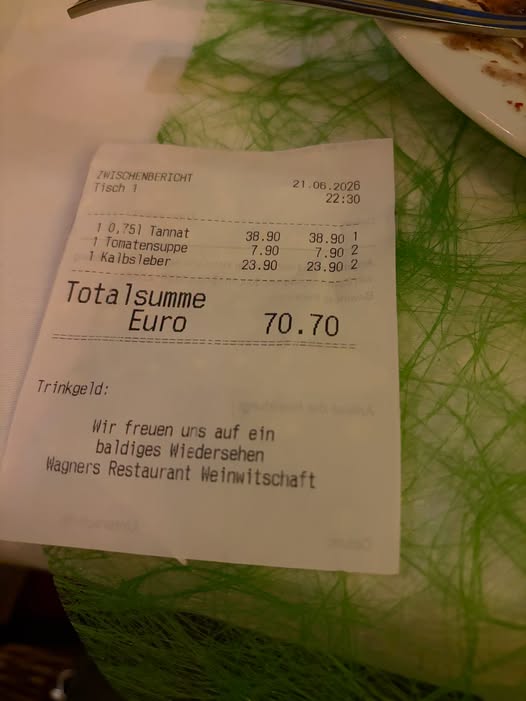
To wrap up the day, I had dinner at Wagners Restaurant und Weinwirtschaft. Although I had originally planned to have asparagus, I decided to switch to a meat dish at the last minute, having already enjoyed asparagus at two other restaurants.
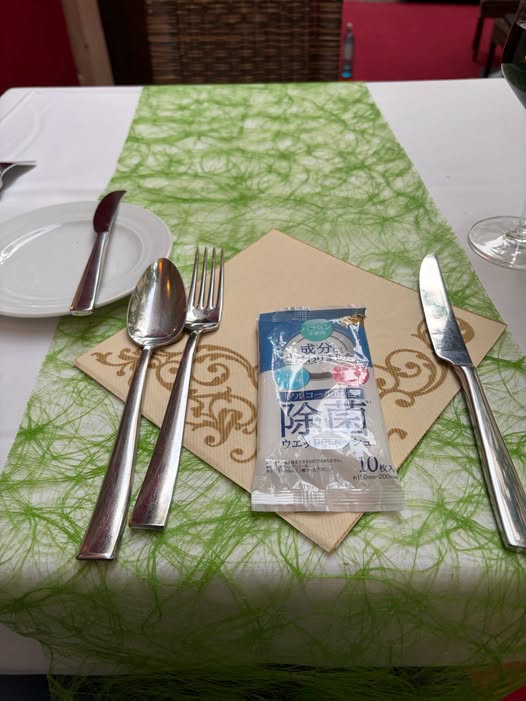
You almost never get an “oshibori” (wet towel) in Germany. That is why this is an essential item to carry.
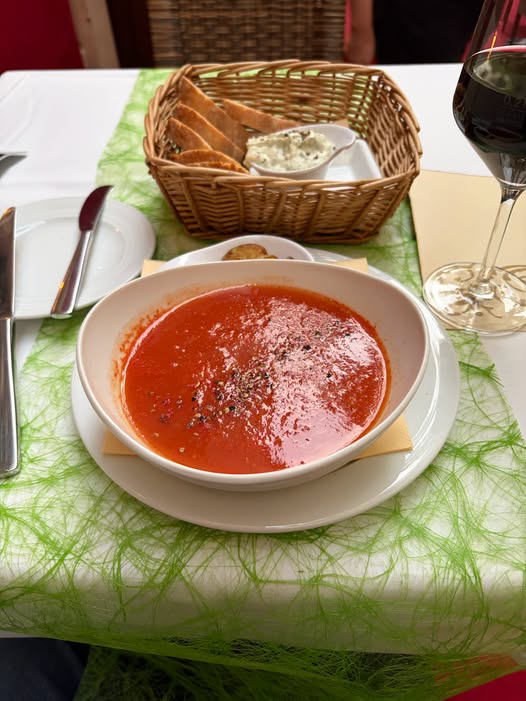
Tomato soup. I was supposed to have ordered the small size, but this is the amount I got.
The dip is incredibly delicious.
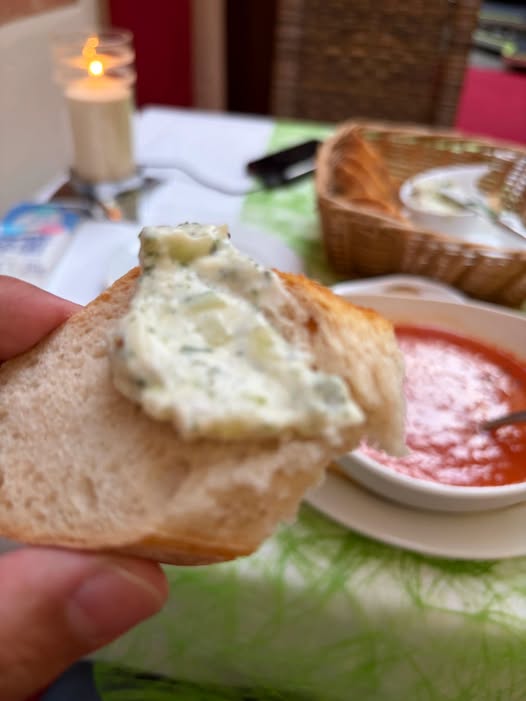
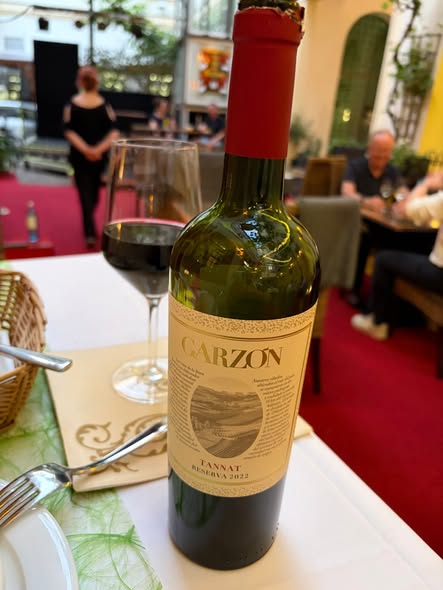
Unfortunately, the wine 🍷 was from Uruguay.
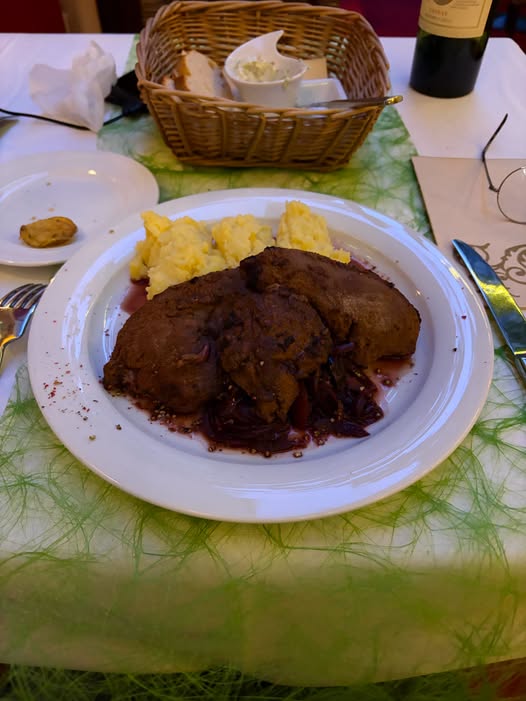
Today’s dish at Maidish is sautéed liver.
All the dishes here bear names derived from Wagner; I seem to recall this one being named “Parsifal” or something similar. In any case, the portion size is enormous. It is seasoned with red wine and apple. I just asked a staff member for the official name of the dish, and that is what it turned out to be.
prager konservatorium Apfel-zwiebel-ragout (Prague Conservatory Apple and Onion Ragout).
This was the biggest splurge of the trip, but I suppose it was reasonably priced…
ーーーーーーーーー