In the future, the most dangerous place will not be Taiwan, but Tokyo. I believe that China and Japan will inevitably clash, and the battlefield will be Tokyo—not some remote island, but Tokyo itself.
I hold a very specific, well-founded perspective on this. This is not mere fantasy; it is a scenario that could realistically unfold. My predictions have proven quite accurate in the past. Many Japanese people fail to grasp this, but there is no such thing as a “China-Taiwan war”. China views the Taiwanese people as compatriots, and its constitution explicitly states that Taiwan is part of China. In fact, with the exception of the period of Japanese occupation, it has always been part of China. Consequently, China has no intention of destroying Taiwan; instead, it aims to force a surrender through a blockade without engaging in direct combat. Nor can China afford to destroy TSMC (Taiwan Semiconductor Manufacturing Company); it seeks to acquire the company in a way that preserves its immense economic value.
The watershed moment in the US-China AI rivalry lies in Taiwan’s semiconductor manufacturing capabilities. Furthermore, controlling both Taiwan and Okinawa would grant dominance over half the globe. Japan’s strategic importance is relatively low; in the event of a crisis, the US would likely abandon Japan first and retreat to Guam.
That is why China is actually quite pleased—because Ms. Takaichi is acting exactly in line with this scenario. It gives China even more justification for a military confrontation. If Japan does not change course, Tokyo will be reduced to a hellscape of fire within a decade, and the nation will never be able to recover.
South Korea actually wants no part of this, which is why it is withdrawing US forces stationed there; it aims to avoid being dragged into a conflict should one break out. North Korea is no longer a threat, either. As long as relations with China remain good, South Korea effectively has no enemies.
There is no deep-seated animosity between China and the American people. China and the US were allies during World War II, and the US did not engage in the kind of predatory aggression seen during the late Qing Dynasty—where powers sought to carve up and seize Chinese territory. Japan is the only target against which China could launch an attack without facing domestic opposition. When China achieves reunification, it will first strike Japan—destroying Tokyo and eliminating the Emperor—to prevent Japan and U.S. forces stationed there from coming to the rescue.
You might point out that the U.S. possesses Tomahawk missiles and B-2 bombers, but China is undeterred. Once war breaks out, China would launch thousands of missiles, thoroughly crushing Japan so completely that it could not recover for fifty years, all before Japan could even mount a counterattack. I have stated that the U.S. would not engage in all-out war with China; China’s nuclear arsenal is already substantial—much like Russia’s, which prevents NATO from attacking it. A more realistic future scenario is one where China and the U.S. jointly administer Japan.
If the Japanese and Chinese economies were decoupled, an attack on Japan would have a minimal economic impact on China. In contrast, attacking Taiwan would halt TSMC’s operations, severely affecting China’s automotive and consumer electronics industries; furthermore, China is unlikely to commit mass slaughter against its own compatriots. Attacking Japan is a different matter entirely. Once Japan is forced to surrender, the U.S. would be unable to intervene on a large scale, cementing China’s strategic position in East Asia. Okinawa could then be utilized as a naval base, and control of the Pacific would effectively be split between China and the U.S.
Thoroughly crushing Japan would likely cause Taiwan to surrender without a fight. This would also serve as retribution for the Nanking Massacre during World War II. That is precisely why Sanae Takaichi is becoming apprehensive; China’s missile exercises are, in reality, all aimed at Japan. Even if faced with global sanctions, China would not hesitate to drop an atomic bomb on Tokyo and destroy Japan.
As for Taiwan, the strategy is simply to blockade it. If the U.S. and Japan do not come to its aid, Taiwan will surrender without a fight. The subsequent phase would involve reclaiming Okinawa—currently occupied by Japan—and shattering the First Island Chain to secure vast access to the open ocean. This is a scenario that could genuinely come to pass.
If you don’t believe me, consider this: on July 5th, I posted that “China would strike Tokyo first with missiles,” and the launch actually took place on July 6th. Everything I say is grounded in fact. If you choose not to believe it, so be it.
<End of quote>——
This aligns almost perfectly with the scenario I have in mind. I consider it a “prediction” that hit the mark brilliantly. I previously wrote the following in an article titled “Is Taiwan China?”:
<Quote begins>——
Is Taiwan part of China?
The answer is clearly stated in the “Japan-China Joint Communiqué (1972)”.
“The Government of the People’s Republic of China reiterates that Taiwan is an inalienable part of the territory of the People’s Republic of China. The Government of Japan fully understands and respects this stand of the Government of the People’s Republic of China and firmly maintains its stand under Article 8 of the Potsdam Proclamation”.
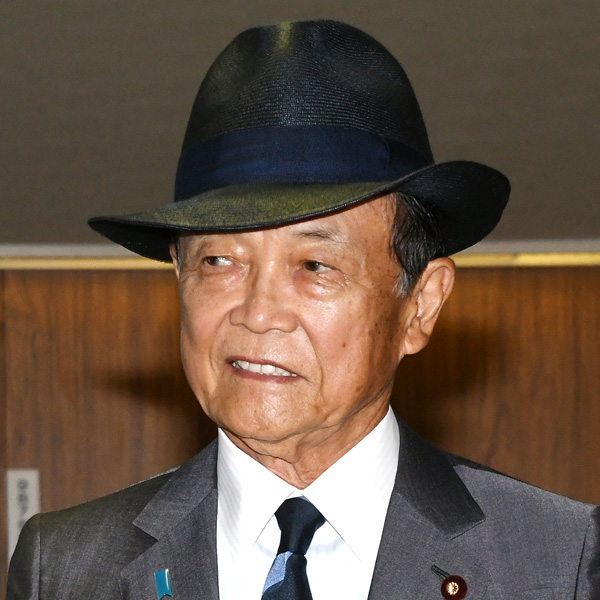
Thus, the Japanese government “fully understands” that Taiwan is Chinese territory. This is tantamount to “acknowledging” that the so-called “Taiwan issue” is an “internal affair” of China. In other words, if China were to move to take control of Taiwan—whether by peaceful means or military force—any objection raised by our country would constitute “interference in internal affairs”. Yet, the Japanese government stokes fears by talking about a “Taiwan contingency”, and Taro Aso goes so far as to calmly declare things like “we are prepared to fight” and “we will use “military force” if the time comes”.
This is no laughing matter! Let us suppose a “Taiwan contingency” (a landing on Taiwan by the Chinese People’s Liberation Army) actually occurs. In that event, Sanae Takaichi would undoubtedly “condone” U.S. military intervention launched from U.S. bases across Japan, including those in Okinawa. And what do you think would happen then? A hail of Chinese missiles would rain down on U.S. bases throughout Japan. Kadena, Yokota, Iwakuni, Atsugi, Sasebo, Misawa, Yokosuka… there are about 130 such bases nationwide. Of course, it wouldn’t just be U.S. bases; missiles would also fly mercilessly toward Self-Defense Force (SDF) garrisons across the country. Naturally, civilians live in the vicinity of these bases. In a country as small as Japan, where are civilians supposed to evacuate to? There isn’t a single fallout shelter anywhere in the nation. It would be one thing if only the “bases” were targeted. But what do you think would happen if the nuclear power plants (all 54 of them) facing the Sea of Japan and the Pacific Ocean were targeted? Japan would undoubtedly be reduced to a state of total devastation. Contaminated by radiation and with the functions of the capital severed, recovery would take decades. The very survival of the Japanese people would be in jeopardy. The crucial point here is that only Japan would become the “battlefield,” while the US mainland would suffer zero damage. Japan alone would be left holding the bag, only to have the rug pulled out from under it later. The US and China are unlikely to fight to the bitter end; after all, neither side wants their own country turned into a battlefield… I want to ask: are you fawning over that “Snake Woman” without even considering these possibilities? #TaiwanContingency#Takaichi#Aso#SnakeWoman#NuclearPowerPlants#China
<End of quote>——
Now, incredibly, a “Taiwanese” individual, Mr. Wang Shiming—one of the key figures involved—has provided “corroborating testimony” regarding this. The most persuasive part of his statement is the assertion that “the battlefield will be Tokyo—not some remote island, but Tokyo itself”. I agree with this view and have long pointed it out myself. However, unlike Mr. Wang, I do not believe China would “use nuclear bombs from the start”. I cannot imagine Xi Jinping voluntarily casting himself as the “villain” by doing something that even Russia has not dared to do. Yet, this may be a trivial detail. After all, “nuclear” weapons are not necessarily required to drive the Japanese archipelago to “total devastation”. Conventional bombs would suffice to achieve that objective. Indeed, that goal could easily be accomplished simply by using conventional bombs to target any one of the 54 nuclear power plants. In any case, I believe Mr. Wang’s post depicts the future “state of Japan” with unparalleled realism. I am convinced that if we Japanese wish to prove his prediction wrong, we must fundamentally rethink our approach. Above all, I believe we need to “Appropriate disciplinary action against Ms. Takaichi”. There is one other point that resonates deeply with me: his assertion that China “will not damage Taiwan’s mainland”. This is because semiconductor manufacturing facilities represent a “treasure trove” for China as well. https://excelkobo.net/Asshole.mp4自民党役員会 麻生太郎副首相