
Sake and Sakana in Japanese Culture
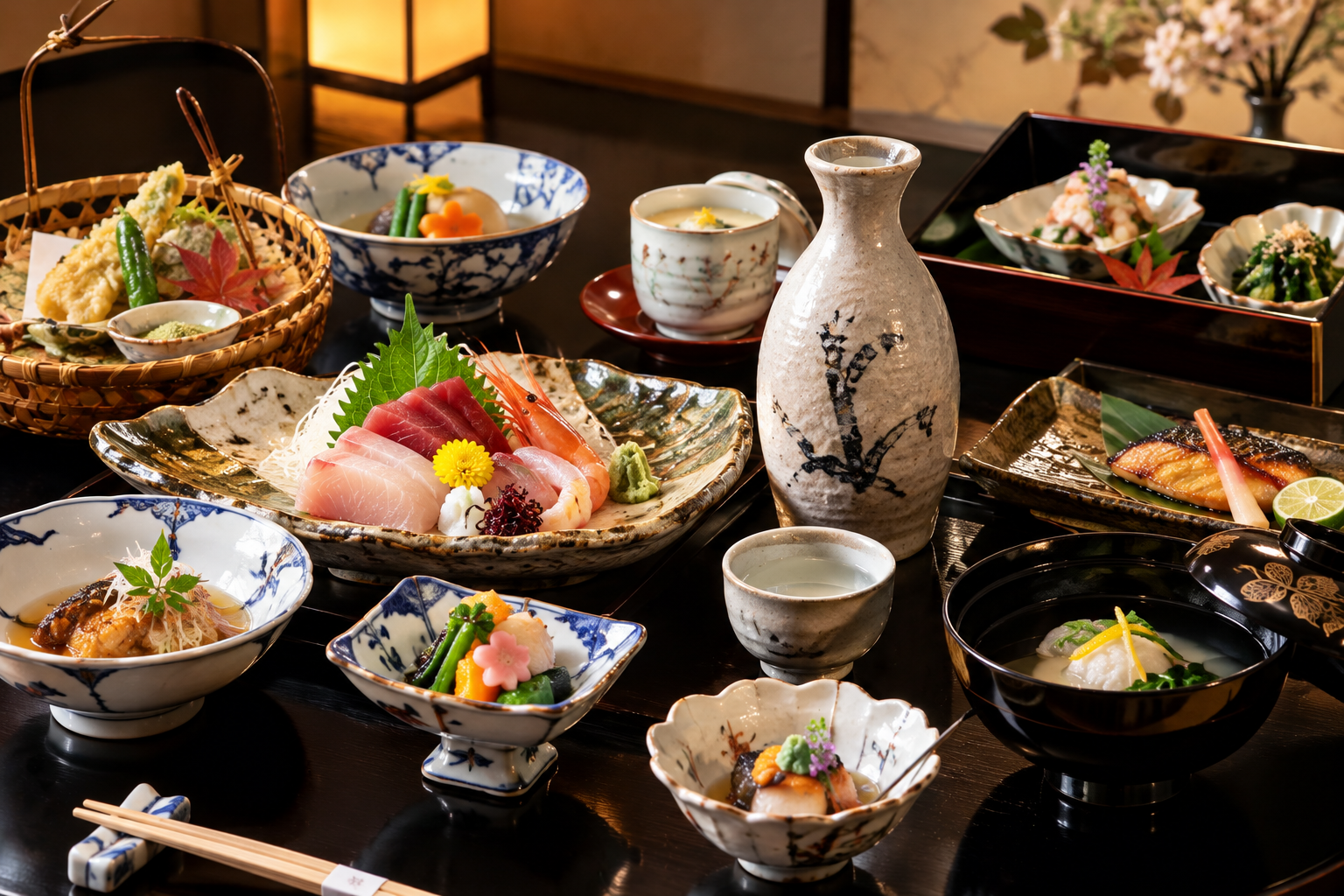
In French cuisine, wine serves to “complement” the food. In Japanese cuisine, however, sake and its accompanying dishes—known as “sakana”—are always considered “equals”. When a Japanese person who enjoys drinking acquires a fine bottle of sake, they will rush out to buy some “sakana” (typically fish). Conversely, if they happen to receive some excellent “sakana”, they will rush out to buy some sake. This is the typical behavior of a Japanese person who loves to drink. It is often said that the “Edo-kko” (native residents of old Edo) would “drink sake with nothing but salt as an accompaniment”—but this is an “aesthetic” rooted in a sense of “bravado”; in truth, they, too, crave delicious food to go with their drink. While the “Edo-kko” might dismiss an overt desire for food as “vulgar”, this is merely a form of posturing; in reality, they—just like any other Japanese person—consider the ideal drinking experience to be one where fine sake is paired with fine food. In Japanese, the word “sakana” (accompaniment) is pronounced the same as the word for “fish” (sakana), and, in fact, they share the same etymological origin. Thus, a “fine sakana” implies a fine fish—most notably, “sashimi. Next in the hierarchy are processed fish products, such as “shiokara” (salted fermented seafood), “shuto” (fermented fish viscera), and “karasumi” (dried mullet roe). Following these are soy-based products like tofu and “natto”, and further down the list are “tsukemono” (picles or ferments). Although the Edo period was defined by a rigid class system—which dictated what types of alcohol and food one was permitted to consume—people across all social strata sought out the “very best” available within their own class to enhance their enjoyment of sake.
In Japanese, the term “shoga-kotto” (calligraphy, paintings, and antiques) is used to refer to works of art. This reflects a unique aspect of Japanese culture: the belief that characters written with a brush possess a value equal to that of paintings or fine crafts. While Western paintings often require years to complete, Japanese calligraphy and paintings are typically created in a relatively short span of time—calligraphy, in particular, can be finished in mere minutes. Certainly, some works, such as folding-screen paintings executed with mineral pigments, do demand significant time, and there are also woodblock prints produced through a division of labor; these are perhaps better classified as “crafts” rather than “fine art”. In the 19th century, “ukiyo-e” (woodblock prints) became a massive sensation in Europe, and other Japanese crafts—such as ceramics and lacquerware—also captivated the Western imagination.
In the post-war era, Japan rose to become an economic powerhouse, dominating the global landscape in modern industry; yet, this period of prosperity did not last. Japan’s technological edge has been eroded—surpassed by emerging nations—and the brilliance of the past has all but vanished. In sectors like AI and robotics, Japan has fallen far behind other East Asian nations. In short, this is the result of government inaction and failed political judgment. A thirty-year economic slump has effectively stripped away the Japanese capacity for innovation, reducing the nation to one where people are merely scraping by, living day-to-day. The consumption tax bears a heavy responsibility for this, further exacerbated by a complete lack of policy regarding social security. The Japanese population continues to shrink year after year, and any sense of national pride has all but evaporated. Despite this dismal state of affairs, some—the so-called “net-rightists”—still look down on China and South Korea. And then there is the claim that “a crisis in Taiwan is a crisis for Japan”—what utter nonsense. Rather than spouting such drivel, the focus should be on restoring domestic demand. Again, the consumption tax is to blame. I had intended to write about food and drink, but it seems the conversation has veered off in an entirely different direction. #sake #sakana #shogakotto #inovation