
Net Right-Wing Trolls and the “Parting Shot”(Originally written 25 years ago by Toshi)
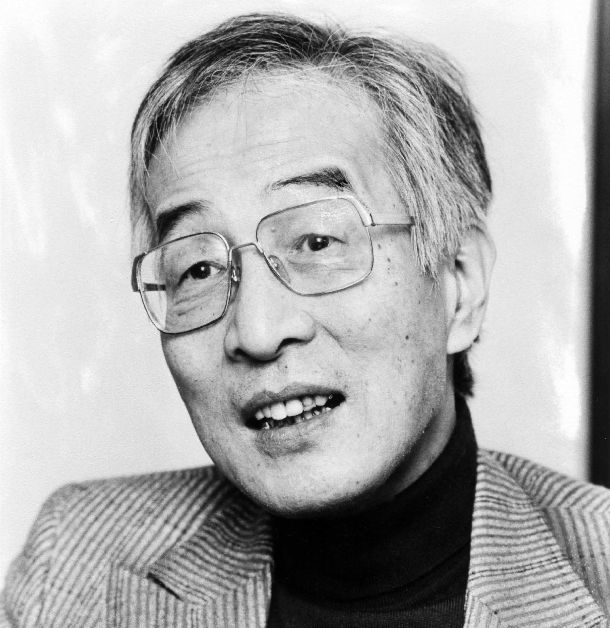
Once upon a time, there was an era when so-called “impostor foreigners” gained immense popularity in Japan—figures going by names like Isaiah Ben-Dasan, Paul Bonnet, and Jan denman. Among them, Isaiah Ben-Dasan was the most prominent. However, Katsuichi Honda, a legendary investigative journalist for The Asahi Shimbun, completely stripped away Ben-Dasan’s mask. Following that public exposure, the author was forced to write under his real name, Shichihei Yamamoto. Yet, remarkably, the public willingly continued to be deceived by him for years. The following is a column I wrote back then.
Phrases like “Goodbye then”, “This is my final post”, “I will never return here”, or “Farewell to you all”. Over the years, throwing out these kinds of petulant “parting shots”—and then immediately creeping back just minutes later—was the most predictable, recurring pattern among the right-wing trolls (known as Net-Uyo in Japan) who used to overstay their welcome on my blog.
Why do they immediately backtrack after making such a grand exit? The reason is laughably simple: it is because, entirely contrary to their brittle expectations, the regular commentators on my blog instantly poke fun at them the moment they turn their backs. It appears they are psychologically incapable of staying silent when subjected to even a minor, witty counterattack.
You would think that any rational human being could foresee this consequence, but these trolls simply lack that capacity. It is their inherent nature to fire off a desperate parting shot, only to return a few minutes later to leave yet another uninvited comment. I have seen some complete fools repeat this absurd cycle multiple times in a single thread.
To declare a “victory”, fire off a “parting shot”, or leave a “last desperate gasp”, only to completely flip your own word and wander back onto the stage a moment later, is—from any objective perspective—profoundly embarrassing. Yet, these internet trolls seem entirely devoid of the capacity to feel shame.
In fact, there is an excellent method to avoid exposing oneself to such public humiliation, and today, I shall generously pass this wisdom down to these trolls. The secret is simple: Do not fire off a parting shot in the first place. It is incredibly simple, isn’t it? If you just follow this one rule, you will never have to suffer the embarrassment of breaking your own word.
Despite having an incredibly impoverished vocabulary, these trolls possess an insatiable desire to attack their adversaries. They confidently issue a “victory declaration” while relying entirely on a predictable script: insulting the opponent, nitpicking at trivialities, and launching ad hominem attacks. For some reason, they are remarkably fluent in this toxic lexicon, weaving it endlessly into the dialogue to make themselves appear slightly more intelligent—though, of course, it never works.
Yet, when it comes to the actual core substance of the debate, they say absolutely nothing. Their vocabulary regarding the actual truth is completely zero. I call this endless wall of irrelevant text “empty social niceties”. Since it is entirely superficial, meaningless, and serves no logical purpose, it deserves no other title. Over the years, countless trolls have burdened myself and my commentators with these long-winded, emotional, posturing, and deeply infantile writings that completely evade the actual thesis.
Today, I want to dissect the anatomy of these parting shots, false victories, and superficial smoke screens.
As it happens, there was a man who could be considered the ancestral archetype of the modern internet troll. This was over forty years ago—an era long before the internet even existed. His name was Shichihei Yamamoto.
At the time, this man was enjoying rampant success within right-wing publishing houses, most notably writing for Bungeishunju. He was a permanent fixture in their monthly magazine, Shorun! (“Gentlemen!”). I am entirely convinced that this specific individual was the pioneer of the modern troll—the direct genetic ancestor of today’s internet gaslighters.He was also the original master of the “sock-puppet identity”. His chosen handle was Isaiah Ben-Dasan.
He was the ultimate pioneer of intellectual impersonation.
During my youth, “theories about Japanese identity” (Nihonjin-ron) were a massive cultural phenomenon, particularly books supposedly written by foreigners looking at Japan. They ranged from authentic, respected scholars like Donald Keene to highly dubious, shady figures like Isaiah Ben-Dasan and Paul Bonnet. It was a chaotic mix of wheat and chaff.
As a side note, the figure named “Paul Bonnet” was actually a full-blooded Japanese man masquerading as a Frenchman to sell books. He went so far as to hire a Caucasian actor to stand in for him during television appearances—an astonishingly calculated deception. Looking back, it was pure comedy. By the time his popularity waned, everyone knew he was a fake, but it remains a marvel that such publishing fraud escaped legal penalty, protected under the vast umbrella of “freedom of speech”.
When I read Isaiah Ben-Dasan’s blockbuster book, The Japanese and the Jews, my immediate and lasting impression was one of profound discomfort. The author, supposedly a devout Jewish intellectual, describes taking a taxi from the airport and has the Japanese driver casually utter blatantly xenophobic remarks. Throughout the rest of the book, a tedious, rambling narrative stretches on endlessly, leaving the reader wondering what on earth he is actually trying to say.
The underlying message buried beneath 90% of the text—which consists of endlessly quoting the Bible, referencing ancient prophets, and performing intellectual acrobatics to mystify the audience—was nothing more than a extreme right-wing Japanese nationalist fantasy. He was using a faked Jewish persona to argue that Japan needed to massively increase its military presence. Furthermore, reading the text, it was completely impossible to believe it was a translation from an English manuscript; the text relied so heavily on distinctively Japanese, ambiguous, and emotional idioms. Even before I knew his true identity was Shichihei Yamamoto, my intuition knew it was a forgery.
Then came the grand clash. This counterfeit intellectual, Isaiah Ben-Dasan, made the fatal mistake of throwing down a gauntlet to our great journalist, Katsuichi Honda. In 1972, he published an article in Shorun! targeting Honda’s work.
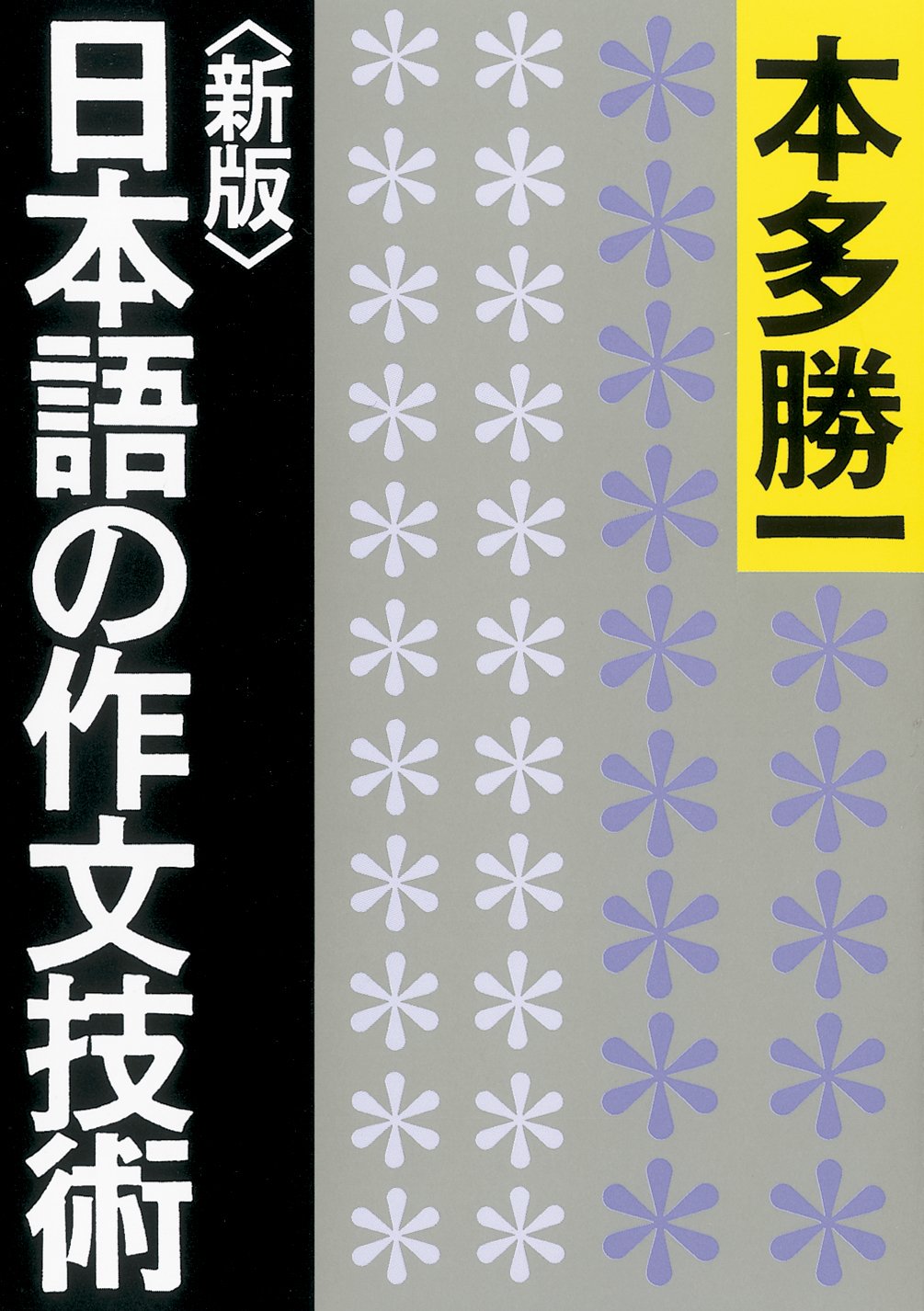
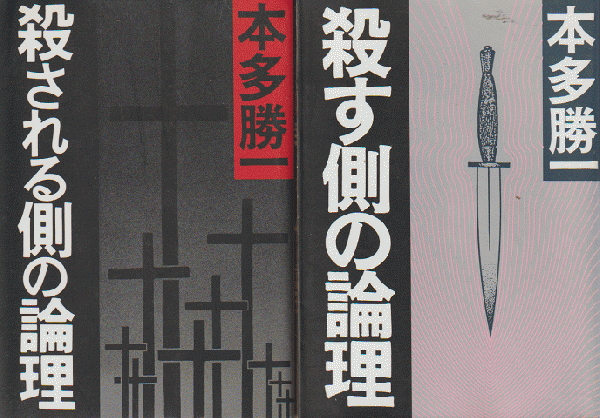
While the intricate details of that debate are a story for another day, the outcome was an absolute, one-sided annihilation. It was a masterclass in intellectual demolition. It provided me with an indescribable sense of catharsis and taught my youth exactly how a rigorous debate ought to be conducted. For those who have not read it, the entire exchange is preserved in Honda’s brilliant anthology, The Logic of the Killing Side (Korosu-gawa no Ronri). Along with his masterpiece, The Craft of Japanese Composition, it represents the absolute pinnacle of Honda’s legacy.
In his desperate response to Honda’s public challenge, Ben-Dasan wrote a piece saturated with arrogant politeness—90% of it being the “empty social niceties” I described earlier. His arguments were more incoherent than ever. And it was at this precise moment that Ben-Dasan committed his fatal, irreversible blunder. He fired off a parting shot.
He wrote, with unearned smugness:”Whether you choose to reply or not is of no consequence to me. Five years from now, the truth will reveal itself, so further debate is unnecessary. However, whether I receive a reply or not, I intend to write you another public letter exactly ten years from today”.
Completely failing to answer a single one of Honda’s direct questions, and fixating pathologically on historical denials, Ben-Dasan carelessly trapped himself in this grand “ten-year silence” proclamation.
Regardless of this exit announcement, Honda calmly published his next counter-reply. In it, Honda addressed every single question, doubt, and historical point raised by Ben-Dasan—comprehensively, without exception, thoroughly, and cleanly dismantling every single absurd demand. It was a flawless, absolute execution of logical refutation before the public eye.
Panic-stricken, Isaiah Ben-Dasan shattered his own vow immediately.In the very next issue of the exact same magazine, he rushed to publish a piece titled “A Postscript to Katsuichi Honda”, beginning with the frantic words: “After sending my previous letter, I thought about it for a short while, and felt that I must send you yet another public letter immediately”.
The comedy was complete. For a supposed Jewish intellectual living halfway across the world to draft a letter in English, have it delivered, and then have Yamamoto translate it into Japanese within a single month was an absolute temporal impossibility. It was a blazing display of pure panic. His text was more contradictory and shattered than ever before.
It had officially transformed into a slapstick comedy show.Honda, of course, did not bother writing back to him ever again. Why should he? Instead, Honda wrote a piece titled: “A Postscript to the ‘Gentlemen’ Readers of Shorun!”.
Once your adversary has officially proven himself to be a fraud and a fool before the public, any further direct correspondence is a waste of a writer’s life. The adversary’s right to an answer is forfeited; the verdict is left entirely to the judgment of the readers. Instead, the writer’s sole duty is to protect the audience from being blinded by the smoke screen of a charlatan.
This is the exact methodology I utilize today. Or rather, it is the sacred methodology I inherited from the great Katsuichi Honda.
Allow me to close with the opening lines of Honda’s historic final postscript to the readers:”I have received yet another ‘postscript’ from Isaiah Ben-Dasan, the self-proclaimed ‘Jew’ who hides his true identity beneath a stolen mask. The very fact that he rushed to write this postscript in such a frantic, desperate hurry demonstrates his utter panic and complete lack of logic in a form that anyone can plainly see. It is only natural that his content is now more incoherent and riddled with self-contradiction than ever before. At the end of his previous, puffed-up letter, a triumphant Ben-Dasan carelessly vowed: ‘I intend to write you another public letter exactly ten years from today’. Yet, instead of ten years, he fell into the pathetic trap of writing a panicked postscript just one single month later in the very next issue. In times like these, he ought to have maintained his dignity and remained silent for the ten years he promised, no matter how deeply he was burning with regret. But whether it is one month or ten years from now, I have absolutely no intention of playing his game ever again. As I stated before, I am officially finished entertaining the ‘scholarly show-and-tell’ of intellectual mercenaries who exist merely to generate noise. I choose instead to dedicate the limited time of my life to the far more vital work that lies ahead”.
References for Further Reading:Katsuichi Honda, The Conspiracy of the Pen: Analyzing the Logic of Charlatans (1977)Sadao Asami, The Counterfeit Jews and the Japanese (1986)